Tag: success

  • Do You Love Your Loved Ones How They Want to be Loved?

    Do You Love Your Loved Ones How They Want to be Loved?

    Where do we go wrong?

    One of the saddest things I see time and time again in my work as a Clinical Psychologist is partners who both love each other and try their best to show this to each other, yet neither of them feels loved and appreciated.

    The same thing also happens frequently within families, either between parents and their children or between siblings.

    In the excellent book, ‘Thanks for the Feedback: The Science and Art of Receiving Feedback Well’ by Douglas Stone and Sheila Heen, they highlight nicely why this often occurs:

    Firstly, we are aware of our thoughts, feelings and intentions behind whatever actions we do. The other person is not. All they can see is what we say, how we say it, and our behaviour or body language. Our body language influences approximately 55% of how others interpret what we say to them, with 38% being how we say it and only 7% what we say (Mehrabian,1971). Worse still, these non-verbal cues are generally out of our awareness, meaning we don’t see what they see either.

    Secondly, no matter how precisely we choose our words or actions, we cannot fully control how our message will be taken in and interpreted by the other person. Someone understands what we say based on their past experiences, core beliefs about others or our role (partner, sibling, parent or child), and their expectations and assumptions of what we are like or how we should be. Therefore, it creates biases before we have even opened our mouths and affects how they are impacted by what we do and say.

    Lastly, suppose we make a mistake or an error or upset someone. In that case, we will usually attribute it to the context or situational factors rather than seeing it as something to do with our character (e.g. “I didn’t wash the dishes because I was running late for work”). Conversely, When others make a mistake or upset us, we often attribute it to a personality characteristic or an unchangeable flaw (e.g. “you didn’t wash the dishes because you are lazy and disrespectful”). What happens next is that we usually criticise their character, which they rightly become defensive over, and they try to explain the context, which we tell them is just an excuse. When the other person criticises our character, the opposite happens, and we wonder how they can be so cruel and unforgiving (making other judgments about their character and personality). It’s no wonder that relationships are so tricky!

    What can we do?

    1. Develop Active Listening Skills

    Rather than assume the intent of others based on how they made us feel, it is much better to try and understand their perspective first and show this understanding through the skills of active listening, including:

    • clarifying: asking for more information on what they were talking about
    • “what did you mean by…?”,
    • “Can you elaborate further on …?”
    • paraphrasing: repeating back what was said to you in another way
    • them: “it’s like 100 degrees outside!”
    • you: “it’s so hot!”
    • reflecting: showing that you understand how they felt
    • them: “I had nothing to do all weekend!”
    • you: “you must have been bored!”
    • summarising: especially if someone has been speaking for a few minutes on a topic
    • them: multiple stories about the various things that have gone wrong for them recently
    • you: “sounds like you’ve had a rough week!”

    Some people will get annoyed if you don’t fully understand them or what they are feeling at the moment. Still, even this is an excellent opportunity to learn more about the other person and to get better attuned with how they think and feel from now on. Most people will appreciate the effort.

    2. Follow the Three Principles of Humanistic Psychology

    Carl Rogers was a Humanistic Psychologist who believed that only three elements were essential for promoting growth and well-being in others. These were:

    • Unconditional Positive Regard: No matter what the other person does or doesn’t do, it is essential to separate the person from their actions and continue to see the person positively. As a parent or a partner, it is more than okay not to accept or tolerate certain behaviours, but we need to show that we are unhappy with the behaviour rather than who they are. If it is someone that we love, our love for them should not diminish, because we can still see that they are a good person who sometimes does the wrong thing. If they can feel this, it will help them learn right from wrong going forward, rather than feeling like they have to be a certain way to be loved.
    • Empathic Attunement: It is essential to see the world in the way the other person does and understand how they view the particular situation and feel about it. If we can show this to them in a way that they feel it, they will know that we get it and will develop greater trust in opening up to us about other things as we advance. They will also feel less alone and isolated and be more responsive if we suggest potential ways to help them out of a predicament. Without understanding first, any advice you give usually falls flat and is not taken on at best or is seen as uncaring and interfering at worst.
    • Congruency: It is essential to ensure that what we are expressing is consistent with how we feel (in a way appropriate to the other person or audience). A parent who is upset at something that has happened in their life may not want to burden a child with their problems. However, it is still better to say, “Mummy is a little upset, but she is going to be okay” rather than “nothing, everything is fine” when a child asks, “what’s wrong mummy?” because they have accurately picked up on how you are feeling. Telling them something that is not congruent with how you feel will only confuse them and potentially make them doubt how their perception is going forward. The more congruent we are, the more trustworthy we are to others, and the less they have to worry about resentment building up or you keeping things from them.

    3. Practice Effective Communication

    As part of Dialectical Behavioural Therapy (DBT), Marsha Linehan teaches interpersonal effectiveness skills. She says that if we want to get an objective met when communicating, try the following four steps:

    — Describe the situation, and stick to facts, not judgments

    (e.g.” When you are 30 minutes late”, not “When you are rude and don’t care!”).

    E — Explain how you feel

    (Emotions — e.g. “I feel hurt and upset!”. Not opinions — e.g. “I feel like you don’t care at all!”)

    A — Ask for what you need or would prefer

    (Behaviours — e.g. “I would prefer that if you are late next time that you either try to leave a bit earlier or text or call to let me know that you are running late”. Not feelings — e.g. “I would prefer if you cared about and loved me like you say you do”).

    R — Reinforce the potential benefits to them, you and the relationship if they could do what you have asked

    (e.g. “Then you won’t need to rush as much, you’ll be safer on the road getting here, I won’t worry as much, we won’t end up fighting, and we’ll be able to enjoy a great night out together!”).

    You might be sceptical, but it really can work, and it does become more comfortable with practice.

    4. Avoid the Four Horseman of the Apocalypse

    John Gottman, the legendary relationship researcher, claims that he can successfully predict with a 91% accuracy which couples will get divorced in the future after observing them for only five minutes. He says that if you want to avoid a later break-up (the apocalypse), it is essential to prevent the following four things (the four horsemen) that can significantly erode the goodwill of a relationship over time. These are:

    • Criticism: While it is essential to be able to make a complaint about a specific behaviour in a relationship (e.g. “you left the toilet seat up again”), a criticism about who the person is will never be helpful (e.g. “you’re such a slob!”).
    • Contempt: This includes anything that communicates disgust, resentment or looking down upon the other. Contempt may be spoken through hostile humour such as sarcasm, cynicism or name-calling, or displayed through behaviours such as eye-rolling, sneering or mocking laughter with the head tilted back. Building a culture of mutual respect and appreciation is the antidote to this.
    • Defensiveness: This is usually in response to criticisms or contempt, and each partner then feels that they are right and the other is wrong, and the argument becomes about who will win. When each partner is trying to win an argument and blame the other, the relationship suffers in the end. It’s much better to take responsibility for your part and then work towards what will be best for both of you going forward.
    • Stonewalling: Eventually, after escalating conflict, one partner tries to tune out the other partner, disengaging from the communication or the relationship emotionally while remaining physically present. Stonewalling is done more by males than females and is a way to calm themselves down when feeling overwhelmed and flooded. The result on the other partner is escalating distress, much like a baby who is suddenly unable to interact with their mother in the Stillface Experiment:

    Let your partner know that you are overwhelmed and need a 20-minute break. Then, tell them that you will be back and happy to continue the discussion once you feel calmer. Doing this is a much more effective way than just shutting off or shutting out the other person. It also leads to both of you feeling more in control and less distressed.

    5. Find Out Their Primary and Secondary Love Languages

    People often express their love to others in the way they would most want, rather than showing their love in how their partner, child, parent, or sibling would wish them to.

    For example, many fathers will try to show their love to their children by working hard, making lots of money, and providing financial security and stability for their future. But, conversely, the child often wants to spend some time with their dad, play at the park, kick the football, or play video games together.

    The most confusing scenario to me is males, who tend to be more visual than females, sending explicit pictures of themselves to a female they are pursuing. I think they do this because they would like to receive a graphic image from the female. However, they assume that the women would want the same. It is considered a crime if you do this in public without prior consent and not through a phone.

    Meanwhile, females, usually more sentimental than males, may prefer some flowers or a lovely card with a thoughtful handwritten message. Still, men don’t understand this because it’s typically not something they would ever want to receive. Therefore they don’t see the point. Big mistake!

    Understanding the five love languages, written about by Gary Chapman in various books, becomes very handy.

    When trying to show someone that you care, the first step is to determine which love languages seem to mean the most to them. A questionnaire exists on the website http://www.5lovelanguages.com that you could ask the other person to complete if you are unsure what they value most and want to understand them better.

    The next step is to disregard what you would want from them and do what you think will make them the happiest, based on their love language preferences:

    Words of Affirmation:

    • DO: Give them compliments, encouraging words, written cards or letters
    • DON’T: Give them undue criticism or emotionally harsh words

    Quality Time:

    • DO: Give them your undivided attention, have one-on-one conversations without interruptions, do things together, take trips together, sit and talk.
    • DON’T: Spend too much time with friends or groups (even if it’s together), neglect them or have long gaps of time between catch-ups and check-ins.

    Gifts:

    • DO: Give gifts, give time, remember special occasions, give small tokens of appreciation or love — show that you have put in the effort or thought in choosing.
    • DON’T: Forget special events or anniversaries, or buy meaningless, generic or thoughtless gifts that show that you haven’t put in time or effort in choosing

    Acts of Service:

    • DO: Assist with chores, make a checklist together, tick something off their to-do list, fix something, ask “How can I help?” or “What can I do?”
    • DON’T: Overcommit to tasks that you won’t be able to complete, forget to follow through on something you have promised to do, fail to help.

    Physical Touch:

    • DO: Sit close, hug, touch
    • DON’T: Withhold affection or threaten to do so, neglect, physically hit or abuse

    By loving those we love in the way they want to be loved, there is a much higher chance that we will feel loved and appreciated, and our relationships will likely improve. Seeing that relationship warmth is the number one predictor of long-term health and happiness, making small changes in how we listen to, talk to, and care for others could go a long way to improving the overall quality of our lives.

    Dr Damon Ashworth

    Clinical Psychologist

  • 7 Life Lessons That We Can Learn From Hollywood Movies

    7 Life Lessons That We Can Learn From Hollywood Movies

    I recently read a book titled ‘Writing Screenplays that Sell’ by Michael Hauge and was fascinated to see how psychologically informed screenwriters create engaging stories with meaningful plots and entertaining characters.

    Although Hollywood sometimes gets bad press for promoting materialistic and unrealistic goals for the audience, I do believe that we can learn some valuable life lessons from dissecting the common elements of screenplays that result in successful movies.

    Here are eight insights that I believe are important:

    #1 — Be the hero of your story

    Every movie has a hero that we identify with and develop empathy for. Screenwriters do this deliberately because we are likely to care more about the story and become involved in the movie if it focuses on one character and their perspective and challenges more than the other characters.

    In real life, the person whose perspective we can most tune into is ourselves, and we feel the emotional impact of our experiences whether we like it or not (even though many people try to tune these out). It, therefore, makes a lot of sense to ensure that we are the hero of our own life.

    Unless you believe in reincarnation, we only have one life. Once we become adults, no one else is entirely responsible for our life’s direction except for us. We are the screenwriters, directors and the main character in our story — unless we give that power up to somebody else. It is a scary thought but also a potentially liberating one.

    Although there are limitations to our abilities and dreams, and it is essential to have realistic expectations, I see too many people that put up roadblocks and barriers where they don’t need to be.

    So if we are free to do what we want with our lives and responsible for how they turn out, what do we want to do? Live the life that someone else expects of us or follow our dreams and hopefully achieve our goals.

    #2 — Challenge yourself if you would like to grow

    Screenwriters are taught that a movie should start slowly and build pace as the film progresses by increasing the magnitude and difficulty of challenges that the hero faces until the film’s climax. A resolution is then typically achieved, and all of the loose ends are tied up before the movie concludes with the hero being a much better person than they were at the beginning of the film. It is from overcoming bigger and bigger adversity throughout the film that the hero develops and grows. Without challenges or difficulties to master, this growth and character development would be impossible, and people would find the movie dull.

    In real life, I see a lot of clients who want a life free of challenges. They strive for a life of inner peace without stress or anxiety and believe that they can achieve this by consistently remaining in their comfort zone. So they do the same thing each day, don’t take any risks, and generally feel okay. A lot of them will tell you that something is missing, however.

    We need to push beyond what feels comfortable to grow, and with this comes a certain amount of stress and anxiety. However, it isn’t necessarily a bad thing and can be a good indication that you are sufficiently challenging yourself so long as you are not feeling overwhelmed. Just remember to start small with tasks that feel a little scary but are also achievable, and as you build up confidence, move on to more significant challenges. As long as the challenges are consistent with changes that you would like to bring about in your life, you will feel more energetic and alive than you ever could by remaining in your comfort zone, even if you fail.

    The purpose of life is to be defeated by greater and greater things.

    Rainer Maria Rilke

    #3 — Conflict leads to more intense emotional experiences

    Screenwriters learn to create conflict in every scene where possible, usually by having two characters with different views and objectives. Conflict creates emotional involvement far more than general exposition ever could, leading to a more engaged audience.

    In real life, especially in relationships, this isn’t always a good thing. We might feel a more significant attraction or more intense emotional experience with someone who is opposed to us in what they want. I see it often when individuals who are anxiously attached (like being close to their partner and worry when they are apart) end up in relationships with avoidantly attached individuals (like their independence and feel trapped if they are too close). Each time it leads to an emotional rollercoaster ride, with lots of conflicts, big ups and downs, and greater emotional involvement. It keeps both parties occupied and interested but will do more harm than good in the end.

    Finding someone who wants the same things that we do may be less exciting initially but can also lead to greater satisfaction and well-being in the long run. Be aware of the emotional trap, and use your head and heart when determining if a relationship is suitable for you.

    #4 — Have clearly defined goals

    All heroes will have the primary goal or external motivation that they will pursue throughout the film. Screenwriters want the audience to cheer on the hero as they strive towards their dream. For example, it may be to escape from or kill the bad guy in a horror movie. In a heist movie, it may be to steal the money and get away with it. In a romantic comedy, it is to win the affection of the love interest. A coming of age story is to learn something, and in a sports movie, it is to win.

    In real life, it is essential to think of the big picture at times and ask yourself where you would like to be in 1, 2, 5, 10 and 20 years from now? How would you want to be spending your days? Whether owning a business, buying a house, getting married, having children or running a marathon, these external, observable goals help keep us motivated and focused on our destination or where we would like to see ourselves in the future. Once these goals have been achieved, you can tick them off the list. It then becomes vital to elicit and develop further plans to pursue.

    Believe big. The size of your success is determined by the size of your belief. Think little goals and expect little achievements. Think big goals and win big success. Remember this too! Big ideas and big plans and often easier — certainly no more difficult — than small ideas and small plans.

    David Schwartz

    #5 — Understand why you want to achieve these goals — clarify your values

    The movie may not explicitly state it, but a hero will still have an internal motivation or reason for pursuing a dream. Otherwise, it wouldn’t be worth overcoming all of the obstacles they face to achieve the movie’s end goal.

    Two people may want to buy a house or run a marathon, but their reasons for doing so could be completely different. For example, one home buyer may wish for security and a place to call home, whereas the other wants to make their parents and family proud of them (to gain love, approval or acceptance). Likewise, one marathon runner may decide to enter the race to become healthier and lose weight. In contrast, another may do it to spend more time with their friend or partner that loves running (for greater connection or intimacy).

    Values, unlike goals, can never be ticked off the list but are guiding principles that can either be followed or not from moment to moment. For example, if honesty is an essential value to you, you can be honest whenever you tell the truth and dishonest whenever you lie. By living honestly, you will be feeling more fulfilled, and by being dishonest, you will likely feel dissatisfied or guilty. So firstly, clarify which values are most important to you, and then set short, medium and long-term goals that are consistent with the guiding principles you choose.

    To be truly rich, regardless of his fortune or lack of it, a man must live by his own values. If those values are not personally meaningful, then no amount of money gained can hide the emptiness of life without them.

    John Paul Getty

    #6 — Have mentors that can help you to achieve your goals

    Screenwriters call these characters reflections, and they are there to help the hero learn and grow along with their journey towards their ultimate goal. This is Robin Williams to Matt Damon in ‘Good Will Hunting’, Mr Miyagi to Daniel-son in ‘The Karate Kid’, and Morgan Freeman in most movies (‘The Shawshank Redemption’, ‘Bruce Almighty’, ‘The Dark Knight’). Mentors usually don’t have a significant character arc because they are already evolved in areas where the hero wants to improve. However, they know what the right thing is and help guide the hero on their path.

    In real life, it is essential to have mentors or people that have done what you would like to do that you can turn to for help when you get stuck, have questions, or need advice. By seeking support through individuals who are more knowledgeable and experienced in the areas you are hoping to build skills, it is possible to learn from their insights and mistakes without repeating them yourself, leading to a more effective learning and growth process. Furthermore, if they can be honest and direct in their feedback of your strengths and weaknesses, they can also help you see the real you and guide you towards what is correct and genuine, even if you don’t exactly want to hear it. Mentors can be friends or relatives or can even be paid for or hired too. It is why people have psychologists, personal trainers and life coaches. It is also why I obtain regular external supervision to keep improving towards becoming the best psychologist that I can be.

    The way for you to be happy and successful, to get more of the things you really want in life, is to study and emulate those who have already done what you want to do and achieved the results you want to achieve.

    Brian Tracy

    #7 — It is our actions that define who we become

    In his book ‘Story’, Robert McKee, a famous screenwriter, says that the hero’s character is genuinely revealed not in the scenes when everything is relaxed and calm, but in their choices when the going gets tough. The greater the pressure, the more revealing the scene is of the hero’s essential nature. Notice it is not their intentions or things they may speak about doing earlier in the film, but what they do when it really counts.

    How will you react in the most significant moments in your life? With courage and persistence despite fear or challenge, or with avoidance, excuses or procrastination? With compassion, generosity and respect, or criticalness, selfishness and contempt? Will you talk about all of the great things you want to do or the things that you could have been, or focus on what you can still do and get out there and do it? It doesn’t just have to be big moments either.

    Don’t wait for extraordinary opportunities. Seize common occasions and make them great

    Orison Swett Marden

    Dr Damon Ashworth

    Clinical Psychologist

  • 25 Ideas That Could Change Your Life

    25 Ideas That Could Change Your Life

    1. KAIZEN

    A Japanese term meaning “improvement”.

    I think of Kaizen as ‘continuous improvement’ or “continual change for the better, one small step at a time”, as this is how I first heard of the term.

    Many successful Japanese manufacturing companies in automobiles and technology have used this exact approach to obtain massive success over time.

    What could you achieve if you just focused on taking one small step in the right direction today and then another one every day after that?

    2. BE THE CHANGE YOU WANT TO SEE…

    Gandhi did not say, “Be the change you want to see in the world,” even though people attribute this quote to him. What he said was this:

    “We but mirror the world. All the tendencies present in the outer world are to be found in the world of our body. If we could change ourselves, the tendencies in the world would also change. As a man changes his own nature, so does the attitude of the world change towards him. This is the divine mystery supreme. A wonderful thing it is and the source of our happiness. We need not wait to see what others do.”

    Mahatma Gandhi

    3. BE HERE NOW

    If we are fully present in the moment and aware of what is going on both internally and externally, we choose what we decide to do.

    If you do not feel present, meditate, ground yourself, get outside, move and connect with your five senses in the moment and the world around you.

    “Awareness is all about restoring your freedom to choose what you want instead of what your past imposes on you.”

    Deepak Chopra

    4. CHOICES DEFINE YOUR LEGACY

    It is a lengthy process of choices becoming actions, actions becoming habits, and your habits informing your character and ultimate legacy. A Mr Wiseman first said a quote like this in 1856. It tells us that whatever we sow, we must later reap.

    Therefore, it is essential to engage in positive actions before what we do becomes habitual. Gambling, smoking and binge drinking all start as choices. But the more engrained something is, the harder it is to stop. If we choose to engage in healthy activities enough, they too can become automatic for us.

    “Neurons that fire together, wire together.”

    Donald Hebb

    5. LIFE WASN’T MEANT TO BE EASY

    We often don’t appreciate things that fall into our lap, and we tend to value things much more when we put in some hard work to get them. Even people who build their own IKEA furniture think these items are worth more than those who do not.

    I know I’d be more proud of the $3 million I built up through hard work than the equivalent amount of money won through a lottery. How about you?

    Anything in life worth having is worth working for.

    Andrew Carnegie

    6. THE MAGIC HAPPENS OUTSIDE YOUR COMFORT ZONE

    Move out of your comfort zone. You can only grow if you are willing to feel awkward and uncomfortable when you try something new.

    Brian Tracy

    So many people want a comfortable life and therefore stick to what feels safe. But, unfortunately, if you are not willing to feel uncomfortable, your life will only get smaller over time.

    When you first step out of your comfort zone, it will be scary; you will feel awkward and even feel unsafe. But is it really, or does it just feel threatening because it is new? If at this moment, you run back to what you are used to, you won’t grow. However, if you persist through the initial pain, it will only get more comfortable in time, and your comfort zone will continue to expand and grow.

    7. RETHINK WHAT IT MEANS TO BE FREE

    What does freedom mean to you?

    You are doing whatever your parents, school, bosses, or government wants you to do? UMM NO. That is called compliance.

    You are rebelling against everything and doing the exact opposite of what your parents, school, bosses and government tell you to do? STILL NO. That is called counterpliance. Your actions are still being defined by what others tell you to do. Plus, it doesn’t always work out too well for you.

    You are just living for the moment and indulging in all of your passions and pleasures whenever you want because YOLO, right? NOPE. Hedonism may feel great for a night but not for a lifetime. It can also have nasty side effects if you aren’t careful, including weight gain, disease, debt, dissatisfaction, and even death.

    True freedom must come from making the choice that is likely to be the best for you in the long term, even if it denies you that last alcoholic drink or dessert or the fun that happens after 2 am. You might want the added snooze time in the mornings, but If you can’t get yourself to do things that are difficult or painful in the short term but beneficial in the long run, you can never honestly be free in the future. As a former NAVY SEAL famously said:

    Discipline equals freedom.

    Jocko Willink

    8. GETTING STARTED IS ALWAYS THE HARDEST PART

    The secret of getting ahead is getting started

    Mark Twain

    In a book that I once read (the Willpower Instinct, I think), I came across a 10-minute rule that I found surprisingly helpful. If you are not sure if you are up for doing something, give it a go for 10 minutes, and if after 10 minutes you still don’t feel up to it, stop. I tried it a few times by going to the gym, and usually, once I get there and get into it, I’m fine, but my brain often tries to tell me that I am too tired before I go.

    The 10-minute strategy seems to work because it is much easier to get our brains to do something for 10 minutes than for a considerable chunk of time. It is because it requires much less energy when we are forecasting our capacity to do the task. In addition, human brains are cognitive misers, which means they are always trying to “help” by conserving energy. So if you want to get started or you feel tired, think small.

    9. THE FIRST DRAFT OF ANYTHING IS TRASH

    Don’t get discouraged because there’s a lot of mechanical work to writing. There is, and you can’t get out of it. I rewrote the first part of A Farewell to Arms at least fifty times. You’ve got to work it over. The first draft of anything is shit. When you first start to write you get all the kick and the reader gets none, but after you learn to work it’s your object to convey everything to the reader so that he remembers it not as a story he had read but something that happened to himself.

    Ernest Hemingway

    This quote is fantastic because people often think they need to produce a masterpiece the first time they try or do something. However, if one of the most famous authors of all time made horrible first drafts, why should we expect more on ours? The solution is to focus on the process, not the outcome, and produce a draft before editing, reviewing, or criticising what you have done.

    10. DON’T PUT THINGS OFF UNTIL LATER

    If something takes less than 2 minutes to do, don’t write it down or add it to your to do list — do it now.

    David Allen, Getting Things Done

    Most people have so much stuff to do at any time that it is challenging to ever get their to-do list down to zero. It causes anxiety and stress for many people. However, the key is to have an excellent system to manage everything that comes in so that you don’t have to keep worrying and thinking about everything you need to do. Getting things done (GTD) is one such system. And the two-minute rule from GTD says that small tasks should never go on your to-do list if you can get them done now. This rule alone means that my email inbox rarely has any unopened or unreplied emails.

    11. BE YOURSELF; EVERYONE ELSE IS TAKEN

    Some believe that Oscar Wilde first said this, but the fascinating quote investigator website said they could not find it in any of his writings. However, Keith Craft noted something similar in announcing that we all have a unique fingerprint, and we can, therefore, “leave a unique imprint that no one else can leave.”

    To be yourself in a world that is constantly trying to make you something else is the greatest accomplishment.

    Ralph Waldo Emerson

    12. WE REGRET THE THINGS WE DON’T DO MORE THAN THE THINGS WE DO

    We tend to think about what we may lose if we take a risk when deciding the future. However, when reflecting on the past, we regret what we missed by not taking a chance. The question then becomes, do we:

    1. Play it safe, and not put ourselves out there because people may judge or criticise us for giving something a go and not succeeding? Or
    2. Criticise others for being brave enough to try something? Or
    3. Throw caution to the wind and give it our best shot, knowing that we will learn and grow more from mistakes and setbacks than we ever would have by sitting back and criticising others?

    It is not the critic who counts; not the man who points out how the strong man stumbles, or where the doer of deeds could have done them better. The credit belongs to the man who is actually in the arena, whose face is marred by dust and sweat and blood; who strives valiantly; who errs, who comes short again and again, because there is no effort without error and shortcoming; but who does actually strive to do the deeds; who knows great enthusiasms, the great devotions; who spends himself in a worthy cause; who at the best knows in the end the triumph of high achievement, and who at the worst, if he fails, at least fails while daring greatly, so that his place shall never be with those cold and timid souls who neither know victory nor defeat.”

    Theodore Roosevelt

    13. FEEL THE FEAR AND DO IT ANYWAY!

    Susan Jeffers was my hero back when I read her top-selling self-help book. I couldn’t believe that I didn’t have to get rid of my fear before I tried to act courageously.

    The Confidence Gap by Russ Harris then further highlighted to me that the actions tend to come before the feeling of confidence, not the other way around.

    Fear was designed to keep us safe as a hunter-gatherer but holds us back more in modern-day life than it helps us sometimes. So instead, we need to assess the actual level of risk whenever we feel fear and go for it if the situation feels scary but is pretty safe. It could be horror movies, roller coaster rides, plane flights, or public speaking.

    The only thing we have to fear is fear itself.

    Franklin Delano Roosevelt, inaugural address, 1932

    14. WYSIATI

    What you see is all there is.

    Daniel Kahneman

    How you are thinking and feeling in the moment is very much influenced by how you are thinking and feeling. If you feel on top of the world, you are likely to be feeling happy, thinking positively about yourself, others, the world and your future. Anything may feel possible. Then the next week, you have a setback or get sick, and you start to feel depressed and hopeless and think negatively about yourself, others, the world and your future. Of course, both can’t be true if they are only a week apart. It’s therefore essential to understand the power of WYSIATI.

    Don’t think too big picture if you feel flat and down, and try not to do your weekly shop when you’re too hungry. The choices you’ll make once you’ve picked up a bit and have eaten something are likely to be very different.

    15. MEMENTO MORI

    Remember that you have to die.

    Latin phrase

    In many cultures worldwide and throughout history, acknowledging our mortality through prayer, meditation, reflection, ceremony, or celebration is more common than in atheistic or modern-day Western life.

    The phrase memento mori helped people consider the transient nature of earthly life, our goods and our pursuits and enabled them to become humble and clarify what was important to them.

    16. THINGS FADE; ALTERNATIVES EXCLUDE

    Two things that are inevitable in life are:

    1. no matter what we do, time passes and things erode over time (also known as the second law of thermodynamics), and

    2. if we go down one path, we cannot go down another track simultaneously.

    Decisions are difficult for many reasons, some reaching down into the very socket of our being. John Gardner, in his novel Grendel, tells of a wise man who sums up his meditations on life’s mysteries in two simple but terrible postulates: “Things fade: alternatives exclude.” […] Decision invariably involves renunciation: for every yes there must be a no, each decision eliminating or killing other options (the root of the word decide means “slay,” as in homicide or suicide).

    Irvin Yalom (1991). Love’s executioner. p. 10. Penguin Books.

    17. PARKINSON’S LAW

    Have you ever wondered how you get way more work done on some days when you are super busy? Then on quiet days, you don’t have much work to do but struggle to get it all done. The reason for this is Parkinson’s law:

    Work expands so as to fill the time available for its completion.

    The Stock–Sanford corollary to Parkinson’s rule is better, in my opinion, and it is something I used a lot when studying at uni:

    If you wait until the last minute, it only takes a minute to do.

    If productivity is what you are going for, give yourself a closer deadline and someone to hold you accountable if you don’t meet it, and voila, productivity and efficiency improve!

    18. THE IMPORTANCE OF MEANING AND PURPOSE

    He who has a why to live for can bear almost any how.

    Friedrich Nietzsche

    Nietzsche was a nihilist, which meant that he didn’t think the world had any meaning in it. Irvin Yalom said that even if the world is meaningless overall, it is still essential for us to find personally meaningful things individually or as a group. Viktor Frankl showed that in the concentration camps in WWII, those with some higher purpose beyond the camps were the ones who could manage to survive the horrible atrocities they faced every day.

    What’s personally meaningful to you? Where could you find purpose?

    19. DON’T LISTEN TO THE DOUBTERS

    Impossibility is not a fact — it’s an opinion.

    Muhammed Ali

    Think of anyone who has done something groundbreaking or is still trying to do something pioneering today — Henry Ford, Walt Disney, Steve Jobs, Barack Obama, Richard Branson, Elon Musk, Bill Gates. I wonder how many people told them to give up, grow up, stop being deluded, or think realistically? I’d say most of them.

    Just because someone hasn’t done something doesn’t necessarily mean you can’t do it. Otherwise, we wouldn’t have had the massive amount of progression that we have had over the past 200 years.

    20. CLARIFY YOUR VALUES AND MAKE DECISIONS BASED ON THESE

    (Some people spend) their lives doing work they detest to make money they don’t want to buy things they don’t need in order to impress people they dislike.

    Emile Gauvreau

    Don’t fall into the trap of thinking that your life has to be a certain way just because everyone else is doing something a certain way and telling you that you should too.

    By clarifying your values first and building your hierarchy, you can see if what you are currently doing is consistent with what is essential. If not, what changes could you make that you’d be willing to make to help you start heading in the right direction? The earlier you make these changes, or at least concrete plans to make them, the higher chance you will be happy with the path you are on.

    21. RELATIONSHIP WARMTH IS THE NUMBER ONE PREDICTOR OF LONG-TERM HEALTH AND HAPPINESS

    Love people, use things. The opposite never works.

    Joshua Fields Millburn & Ryan Nicodemus, The Minimalists

    The minimalist movement has picked up in the last 20 years in response to most of us in the Western world having way too much stuff and realising that it doesn’t make us any happier. If anything, it causes us more stress. Clothing used to be a scarce and valuable thing. Now wardrobes and houses are overflowing, and storage facilities are popping up everywhere to help clear some space.

    What if we just bought fewer things and focused more on what matters: our connections with the important people in our lives. Robert Waldinger, director of the Harvard Study of Adult Development, found that in the end, close relationships are more critical to our health and happiness than anything else.

    22. OCCAM’S RAZOR

    Given several possible explanations about something, the simplest one is probably right.

    Is the dog above trying to read, or is it merely sniffing the book?

    Occam’s razor is why conspiracy theories are never likely to be true. Think about the moon landing, or 9/11, or the Illuminati, flat earth theories, or any other conspiracy out there. For the conspiracy plot to be accurate, so many added levels are needed. Even people keeping the scheme a secret for years without anyone turning themselves in or trying to make money out of it is unlikely. So it’s much simpler and more likely that there is no conspiracy.

    You can also apply Occam’s razor to losing weight, sleeping well, getting stronger, or improving any skill. Some people have complicated theories, but usually, the answer lies in relatively simple explanations. Doing too much or complicating things beyond what is necessary often backfires.

    Reduce things back to the bare essentials, and see what happens.

    23. LAW OF DIMINISHING RETURNS

    The law of diminishing returns says that each time we do something to receive a benefit, the benefit will be less and less.

    Let’s say you order this massive stack of pancakes in the picture above. The first pancake may taste amazing, and the pleasure received is a 9 out of 10. After that, each bite is likely to be slightly less enjoyable than the bite before. Finally, if you somehow managed to get through the whole stack, the last taste might only be a 1 out of 10 on the pleasure scale.

    However, a month later, your next pancake might reach 9 out of 10 on the pleasure scale again.

    The solution is to wait for long enough between doing the same thing twice so that you enjoy it just as much the next time.

    Variety is the very spice of life, that gives it all its flavour.

    William Cowper

    24. BE KIND

    If you’re kind, people may accuse you of selfish, ulterior motives. Be kind anyway.

    Mother Teresa

    If you know why you are doing something, try not to worry about what others think. People who do not understand why you are doing what you are doing will see it from their point of view.

    If they could only do what you are doing by getting something in return, they will assume you have the same intention. But being kind is a reward within itself. If you can give just for the sake of it, do it. You can thank me later.

    25. DESIGN YOUR OWN LIFE

    When you grow up you tend to get told the world is the way it is and (you should) just live your life inside the world. Try not to bash into the walls too much. Try to have a nice family, have fun, save a little money. That’s a very limited life. Life can be much broader once you discover one simple fact: Everything around you that you call life was made up by people that were no smarter than you and you can change it, you can influence it, you can build your own things that other people can use. Once you learn that, you’ll never be the same again”.

    Steve Jobs

    As far as I see the world, we only have one life to live. We can spend it doing what others expect of us, or we can spend it doing what is suitable for us. We can blame everyone else for how things turn out, or we can go our own way.

    Regardless of what you decide, time passes, and eventually, you will either feel that you made the most of what you had or accumulate regrets. I try to live my life in a way where I learn from my past mistakes, and make choices that I hopefully won’t regret in the future. What about you?

    Dr Damon Ashworth

    Clinical Psychologist

  • How to Be Useful to Others, Get Rich, Like People, and Thrive in an Unknowable Future

    How to Be Useful to Others, Get Rich, Like People, and Thrive in an Unknowable Future

    Derek Sivers seems like a pretty cool guy. On his website, he calls himself a musician, producer, circus performer, entrepreneur, TED speaker, and book publisher. He started a company called CDBaby and made millions from this. He then gave the company to charity, resulting in millions of dollars subsequently being used to help up-and-coming musical artists who need some monetary support to try and realise their dreams.

    Sivers also reads a lot of non-fiction books that are focused on psychology, self-help and self-improvement. He has little reviews of these books on his website and gives them a score out of 10, which is great if you are in need of a recommendation of what to read.

    In 2016, Sivers tried to summarise all of the key points that he obtained from reading so many non-fiction books. These key points were put into “do this” directives for him as a personal guide to various aspects of life. The directives were first brought to the public’s attention in his episode of the hugely popular ‘Tim Ferriss Show’ podcast. Because of the demand for the remainder of these lists, they were shared on Derek’s website sivers.org. He also plans on doing more with these directives in the future, including potentially writing his own book.

    Below are his directives, as well as my opinion of them. Directives that I completely agree with will be in green. Directives that I disagree with or that go against scientific research will be in red.

    group hand fist bump

    How to be useful to others:

    Get famous

    • Do everything in public and for the public.
    • The more people you reach, the more useful you are.
    • The opposite is hiding, which is of no use to everyone.

    Get rich

    • Money is neutral proof you’re adding value to people’s lives.
    • So, by getting rich, you’re being useful as a side effect.
    • Once rich, spend the money in ways that are even more useful to others.
    • Then, getting rich is double useful.

    Share strong opinions

    • Strong opinions are very useful to others.
    • Those who were undecided or ambivalent can just adopt your stance.
    • But those who disagree can solidify their stance by arguing against yours.

    Be expensive

    • People given a placebo pill were twice as likely to have their pain disappear when told the pill was expensive.
    • People who paid more for tickets were more likely to attend the performance.
    • People who spend more for a product or service value it more, and get more use out of it.

    people taking group photo

    WHAT I THINK: While there are a lot of famous and rich people who are useful to other people, there are many others who are not. What is true is that if you are famous and rich, you have the potential to have more influence on others and do more positive things, such as Bill and Melinda Gates. You also have the potential to negatively influence more people too, such as Donald Trump. What you do with that power and exposure is up to you.

    You can also make a difference to others without being rich or famous. Don’t underestimate the difference you can make as a teacher or coach or parent or volunteer or community member or any other role where you interact with others on a regular basis. If you charge more, people will value your services more, you will earn more money and then have a greater chance to be useful to others.

    Do try to be informed before sharing your opinions publicly. Look at all the damage Jenny McCarthy did by sharing her opinions on vaccines and autism.

    achievement-bar-business-chart-40140.jpeg

    How to get rich:

    Live where luck strikes

    • Live where everything is happening.
    • Live where the money is flowing.
    • Live where careers are being made.
    • Live where your role models live.
    • Once there, be as in the game as anyone can be.
    • Be right in the middle of everything.

    Say yes to everything

    • Meet everyone.
    • Pursue every opportunity.
    • Nothing is too small. Do it all.
    • Like lottery tickets, you never know which one will win. So the more, the better.
    • Follow-up and keep in touch with everyone.

    Learn the multiplying skills

    • Speaking, writing, psychology, design, conversation, 2nd language, persuasion, programming, meditation/focus.
    • Not pursued on their own, they’re skills that multiply the success of your main pursuit (e.g., A pilot who’s also a great writer and public speaker; A chef with a mastery of psychology, persuasion and design).
    • These skills multiply the results of your efforts, and give you an edge over others in your field.

    Pursue market value, not personal value

    • Do what pays well.
    • Do not be the starving artist, working on things that have great personal value to you, but little market value.
    • Follow the money. It tells you where you’re most valuable.
    • Don’t try to make a career out of everything you love. For example, sex.

    Shamelessly imitate success

    • Imitate the best strategies of your competitors.
    • The market doesn’t care about your personal need to be unique.
    • It’s selfless and humble to use the best ideas regardless of source, to create the best service or product for your clients.
    • Get great at executing other people’s ideas as well as your own.

    Be the owner, not just the inventor

    • It’s tempting to try to be the ideas person, having someone else do the dirty work of making those ideas happen.
    • Ideas don’t make you rich. Great execution of ideas does.
    • A rule of capitalism: whoever takes the most financial risk gets the rewards.
    • The biggest rewards will always go to those that fund it and own it.
    • To get rich, be the owner. Own as close to 100% as possible.

    Benefit from human nature

    • Instead of complaining about the downside of human nature, find ways to benefit from it.
    • Instead of complaining about the rules, just learn the game, then play it.

    bitcoins and u s dollar bills

    WHAT I THINK: To get rich, it is important to know how humans think and act, and to find ways to benefit from this instead of wishing for things to be different. It is useful to see what has worked for others, to learn how to do things in this way first, and then to adapt the best things so that what you are doing is authentically yours. It is important to try to own the product or service you are trying to sell. If you don’t do this, your earning potential will always be capped and will generally always be less than your bosses.

    While it is true that people need to be willing to spend money in order to make money, it’s not just about taking financial risks. There are many broke people out there who have spent too much on bad ideas. Figure out how to test your ideas or products first to see how the market responds before investing too much in it, and don’t be afraid to make changes or start over again if a better opportunity presents itself. Ideally we aren’t just doing something for the money. If we love it, are good at it and it makes a lot, you will be much happier than doing something just because you know that it pays well.

    While it is true that we don’t know which opportunities will necessarily work out, we also can’t make much progress if we are saying yes to everyone and everything. Meet and connect with the right people who are not just out for themselves until you find a great idea. Then pursue this project for a set period until you know if it is likely to make you rich or not. If not, jump ship as soon as you realise it and keep brainstorming and connecting and saying yes until you find your next great idea. Once you have this, learning how to prioritise and say no may be even more important than always saying yes. Same with being in the middle of everything. It’s good until you know which path you want to go down. Once you know, distance from others can be just as good until an idea has been executed.

    The last bit of advice that isn’t here is don’t gamble or invest in get rich quick schemes. Use debit cards instead of credit cards. Don’t buy the most expensive insurance options. Do invest in index funds and other trustworthy stocks regularly and as early as you can and don’t change them around too much. Compounding interest will help you to gain a lot of money over time. But having heaps of money beyond what you need to meet your basic needs isn’t likely to make you a lot happier in the long run.

    flight technology tools astronaut

    How to thrive in an unknowable future:

    Prepare for the worst

    • Since you have no idea what the future may bring, be open to the best and the worst.
    • But the best case scenario doesn’t need your preparation or your attention.
    • So mentally and financially prepare for the worst case, instead.
    • Like insurance, don’t obsess on it. Just prepare, then carry on appreciating the good times.

    Expect disaster

    • Every biography of a successful person has that line, “And then, things took a turn for the worse.”
    • Fully expect that disaster to come to you at any time.
    • Completely assume it’s going to happen, and make your plans accordingly.
    • Not just money, but health, family, freedom. Expect it all to disappear.
    • Besides, you appreciate things more when you know this may be your last time seeing them.

    Own as little as possible

    • Depend on even less.
    • The less you own, the less you’re affected by disaster.

    Choose opportunity, not loyalty

    • Have no loyalty to location, corporation, or your past public statements.
    • Be an absolute opportunist, doing whatever is best for the future in the current situation, unbound by the past.
    • Have loyalty for only your most important human relationships.

    Choose the plan with the most options

    • The best plan is the one that lets you change your plans.
    • Example: renting a house is buying the option to move at any time without losing money in a changing market.

    Avoid planning

    • For maximum options, don’t plan at all.
    • Since you have no idea how the situation or your mood may change in the future, wait until the last moment to make each decision.

    aerial view of city with lights during night

    WHAT I THINK: It’s good to be creative, flexible, adaptable and open to change. These characteristics will become even more important in the future, because change is likely to continue to happen at an even faster and faster pace. People back in the 14th century kind of knew what to expect by the 15th century, but most people living now have no idea what life is likely to look like in the 22nd century. This doesn’t mean that we shouldn’t plan, and it definitely doesn’t mean that we should only plan for the worst. Life has continued to get better and better in so many ways, and it is likely to continue to get better in many ways too. It doesn’t mean it can’t get worse, but we shouldn’t all become doomsday preppers or not buy anything in case disaster strikes. Try to only buy the things you need that will help add value to your life.

    Especially if you have kids, stability is good, so don’t be afraid to set up roots. Buy a house, start a business where you live, and develop friendships with other people in your neighbourhood. Some people may leave, businesses may collapse, marriages may crumble, but research still indicates that people have more satisfied relationships if they get married than if they live together but don’t get married. Married men are also both happier and healthier than single men. Divorce negatively impacts kids, especially if there is a lot of conflict, and learning how to overcome difficulties is better than always avoiding things or running away as soon as things get tough or another seemingly desirable option presents itself. We always think the grass is greener on the other side, but when we get there it’s often not as shiny or as different as we first thought (or better than we’ve previously had).

    Essentially, having plans and making commitments is better than having none, as long as you are also open to making tweaks and even big changes if things really aren’t working out. Research indicates that having too many options makes it too hard to choose and not making a decision can be really stressful and both physically and emotionally draining. Research also indicates that we tend to become happier with our choices over time once we have made them, as long as we commit to our choices and don’t keep trying to doubt ourselves or leave all the other doors open too.

    four women standing on mountain

    How to like people:

    Assume it’s their last day

    • Everyone talks about living like it’s your last day on earth.
    • Instead, to appreciate someone, live like it’s their last day on earth.
    • Treat them accordingly. Try to fulfill their dreams for the day.
    • Really listen to them. Learn from them.

    Be who’d you’d be when alone

    • You could live in a crowd, pleasing only others.
    • You could live in solitude, pleasing only yourself.
    • But ideally, when in a crowd, be the same person you’d be when alone.

    Assume men and women are the same

    • Men think women are so different from them.
    • Women think men are so different from them.
    • But the differences among men and differences among women are far greater than the differences between men and women.
    • So, counteract your tendency to exaggerate the differences.

    Always make new friends

    • As you grow old and change, old friends and family will be unintentionally invested in maintaining you as you were before.
    • Let go of people that don’t welcome and encourage your change.

    Avoid harming the relationship

    • For long-term relationship success, it’s more effective than seeking the positive.
    • A friendship that may take years to develop can be ruined by a single action.

    Act calm and kind

    • Regardless of how you feel

    Don’t try to change them

    • unless they asked you to.
    • Don’t teach a lesson.
    • Stop trying to change people who don’t think they have a problem.

    Find wisdom in your opponents

    • Really engage with those who think opposite of you.
    • You already know the ideas common on your own side.

    Purge the vampires

    • Get rid of people that drain you, that don’t make you feel good about yourself.
    • They make you hate all people.

    men s white button up dress shirt

    WHAT I THINK: It is great to really try to appreciate others, and understanding that some people may die soon is a helpful way to ensure that we don’t take others for granted. The Tail End by Tim Urban is an awesome blog post that nicely highlights how little time we actually have left with the important people in our lives. We should try to make the most of our time with them while we still have it so we don’t regret it later.

    We can learn a lot from others if we ask them about their life and experiences and beliefs and really listen, even if they have different ways of looking at things to us. But we shouldn’t try to give advice or teach lessons to others unless someone has asked or agreed to it first (or they’re reading your blog post!).

    While it is good to minimise how much time we spend with people that drain us or make us feel bad or don’t accept us for who we are, it is also important to try and maintain our old friendships too. Having both old friends and family to keep us grounded and new friends to help us learn and grow is having the best of both worlds.

    Men and women are different in some ways, and it is important to understand how and why. Of course we should still see each other as individuals and not just a gender, but this is the same with people who come from a different culture, ethnicity, nationality, religion and any other group that is different to yours. If we can understand group norms, it can help us to understand others a little bit better, but we should also be willing to change our perceptions of others based on what they say and do, rather than hold onto rigid, unhelpful or even discriminatory stereotypes.

    While it’s not possible to always be 100% ourselves around others, the more authentic we can be the more we will feel energised around others and connected with them. Similarly, we shouldn’t always act calm if we really are upset or angry or worried and need to express our feelings or what we need. What we can do is express this in a way that is still kind and considerate so that you don’t unnecessarily burn any bridges.

    Thanks for reading! For more advice on a good life, feel free to check out some of my other articles, especially: Can We Develop Our Own Guide to Better Living?; 10 Bits of Advice I’d Give My 10-Year-Old Self; Ten Traits of Highly Successful People; 25 Ideas That Could Change Your Life.

    Dr Damon Ashworth

    Clinical Psychologist

  • What’s a Better Life Goal than Happiness?

    What’s a Better Life Goal than Happiness?

    When I type ‘Happiness books’ into Amazon.com, over 60,000 results appear.

    Happiness is clearly a popular topic. However, when I hear people say to me in therapy that they “just want to be happy”, I find it hard to write this down as a goal for them to achieve in therapy.

    The problem with striving for happiness is that it is simply one of many emotions. Sometimes we can feel happiness or joy, and other times we can feel sad, angry, jealous, disgusted, guilty, surprised, anxious, or many other things. Not only is it okay if we feel these things at times, but it is normal and healthy.

    To say that we only want to feel happy is unrealistic and unhealthy. The movie ‘Inside Out’ taught this message that it is essential to allow ourselves to feel whatever we do at the moment, whether it is sadness, fear, disgust or anger. To live our lives to the fullest, we need to make room for our emotions instead of changing them or pushing them away.

    So if feeling happy all the time is not the healthiest goal to aim at, what is?

    Life satisfaction?

    Life satisfaction (Diener, Emmons, Larsen & Griffen, 1985) has been widely measured worldwide. People from different cities and countries have even had their life satisfaction scores compared to each other.

    To determine your life satisfaction, simply ask yourself how satisfied you are with your life currently from 0 to 10, where 10 is the best life you could imagine, and 0 is the worst.

    Finland has the highest life satisfaction in the latest World Happiness Report findings. But how do we know if one person’s 8 out of 10 is the same as someone’s from another city or country? For example, both Uzbekistan and Somalia have cities that are the two most hopeful in the world regarding their expected life satisfaction in the future. However, neither country has any cities in the top 20 for their current life satisfaction.

    Is it better to be satisfied now but expect that things will worsen in the future, or not be fully satisfied now, but hope that things will continue to improve?

    High positive affect and low negative affect?

    The positive and negative affect scale (PANAS; Watson, Clark & Tellegen, 1988) has also been widely used to assess how strongly people tend to experience positive and negative emotions. Including ten positive and ten negative emotions represents what people feel more than just focusing on happiness, but it can still be hard to determine the ideal.

    Asuncion in Paraguay has the highest levels of positive emotion, and Taipei in Taiwan has the lowest negative emotions. Still, neither country has a city in the top ten globally for both.

    ‘Inside Out’ and I believe it is better to fully experience all emotions rather than not experience feelings at all. But it may be different depending on the culture that you live in. Should negative emotions even be considered “negative” if all feelings have a purpose or function?

    Psychological well-being?

    Ryff’s (1989) model of psychological well-being proposed additional aspects of life as crucial to well-being rather than just emotions or life satisfaction. She included self-acceptance, positive relations, autonomy, environmental mastery, purpose in life, and personal growth. Now, these seem like good things to measure if you want to see if someone is psychologically healthy.

    Seligman also formulated his PERMA model of well-being. He said that we needed five main things in our lives to thrive or flourish. He detailed these five things in his 2012 book ‘Flourish: A Visionary New Understanding of Happiness and Well-Being’. They were p = positive emotions, e = engagement, r = (positive) relationships, m = meaning, and a = achievement.

    Self-determination?

    Ryan and Deci (2000) came up with self-determination theory (SDT) over twenty years ago. The researchers derived three core needs that they said each human must-have for optimal functioning. They are needs for competence, relatedness and autonomy. Competence covers environmental mastery and personal growth from Ryff’s model and achievement from Seligman’s, and autonomy is in Ryff’s model too. Relatedness and positive relations with others and positive relationships are all similar. However, SDT doesn’t adequately account for self-acceptance, positive emotions, engagement, purpose in life and meaning.

    Curiosity?

    Kashdan and colleagues (2009; 2017) defined curiosity as “the recognition, pursuit and intense desire to explore novel, challenging and uncertain events“. There are five dimensions of curiosity, including joyous exploration, deprivation sensitivity, stress tolerance, social curiosity and thrill-seeking.

    These aspects definitely consider positive emotions, engagement and achievement from Seligman’s well-being model, but less so positive relationships and meaning. Unless social curiosity leads to positive relationships and meaning can be found in trying new things and being curious about everything you encounter?

    A Good Life?

    The Good Lives Model is a strengths-based approach to rehabilitating offenders. Ward and colleagues (2004) first proposed nine classes of primary goods, which have since been extended to 11 because of further research by Purvis (2010).

    The 11 classes of primary goods are life, knowledge, excellence in play, work, agency, inner peace, relatedness, community, spirituality, pleasure, and creativity. If people do not have much of a primary good in their life, approach goals are set to help them achieve more of this good. It can then reduce the person’s risk of reoffending or committing another crime.

    Self-actualisation?

    Maslow put self-actualisation at the top of his hierarchy of needs. But, according to Scott Barry Kaufman in his excellent book, ‘Transcend: The new science of self-actualisation’, Maslow never intended his hierarchy to be a pyramid of needs, as most people think of when they hear Maslow’s name.

    Maslow thought human maturation was an ongoing growth process towards the transcendent experience of being “fully human“. You don’t tick off an area and never think about it again. Instead, over time, you become less concerned with the security needs of safety, connection and self-esteem and more interested in growing and exploring, loving and finding purpose.

    The more self-actualised one becomes, the more they understand themselves and their identity. People who have become self-actualised can utilise who they are and their strengths to best help others and the world.

    Kaufman has since developed the characteristics of self-actualisation scale (CSAS). In it, there are ten elements of self-actualisation that are assessed. To see how self-actualised you are in each area, say whether you strongly disagree with each statement (1 point), disagree (2 points), are neutral (3 points), agree (4 points), or strongly agree (5 points). Then add up your total for each element, or complete the test here.

    1. Purpose

    “I feel a great responsibility and duty to accomplish a particular mission in life.”

    “I have a purpose in life that will help the good of humankind.”

    “I feel as though I have some important task to fulfil in this lifetime.”

    2. Humanitarianism

    “I feel a deep sense of identification with all human beings.”

    “I feel a great deal of sympathy and affection for all human beings.”

    “I have a genuine desire to help the human race.”

    3. Equanimity

    “I tend to take life’s inevitable ups and downs with grace, acceptance, and equanimity.”

    “I am relatively stable in the face of hard knocks, blows, deprivations, and frustrations.”

    “I am often undisturbed and unruffled by things that seem to bother most people.”

    4. Continued freshness of appreciation

    “I can appreciate again and again, freshly and naively, the basic goods of life, with awe, pleasure, wonder and even ecstasy, however stale these experiences may have become to others.”

    “I often feel gratitude for the good in my life no matter how many times I encounter it.”

    “A sunset looks just as beautiful every time I see one.”

    5. Peak experiences

    “I often have experiences in which I feel new horizons and possibilities opening up for myself and others.”

    “I often have experiences in which I feel one with all people and things on this planet.”

    “I often have experiences in which I feel a profound transcendence of my selfish concerns.”

    6. Creative spirit

    “I bring a generally creative attitude to all of my work.”

    “I have a generally creative spirit that touches everything I do.”

    “I am often in touch with my childlike spontaneity.”

    7. Authenticity

    “I can maintain my dignity and integrity even in environments and situations that are undignified.”

    “I can stay true to my core values even in environments that challenge them.”

    “I take responsibility for my actions.”

    8. Good moral intuition

    “I have a strong sense of right and wrong in my daily life.”

    “I trust my moral decisions without having to deliberate too much about them.”

    “I can tell deep down right away when I’ve done something wrong.”

    9. Acceptance

    “I accept all sides of myself, including my shortcomings.”

    “I accept all of my quirks and desires without shame or apology.”

    “I have unconditional acceptance of people and their unique quirks and desires.”

    10. Truth-seeking or efficient perception of reality

    “I try to get as close as I can to the reality of the world.”

    “I am always trying to get at the real truth about people and nature.”

    “I often have a clear perception of reality.”

    Once you have scored up the totals for all of your elements, you can see which ones are strengths or weaknesses for you. For example, authenticity was my top score, with peak experiences being my lowest.

    Conclusion

    Self-actualisation is not precisely the same as psychological well-being or curiosity, but it seems to include elements from both.

    Being more curious, psychologically healthy or having optimal psychological well-being are all worthwhile goals in therapy. They are also better to aim for than wanting to “just feel happy”.

    Striving for self-actualisation is also another worthy target to aim for in therapy.

    Self-actualisation is associated with emotional stability, goal attainment, constructive thinking, authenticity, and meaning in life. It can reduce disruptive impulsivity. Self-actualisation can also increase life satisfaction, curiosity, positive relationships, personal growth, and environmental mastery. Higher self-actualisation scores can also improve work performance, work satisfaction, skill development, creativity and humour ability. Lastly, it can increase one’s feelings of connectedness with the world.

    Interestingly, self-actualisation is not correlated with age, education, ethnicity, gender, childhood income or school performance. So while many variables, including one’s environment, can impact a person, it does not look like it has to stop them from becoming more self-actualised.

    Exactly how to reach self-actualisation isn’t fully known, but practising Mindfulness Meditation or Loving-Kindness Meditation daily could help. You could write a gratitude letter to thank someone you really care about. Or write down three things that either went well or you appreciated or felt grateful for each day. Or try to look for opportunities to help others, volunteer your skills or time, be curious about others or the world, or engage in a random act of kindness.

    Different fields, including mindfulness and positive psychology, are looking into ways to help build psychological health and optimal well-being. Many of these strategies and practices are also likely to help people become more self-actualised.

    Now that there is a modern instrument for measuring self-actualisation and its ten components, it will be possible to also create interventions that directly aim to improve these areas over time.

    Dr Damon Ashworth

    Clinical Psychologist


  • How Does It Feel to Have Your To-Do List at Zero?

    How Does It Feel to Have Your To-Do List at Zero?

    It’s quite strange. Yesterday, I managed to finish off the last thing on my to-do list for the week. For the first time in a long time, I had nothing that I had to do. Sure, there are some things that I would like to do in the future. However, nothing required me to take any steps towards them until Friday next week. This is definitely the first time that this has been the case in 2021. I’m not even sure if I reached this point at all in 2020.

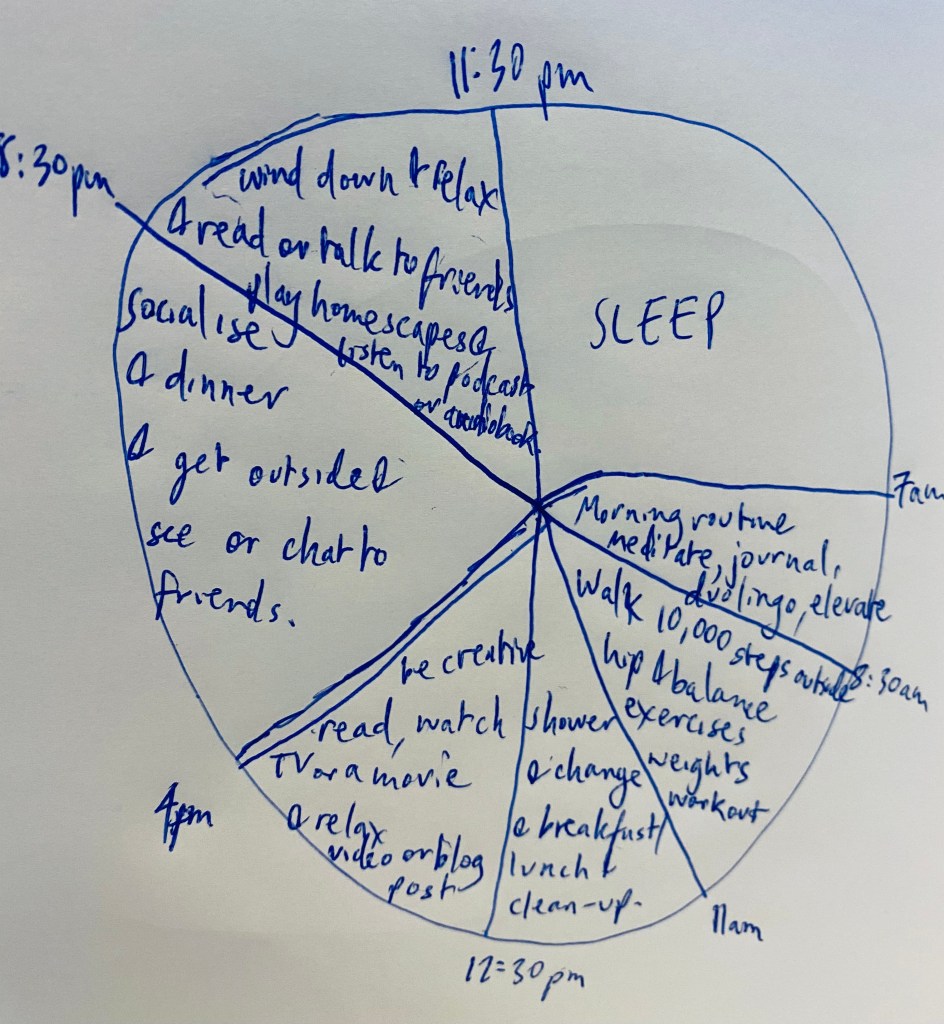
    I feel lighter to have all of these items gone. They are no longer hanging over my head or telling me that I shouldn’t be relaxing when I am. But I also feel a bit lost. Today, I have already done my morning meditation, journaling, Elevate brain training and Duolingo French language training. I then did my daily weight training, hips and balance exercises, and went outside and walked 10,000 steps. I shopped for the food I needed at the local supermarket, meal prepped for the next few days, and cleaned up my place.

    I then tried to relax and watch some TV and a movie, but both of these activities already felt boring. One of my friend’s said that he had clocked Netflix because of this pandemic. I haven’t, but the returns of these activities are definitely diminishing.

    My brain told me that I would feel amazing, no longer having anything that I needed to do. But I do not. So now, having just eaten half a salad and a tasty Magnum ice cream, I find myself here at the computer putting down my thoughts into words.

    Goals vs Values

    blue sea under blue sky
    Photo by Riccardo Bertolo on Pexels.com

    Exactly how I feel now is why I tell my clients not just to live their lives by their goals. Sure, having things to aim for is great. So is hitting these targets and crossing these items off our to-do lists. It gives us a nice little surge of dopamine and fires up the reward pathways in our brain when we achieve something. And our brains feel good for a temporary moment until we start searching for the next target to hit.

    But it is never-ending and generally always future-focused. We think, once I have achieved this, then I will be happy. But then we meet this goal, and our brain says, “great… what’s next?” We begin looking again to the future for the imaginary thing that will make us happy and satisfied forever once we achieve it.

    Unfortunately, the long-term rewards of this future goal are mostly a mirage. Our brains telling us that it will satisfy us forever helps us not give up pursuing the goal. However, once we have achieved it, the reward is fleeting and less satisfying than we imagined beforehand. This is because dopamine is more about desire than reward.

    Imagine if we were forever satisfied after achieving a goal. I doubt that our ancestors would have lasted long enough to reproduce. A slightly unsatisfied person, always craving for more and an ideal future that never comes. Those humans are the ones that will keep moving, growing, meeting and breeding. And now, here we are…

    Enjoying the Process vs Desiring a Future Outcome

    photo of mountain under cloudy sky
    Photo by Evgeny Tchebotarev on Pexels.com

    As I have already said, a goal is set for the future. You want to lose weight, buy a house, run a marathon, or climb Mount Everest. As an extension of this, you are saying that you lack something in the present when you set a goal. You are heavier than you want to be. You don’t have the house that you want to be in. You haven’t run the marathon this year, and you are yet to climb the tallest mountain in the world.

    Values are different to goals. Values are followed in the present. They are guiding principles for life. You are either living by them at the moment, or you are not.

    By clarifying why you want to achieve your specific goals, you can determine if you are living by these values in the present or not. Let’s take the first example. You might want to lose weight because you value looking attractive, but I want to lose weight because I value being healthy. I have lost weight through not eating much, not exercising and taking diet pills. The goal has been achieved, and if it was you, you might even live by your values. But I am not. Deep down, I would know that I am not healthy, and even if I have lost some weight, I would feel inconsistent rather than consistent with what is most important to me.

    You might want to climb Mount Everest because your husband is too and you value doing things together, whereas I am training for it because I value pushing myself to reach my potential. We both head off on the expedition, and we can’t climb beyond base camp because our guide says that the weather is too bad for the next few weeks. Because I am unable to live by my value, I feel disappointed and unhappy. Because you are still consistent with yours, you are happy and don’t mind getting to enjoy your downtime in Nepal with the love of your life.

    What Do You Want Your Legacy to Be?

    This question needs to be asked more often, in my opinion. I’m not too sure how many people could answer this clearly and succinctly. But if we aren’t clear on what principles or values are most important to us, how are we meant to decide if we are on the right path or not? How will we know if what we are doing is time well spent or just a waste of time?

    Epitaph On Your Gravestone
    monochrome photo of man walking in cemetery
    Photo by Brett Sayles on Pexels.com

    Imagine that you have lived your whole life and have recently died. Someone really close to you has decided to bury you, and they are deciding what will be written on your gravestone. What would you want them to write?

    If you aren’t sure what you would want your legacy to be about, this question can often help. Even though I would prefer to be cremated instead of buried, the main thought that pops into my head when I think of this exercise is:

    “Here lies Damon…He tried his best”

    Maybe that is cliched or lame, but it highlights that a core value in my life is around effort. I care much less about how much I manage to achieve in my life. I want to know that I gave things a proper go and put in the effort required. That I focused on the process of what I am doing, which is within my control, rather than the outcome, which is often outside of it.

    Your 80th Birthday Party

    If thinking about after your own death is too morbid an exercise for you, this thought experiment may be more appealing. Imagine that it is your 80th birthday party, and all of your closest family and friend’s are there to celebrate the life you have had so far. Someone close to you stands up and tells everyone in the crowd about the person you have been from now until your 80th birthday. What would you want to hear them say about you? I’d love to hear my partner’s daughter stand up and say:

    “Even though I wasn’t convinced about Damon initially, he’s turned out to be a pretty cool role model as a father figure for me. He’s consistently been there for me and tried his best to be emotionally supportive and understand me and what I was going through. Damon’s always wanted the best for me in life, and I could feel this. But he also didn’t care if I won things or where I came as long as I was willing to try and give new things a go. Damon was always willing to do things for me and be there when I needed him to help or listen. But he also didn’t do things for me if he knew that it would be better for me to give something a go and learn how to do it myself. Damon encouraged me to explore the world and not be held back by fear. He also offered a safe space with mum to come back to when I needed comfort, care and support. I’m glad that Damon came into my life, and I am happy about the person I am today partly because of the role that he has played. Above all, I feel loved for who I am by Damon, no matter what, and that is a pretty cool thing to have. So thank you, and happy 80th birthday!”

    Your answer to this question should help you clarify what values are most important to you or what you would like your legacy to be about. Based on the above passage, I want to be a good role model as a father, present, supportive, understanding, encouraging, helpful, loving and unconditional. Many people think of their legacy in terms of work, but is that really what you value most in this life?

    Are You Travelling in the Right Direction?

    green mountain
    Photo by Quang Nguyen Vinh on Pexels.com

    In her excellent post and subsequent book, Bronnie Ware shared her top five regrets of people who were dying. Having worked as a palliative care nurse for several years, Bronnie identified them as:

    1. I wish I’d had the courage to live a life true to myself, not the life others expected of me.
    2. I wish I hadn’t worked so hard
    3. I wish I’d had the courage to express my feelings.
    4. I wish I had stayed in touch with my friends
    5. I wish that I had let myself be happier.

    This list highlights that my life was imbalanced before I had my stroke in January. Because of the COVID-19 pandemic, I was separated from my partner and her daughter back in Vanuatu on March 20th, 2020. I could not see any of my friends or colleagues back there and did not say a proper goodbye to them. Thanks to the months of lockdowns in Melbourne, I could not do many things I enjoyed or see my friends and family here in Australia that I wanted to either. I was working too much for too long each day, spending too much time on my phone and watching TV, and wasn’t eating as healthily or being as active as I wanted to be.

    What about you?

    How Much of the Day Are You Spending in the Way that You Want?

    For this exercise, draw a pie chart of what a typical workday looks like for you and another pie chart for what a typical day off looks like. It doesn’t matter what time you go to bed or get out of bed or start and finish work, because the whole pie represents 24 hours.

    When you are drawing your two pie charts, think about:

    • How much time are you just in the moment vs trying to do things for a better future?
    • How much are you socialising and connecting with others, including family and friends?
    • How much time are you spending inside vs outside in nature?
    • How much are you dedicating towards being physically fit or exercising?
    • How much time are you resting, sleeping and relaxing?
    • How much are you dedicating towards doing creative or fun vs passive hobbies?
    • How much time are you working and doing tasks related to work?

    Above is an example pie chart that I drew up in less than five minutes, so it really doesn’t have to take a long time. For some people, their workdays and non-workdays are very similar. For others, their weekend’s are spent very differently. There are no right or wrong answers. The key is to draw down what is typical for you.

    Now that these pie charts have been drawn up, reflect and ask yourself:

    • Are there things that you would like to do more of?
    • Are there things that you would like to do less of?
    • What’s making it hard or stopping you from making these changes?

    Once you have identified what you want to change and why the most important thing is getting out there and starting. Behavioural change is hard, especially at the start. But as Zig Ziglar says, “no one just walks around and finds themselves atop Mount Everest“. If you try something new and get stuck, my next blog post will give you a few tips and tricks to overcome these barriers.

    The best thing about living by our values instead of just chasing after goals is that this can happen at any chosen moment. It doesn’t have to be New Years Day, and it doesn’t have to take a long time. I want to be more creative and present and connect more with those I care most about starting now. I don’t want work, focusing on the future or distractions on my phone or TV to get in the way.

    What about you?

    Dr Damon Ashworth

    Clinical Psychologist

  • 20 Fascinating Paradoxes About Life

    20 Fascinating Paradoxes About Life

    What is a Paradox?

    According to the Oxford dictionary, a paradox is a noun that has two meanings:

    1. A seemingly absurd or contradictory statement or proposition which when investigated may prove to be well founded or true.

    2. A person or thing that combines contradictory features or qualities.

    I love paradoxes because they are sometimes funny and usually also quite insightful. Listening to the audiobook version of the Tao Te Ching by Lao Tzu was like listening to one paradox after another. This was especially surprising to me because it is an ancient book of wisdom. So a great paradox is much more than just a cliche, even though it can appear like that over time.

    Below is a list of some of my favourites, starting with one from the Tao Te Ching:

    1. New beginnings are often disguised as painful endings” – Lao Tzu

    young game match kids

    2. “Who you are speaks so loudly I can’t hear what you’re saying.” – Ralph Waldo Emerson

    man wearing brown suit jacket mocking on white telephone

    3. “I’d rather be hated for who I am, than be loved for who I am not” – Kurt Cobain

    hi haters scrabble tiles on white surface

    4. “I refuse to join any club that would have me for a member.” – Groucho Marx

    black steel welcome hanging signage

    5. “You know what the issue is with this world? Everyone wants a magical solution to their problem, and everyone refuses to believe in magic.” – Alice in Wonderland

    woman holding teacup

    6. “I am the wisest man alive, for I know one thing, and that is that I know nothing.” – Socrates

    man wearing brown jacket and using grey laptop

    7. “Yesterday I was clever, so I wanted to change the world. Today I am wise, so I am changing myself.” – Rumi

    adventure cliff lookout people

    8. “We judge ourselves by our intentions and others by their behaviours.” – Stephen Covey

    man in blue crew neck shirt staring at woman trying to lift barbell

    9. “If you don’t risk anything you risk everything.” – Mark Zuckerberg

    action adventure challenge climb

    10. “The more we do, the more we can do; the more busy we are, the more leisure we have.” – William Hazlitt

    man and woman holding hands walking on seashore during sunrise

    11. “Only you can take responsibility for your happiness…but you can’t do it alone. It’s the great paradox of being human.” – Simon Sinek

    group hand fist bump

    12. “If you try to fail and succeed, which have you done?” – George Carlin

    man person street shoes

    13. “Seek freedom and become captive of your desires. Seek discipline and find your liberty.” – Frank Herbert

    red and blue hot air balloon floating on air on body of water during night time

    14. “Nowadays most people die of a sort of creeping common sense, and discover when it is too late that the only things one never regrets are one’s mistakes.” – Oscar Wilde

    active activity adventure backpack

    15. “Whatever you do will be insignificant, but it is very important that you do it.” ―Mahatma Gandhi

    man person mountain hiker

    16. “He who fears he shall suffer, already suffers what he fears.”― Michel de Montaigne

    close up photo of jack o lantern

    17. “A lot of people never use their initiative because no-one told them to.” – Banksy

    microphotography of orange and blue house miniature on brown snail s back

    18. “If someone doesn’t value evidence, what evidence are you going to provide to prove that they should value it? If someone doesn’t value logic, what logical argument could you provide to show the importance of logic?” ― Sam Harris

    battle black blur board game

    19. “Let go of certainty. The opposite isn’t uncertainty. It’s openness, curiosity and a willingness to embrace paradox, rather than choose up sides. The ultimate challenge is to accept ourselves exactly as we are, but never stop trying to learn and grow.” Tony Schwartz

    two men assisting woman riding on swing

    20. “If you don’t get what you want, you suffer; if you get what you don’t want, you suffer; even when you get exactly what you want, you still suffer because you can’t hold onto it forever. Your mind is your predicament. It wants to be free of change. Free of pain, free of the obligations of life and death. But change is law and no amount of pretending will alter that reality.” – Socrates

    bench cold dawn environment

    Dr Damon Ashworth

    Clinical Psychologist
  • The 10 Truths of Longevity

    The 10 Truths of Longevity

    The saddest aspect of life right now is that science gathers knowledge faster than society gathers wisdom.” — Isaac Asimov

    The Longevity Project

    Over 1,500 of the most promising and brightest boys and girls were recruited in 1921 by Lewis Terman. Unfortunately, he died in 1956, but the study continued for decades afterwards. All participants were born around 1910 and studied for 80 years or until they died. It was then possible to figure out who lived the longest and why.

    Although each child was potentially gifted, not all lived long and happy lives. Fortunately, analysis of this extensive data has taken place for over twenty years at The University of California in Riverside.

    The study’s significant findings are summarised in the 2011 book “The Longevity Project: Surprising Discoveries for Health and Long-Life from the Landmark Eight-Decade Study” by Howard Friedman and Leslie Martin. I listened to this audiobook recently and was quite surprised with some of its key results:

    1. Living honestly is essential.

    • “A key part of one of the healthy paths is called ‘The High Road.’ Such an individual has good friends, meaningful work and a happy, responsible marriage. The thoughtful planning and perseverance that such people invest in their careers and relationships promote long life naturally and automatically, even when challenges arise.”

    2. Please do NOT send your children to school earlier than their peers.

    • “Starting formal schooling at a very early age was not a great idea for most. Children need unstructured playtime, and they need to get along with their peers; starting young seemed to alienate them.”

    3. Illness is NOT random.

    • “Those that live longer are often healthier throughout their years and (managed to) avoid serious ailments altogether.”
    • “Those who are healthier tend to be happier, and those who are happier tend to be healthier.”
    • “It’s never too late to choose a healthier path. The first step is to throw away the lists and stop worrying about worrying.”
    • “Thinking of making changes as taking ‘steps’ is a grand strategy. You can’t change major things about yourself overnight. But making small changes, and repeating those steps, can eventually create that path to a longer life.”

    4. Good marriages lead to better health, especially for men.

    • “Marriage is only health-promoting for men who are well-suited to marriage and have a good marriage. For others, it is more complicated.”
    • “Women who stayed single, were widowed or got divorced often thrived more than women who were married to troublesome husbands.”
    • “Men who stayed divorced were at high risk for premature mortality.”

    5. Divorce during childhood predicts early death in adulthood.

    • “The strongest social predictor is parental divorce, as it often pushes the child into many unhealthy directions, including heavier drinking and smoking, less education, lower career achievements and a greater risk of later divorce themselves.”
    Photo by Vlad Sargu on Unsplash

    6. Follow the long-term recommendations that are right for you.

    • “The long-lived did not find the secret to health in broccoli, medical tests, vitamins or jogging. Rather they were individuals with certain constellations of habits and patterns of living. Their personalities, career trajectories and social lives proved highly relevant to their long-term health, often in ways we did not expect.”
    • “You need to make changes that will be sustainable in the long term. We say, if you don’t like jogging, don’t jog! Instead, begin doing things that you enjoy and can keep up, like a walk at lunchtime with a friend or vigorous gardening.”
    • “The usual piecemeal suggestions of relax, eat vegetables, lose weight and get married are lifesaving for some, but neither effective nor economical for many.”
    • “Some of the minutiae of what people think will help us lead long, healthy lives, such as worrying about the ratio of omega-6 to omega-3 fatty acids in the foods we eat, actually are red herrings, distracting us from the major pathways. When we recognise our long-term healthy and unhealthy patterns, we can begin to maximise the healthy patterns.”

    7. Conscientiousness is the most critical personality factor for longevity.

    • “Conscientiousness is very important. Unconscientious boys, even bright ones, are more likely to grow up to have poor marriages, smoke more, drink more, achieve less education, be relatively unsuccessful at work, and die younger.”
    • “Conscientious people stay healthier and live longer for three reasons:
    1. First, they do more things to protect their health.
    2. Secondly, they are biologically predisposed to be healthier, and
    3. Lastly, they end up in more beneficial situations and relationships.”

    8. Working hard can be helpful for you.

    • “Those who worked the hardest often lived the longest…especially if they were involved in meaningful careers and were dedicated to things and people beyond themselves.”
    • “It was clear that working hard to overcome adversity or biting off more than you can chew — and then chewing it — does not generally pose a health risk. Striving to accomplish your goals, setting new aims when milestones are reached, and staying engaged and productive is what those heading to a long life tend to do. The long-lived didn’t shy away from hard work; the opposite seemed true.”

    9. Resilience is protective for health.

    • “Depending on the circumstances, a traumatic event such as parental divorce could contribute to a longer life if the child learned to be resilient.”
    • “Resilience is important, and can be achieved via a sense of personal accomplishment, the strength of character and maturity.”
    • “Combat veterans are less likely to live long lives, but surprisingly the psychological stress of war itself is not necessarily a major health threat. Rather, it is a cascade of unhealthy patterns that sometimes follows. Those who find meaning in a traumatic experience and can reestablish a sense of security about the world usually return to a healthy pathway.”

    10. Human connection is essential.

    • “Having pets can improve well-being, but they do not help people live longer and are not a substitute for friends.”
    • “People who feel loved and cared for report a better sense of well-being.”
    • “The clearest health benefit of social relationships comes from being involved with and helping others.”
    • “It is important to be well-integrated into your community.”
    • “Connecting with and helping others is more important than obsessing over a rigorous exercise program.”
    • “The groups you associate with often determine the type of person you become — healthy or unhealthy.”
  • Harvard University studied 700 People’s Health and Happiness from their Teen Years Until They Died

    Harvard University studied 700 People’s Health and Happiness from their Teen Years Until They Died

    Here Are 10 Fascinating Findings from the Study

    The Harvard Study of Adult Development began in 1938. It is sometimes also called ‘The Grant Study’.

    This longitudinal prospective study aimed to identify predictors of healthy ageing in real-time.

    For 79 years, it has examined the lives of 268 physically and mentally healthy Harvard college sophomores from 1939–1944 until their death, including eventual US President John F. Kennedy. It has also incorporated many of their offspring and 456 disadvantaged inner-city youths who grew up in Boston between 1940 to 1945.

    Earlier this year, I listened to the 2012 audiobook by George Vaillant, titled “Triumphs of Experience.” He was the previous director of the study.

    The primary research findings include:

    1. “Alcoholism is a disorder of great destructive power.”

    • Alcoholism precedes marital difficulties and is the leading cause of divorce, with 57% of divorces traced to alcoholism.
    • Alcoholism can also lead to the later development of depression and neurosis.
    • Alcoholism is the most significant predictor of early death alongside cigarette smoking.

    2. “Above a certain level, intelligence doesn’t matter.”

    • There is no significant difference in income earned by men with an IQ of 110–115 compared to men with an IQ higher than 150.

    3. “Ageing liberals have more sex.”

    • While political ideology has no significant impact on life satisfaction overall, most liberal men continue to have an active sex life into their 80s. In contrast, conservative men are likelier to cease having sex by 68.

    4. “For good or ill, the effects of childhood last.”

    • A warm childhood relationship with the mother predicts greater financial earnings later in life ($87,000 more than males who had uncaring mothers), greater effectiveness at work later in life, and a three times lower risk of dementia in old age.
    • A warm childhood relationship with the father predicts lower rates of anxiety and pessimism during adulthood, increased life satisfaction later in life, reduced difficulties in letting others get close and greater enjoyment of vacations throughout life.

    5. “It is not one thing for good or ill — social advantage, abusive parents, physical weakness — that determines how children adapt to life, but the quality of their total experience.”

    • It means that what goes right during childhood matters much more than what goes wrong.
    • If bad things happen, as long as they are outweighed by the good, you are likely to still turn out okay.
    • “Bleak childhoods were not always associated with bleak marriages.”
    • “Restorative marriages and maturing [psychological] defences” are “the soil out of which resilience and post-traumatic growth emerge.”

    6. “People really can change, and people really can grow. So childhood need be neither destiny nor doom.”

    7. “Even the death of a parent was relatively unimportant by the time the men were fifty. By age eighty, men who had lost parents when young were as mentally and physically healthy as men whose parents had lovingly watched them graduate from high school.

    8. “Prudence, forethought, willpower, and perseverance in junior high school were the best predictors of vocational success at age fifty.”

    9. “All fifty-five Best Outcomes had gotten married relatively early and stayed married for most of their adult lives. Proportionately three times as many of the Best Adjusted men enjoyed lifelong happy marriages as the Worst.”

    • The effect of marriage was even starker for the inner-city men of the Glueck Study: “two-thirds of the never-married were in the bottom fifth in overall social relations, 57% were in the bottom fifth in income, and the study raters classified 71% as mentally ill.”
    • “It turned out that happy marriages after eighty were not associated either with warm childhoods or mature defences in early adulthood — that is, you don’t have to start ‘all grown up’ to end up solidly married.”

    10. “It was the capacity for intimate relationships that predicted flourishing in all aspects of these men’s lives.” In other words, “Happiness is love. Full stop.”

    • Spouses’ mutual dependence on each other was associated with happy and healthy marriages. For example, 76% of the men still alive at age eighty-five said their marriages were happy.
    • “Most of the men who flourished found love before thirty, and that was why they flourished.”

    See the latest director of the study Robert Waldinger talk about the key findings from the Harvard Study of Adult Development for more information. His TED talk has millions of views:

    I hope you find these highly significant findings as fascinating as I do.

    They also give us scientifically supported indicators of what to do if you want to live a happy, healthy, and long life.

    Dr Damon Ashworth

    Clinical Psychologist

  • Three Steps to an Improved Life

    Three Steps to an Improved Life

    It is possible to understand who you are and what you want in only three steps.

    STEP ONE: Who am I?

    To know what we want, we first need to figure out who we are (or, more accurately, what we see ourselves to be).

    STEP TWO: What do I care about?

    Once we know who we are, we must figure out what is important or meaningful to us (and what isn’t).

    STEP THREE: How do I show that I care about these things?

    We then need to figure out what actions to take and what systems or habits we can develop to help us live consistently by these values.

    STEP ONE: Who Am I?

    Our identity, or who we see ourselves as consists of many things. 

    It may include our name, family, nationality, ethnicity, or racial background. It could also have our culture, our class, our friends, our relationship status, our sexuality, our gender, or our religious beliefs. Finally, it could have where we live, work, what we do for work, our interests and hobbies, and what we like to do for fun or relaxation. Most people can answer these descriptive questions about themselves quickly.

    Different factors can shape the overall identity of one person much more than they do for others. For example, a cisgender straight white male may not consider that his gender, race, sexuality or culture play a significant role in his identity. However, these factors could be huge for someone who is non-gender conforming or sexually fluid. It could also be substantial for people from a minority cultural or religious group in their country who have suffered stigma or discrimination.

    1a. Write down a descriptive answer to the question “Who am I?”

    What is your name?  ________________________________________________________

    How many siblings do you have?  ____________________________________________

    Are they older or younger than you? __________________________________________

    Are your parents still together or married?  _____________________________________

    What did they do for work? __________________________________________________

    Has anyone important to you died?   __________________________________________

    Where were you born?  _____________________________________________________

    What country are you a citizen of?  ____________________________________________

    What is your ethnicity?  _____________________________________________________

    Where do you live?  ________________________________________________________

    What do you do for work? ___________________________________________________

    What is your sexuality? _____________________________________________________

    Are you in an intimate relationship?  __________________________________________

    Do you have any children?  __________________________________________________

    Are you religious? __________________________________________________________

    What are your hobbies?  ____________________________________________________

    What do you like to do in your leisure time?  ____________________________________

    MY DESCRIPTIVE PROFILE:

    I’m Damon Ashworth. I’m the middle child in my family, with an older brother and a younger sister. My parents are still happily married, and we all get along well. I am a dual citizen of Australia and the United States of America. Still, I have spent most of my life in Melbourne, Australia. I am of Caucasian descent. My parents were both teachers, making me from the middle class. My friends are predominantly from Melbourne, but I’ve made some friends in the US when I went to school there for two years and some good friends since moving to Vanuatu. I am currently volunteering in Vanuatu as a Clinical Psychologist with the Ministry of Health and at the Vila Central Hospital. I identify as a straight male and am in a happy monogamous relationship with my partner. She has a fantastic daughter. I have been baptized as a Christian but do not attend religious services. I love reading non-fiction books, listening to podcasts, playing fantasy basketball and watching NBA, and writing and making music and movies. I love hip-hop and laid-back music, horror and comedy movies, and watching live theatre shows and stand-up comedy. I also love to be active, get outside, visit new places on holidays, and travel and snow ski when I can afford it.

    1b. Take a personality test to help answer the question “Who am I?”

    No matter what is essential to you, everyone needs to construct a cohesive narrative or story about who they are. If you are getting stuck in describing your personality, many tests can help you. I believe the five-factor personality model is probably the best personality test for the average person to understand themselves better. You can complete either the short-form 120-question IPIP-NEO or the long-form 300-question version for free online.

    An individual’s scores on Extroversion, Agreeableness, Conscientiousness, Neuroticism and Openness to Experience are reasonably consistent across their lives. So, knowing where you sit on the spectrum of each of these facets helps you get to know yourself better. It can also help you work with who you are rather than against yourself when designing your Deliberately Better Health plan.

    Take the IPIP-NEO. Then write down your percentile scores for each of the five factors.

    What are your different personality factor scores?

    Extraversion:  _____________________________________________________________

    Scores above the 60th percentile indicate that you are more extroverted than introverted. It means you are above average in friendliness, cheerfulness, excitement seeking and activity level. In addition, you are above average in speaking up when needed and enjoy being in large groups and crowds. Extroverts love being around other people and expressing their feelings and whatever is on their minds. They also tend to feel more energized when socializing and enjoy living a fast-paced life.

    Scores between the 40th and the 60th percentile indicate that you are an ambivert. That means you identify more with extroverts with some of your traits and more with introverts with other characteristics.

    Scores below the 40th percentile indicate that you are more introverted than extroverted. Introverts prefer to spend more time doing quiet or solitary activities and recharge their energy more when alone than with others. When they are in a group, they may talk less and listen more.

    Agreeableness: ____________________________________________________________

    Scores above the 60th percentile indicate that you are more agreeable than disagreeable. In addition, you are likely higher than average on trust, straightforwardness, cooperation, altruism, modesty and sympathy.

    Scores between the 40th and the 60th percentile indicate that your agreeableness is average. You might identify more with highly agreeable people in some ways and with disagreeable people in others.

    Scores below the 40th percentile indicate that you are more disagreeable than agreeable. You are probably higher than average on distrusting people and keeping your cards close to your chest in discussions with others. On the other hand, you are less likely than average to comply with other people’s wishes, feel bad for those less fortunate, enjoy helping others and be humble in discussions with others.

    Conscientiousness: ________________________________________________________

    Scores above the 60th percentile indicate that you are high in conscientiousness and are efficient and organized. You believe in yourself, like to have things in order, and stick to your promises. You try your best to achieve something, are self-disciplined, and think through the consequences of your actions before deciding what to do.

    Scores between the 40th and the 60th percentile indicate that your conscientiousness is average. You might identify more with highly conscientious people in some ways and with people low in conscientiousness in others.

    Scores below the 40th percentile indicate that you are low in conscientiousness and may be extravagant and careless or lack direction in your tasks or life. You are more likely to struggle with your belief in your ability to achieve things, follow through on your obligations or promises, and keep things neat and organized. You are also unlikely to strive towards attaining things or have the discipline to follow through on the tasks that you want to do. Lastly, you tend not to deliberate on things too much before acting and may be careless.

    Neuroticism:  ______________________________________________________________

    Scores above the 60th percentile indicate you are high in neuroticism. You experience more negative emotions than the average person, including depression, anxiety, and anger. You are more likely to feel self-conscious, struggle to moderate your behaviours, and feel vulnerable when overwhelmed.

    Scores between the 40th and the 60th percentile indicate that your neuroticism is average. You might experience some negative emotions intensely while experiencing other negative emotions less often or less intensely.

    Scores below the 40th percentile indicate that you have high emotional stability. You experience low anxiety, anger, depression, self-consciousness, immoderation, and vulnerability.

    Openness to experience: ____________________________________________________

    Scores above the 60th percentile indicate that you are highly open to experience. You are more likely to be higher than the average person in imagination, artistic interest, liberalism and intellect. You are aware of your emotions and others and enjoy being adventurous.

    Scores between the 40th and the 60th percentile indicate that your openness to experience is average. You might identify more with highly open people in some ways and with less open people in others.

    Scores below the 40th percentile indicate that your openness to experience is low. For example, you are less likely than the average person to escape to fantasy, be interested in art, or be aware of your emotions and others. You are also less likely to enjoy discussing abstract ideas and concepts, and more likely to support conservative and traditional views. Lastly, your desire for adventure is lower than average.

    MY PERSONALITY FACTOR SCORES:

    • Openness to Experience: 95th percentile
    • Agreeableness: 90th percentile
    • Extroversion: 74th percentile
    • Conscientiousness: 74th percentile
    • Neuroticism: 13th percentile

    What are your top personality facets?

    Are there any facets in which you are very high (90th to 99th percentile)? These facets likely represent your personality, regardless of your overall factor scores.

    Your top 5 facet scores:

    1. ____________________________________________________________________
    2. ____________________________________________________________________
    3. ____________________________________________________________________
    4. ____________________________________________________________________
    5. ____________________________________________________________________

    MY TOP PERSONALITY FACETS:

    • Cooperation: 99th percentile
    • Liberalism: 97th percentile
    • Adventurousness: 95th percentile
    • Emotionality: 90th percentile
    • Altruism: 90th percentile
    • Trust: 90th percentile
    • Activity Level: 90th percentile

    What is your personality profile?

    Try putting all of this together to make up a personality profile about yourself, based on your factor scores and your top facets. I have done this for myself below.

    Your personality profile: ____________________________________________________________________________________________________________________________________________________________________________

    MY PERSONALITY PROFILE:

    I am highly open to various experiences, including cultural, intellectual, emotional, and physical. I am highly agreeable and tend to do whatever it takes to have positive relationships with others. I will always try to co-operate with others if I can. I like to challenge convention and try to help bring about progressive change. I prefer a lot of variety and want to go on adventures. I am highly attuned to my emotions and the emotions of others around me and try to remain open to whatever I am feeling. I enjoy helping others when they need it. I trust others easily and believe that most people are generally good and do not harm others. I have lived a pretty fast-paced life and care about being efficient and effective. I love to have in-depth discussions with others and enjoy playing with ideas and reflecting on essential aspects of life through meditative practices and my writing.

    STEP TWO: What Do I Care About?

    Finding out what you care about is through the process of clarifying your values. Values are guiding principles in life that we cannot achieve like a goal but choose to live by each day. For example, someone who values honesty does not live consistently with what matters to them when they tell a lie but is consistent as soon as they return to telling the truth. By clarifying which values are most important, we can know when we have gone off track and what to do to get back on.

    2a. Engage in thought experiments to elucidate what values are most important to you

    An interesting experiential method to help patients identify their top value is writing the epitaph they want on their gravestone. For this, they would write what they hoped would be said about them if they were to die after a long and good life.

    What would your epitaph say?

    Here lies __________________________________________________________________

    MY EPITAPH: Here lies Damon. He tried his best.

    It tells me that one of my core values is applying myself to be the best I can be. Of course, not the best person overall, as this is an outcome I can’t control. But, I want to know that I have applied myself and put in the effort required to give me the best chance that I can have for success.

    If writing your epitaph seems too dark or morbid, try to imagine your birthday party at least 20 years later (I choose my 70th birthday). All of your closest friends and family are there. An important person in your life gets up and makes a speech about the type of person you have been from today until then (over the past 20+ years). 

    What do you want to hear them say? 

    __________________________________________________________________________________________________________________________________________________________________________________

    It can be a powerful exercise that helps people realize the type of person they most want to be, both to themselves and others.

    WHAT I WISH MY PARTNER’S DAUGHTER WOULD SAY ON MY 70TH BIRTHDAY:

    I wasn’t so sold on Damon when I first met him. He seemed tall, friendly, pleasant, and good at sport. However, I also really enjoyed it being mum and me for the six years before we met. But the more I got to know him, the more I realized he wasn’t so bad and that there could be a few positives for me about having him around. Firstly, he helped to calm down mum when she was upset about something. He also seemed to care about her and me, making mum happy. He also tried to help me understand what I was going through whenever I was upset and made me feel loved and appreciated for who I was. He didn’t seem to want anything from me except for what I thought would be in my best interest in the long term. We also had fun doing things together, including daily walks with our dog Serahfina, playing games, rock climbing, watching movies and swimming as a family. I also loved the fantastic trips that we went on as a family.

    2b. Take a strengths survey to identify your key strengths or values that you put into action

    If none of the above activities interests you or help to highlight your core values, the Values in Action (VIA) Character Strengths Survey can. It ranks your strengths from 24th to 1st and is quite valuable for elucidating what you may want your guiding principles in life to be. You can complete it for free online at www.characterstrengths.org.

    Your key strengths:

    1. ______________________________________________________________
    2. ______________________________________________________________
    3. ______________________________________________________________
    4. ______________________________________________________________
    5. ______________________________________________________________

    MY KEY STRENGTHS:

    Based on my 2018 findings, my top five strengths were as follows:

    1. Love of learning
    2. Curiosity and interest in the world
    3. Kindness and generosity
    4. Humour and playfulness
    5. Judgment, critical thinking, and open-mindedness

    If you want to explore the results further, you can see which virtues are the highest for you. For me, wisdom was my highest virtue, with an average score of 6.2 for these items. The next highest was humanity, with an average score for these items of 8.33. Justice and transcendence were not virtues that were strengths of mine, with average scores of over 13.

    You can answer the following question by combining your strengths and virtues. My response to this question is also provided as an example below.

    What do you care about?

    ____________________________________________________________________________________________________________________________________________________________________________

    WHAT I CARE ABOUT:

    I care about not jumping to conclusions and looking at the evidence from multiple perspectives before deciding the best thing to do. I care about being able to say that I am sorry and that I was wrong or being open to changing my mind if there is enough evidence about something. I care about being playful, having fun, laughing, or smiling with others. I care about being generous and kind to others and giving them my time, help, and undivided attention if possible. I care about learning new things and developing my knowledge and skills in various subjects and topics. I care about maintaining my curiosity and awe, growing as a person and gaining wisdom. Finally, I like to use what I have learned to help humanity where possible —both individually and on a larger scale.

    STEP THREE: How do I show that I care about these things?

    Finally, we must assess if we live consistently with our core values or key strengths. In other words, how much are you currently being the person you want to be, and what changes can you make to move in the right direction from now on?

    3a. Do the Bullseye Exercise to assess where you are at and what is most important to you

    The Bullseye exercise, first created by Swedish ACT Therapist Tobias Lundgren, is the best way to determine if you live consistently with your values. It helps you specify this in four critical areas of your life:

    1. school or work,
    2. leisure or recreation,
    3. personal growth or health, and
    4. relationships (including an intimate relationship if you have one as well as with your friends and family).

    First, determine which areas you prioritize in your life at the moment. Is work most important? Or your health? Or your relationships? Or how you spend your spare time? Once you know how you would rank them, from first to fourth, write them down.

    Your priorities:

    1. ____________________________________________________________________
    2. ____________________________________________________________________
    3. ____________________________________________________________________
    4. ____________________________________________________________________

    MY PRIORITIES:

    1. Personal growth and health
    2. Relationships
    3. Leisure and recreation
    4. School and work

    Keep your core values or key strengths in mind. Then, from 0 to 100%, say how consistently you have lived by your values in each area of your life. Place an X in the circle or a percentage for where you think you have been over the last month. 100% = a bullseye and 0% = outside the last circle. You can download a complete worksheet for free online if you want to complete it. You can also write down the percentages below.

    How consistent have you been living with your values in this area of your life?

    Consistency with your personal growth and health values: _____________________________

    Consistency with your values in your most important relationships: ____________________

    Consistency with your leisure and recreation values: ___________________________________

    Consistency with your values in work and education: __________________________________

    CONSISTENCY WITH MY VALUES IN EACH AREA OF MY LIFE:

    1. Personal growth and health = 60%
    2. Relationships = 75%
    3. Leisure and recreation = 70%
    4. School and work = 80%

    Unfortunately, I am living more consistently with how I want to be when it comes to my work than in all other areas of my life. At the moment, I want to prioritize my health the most, and yet it feels like I am not living my life as healthily as I would like to. I want to exercise more, eat more fresh and less processed food, and maintain daily healthy habits.

    Health was my top priority, yet my lowest score on the bullseye. It highlights how living more consistently with my health values could help me improve my overall well-being and life satisfaction.

    What about you? What did your bullseye reveal that you were previously unaware of? Is improving your health the number one priority in your life, or are there other things you would prefer to put time and effort into improving?

    3b. Set up sustainable systems or goals to help you live more consistently with your core values and strengths in each vital area of your life.

    Once you have identified where you stand on each quadrant of the bullseye, ask yourself what you can do over the next 1–2 weeks (short-term), following 1–3 months (medium-term) or next 6–18 months (long-term). You want goals that help you live more consistently with your core values or key strengths. It could be new targets for studying, working, eating, relaxing, socializing, exercising, or sleeping.

    Setting Your Targets

    It helps to rank the aspects of your life that you most want to improve. Write down your top 5 targets for improvement. Place this list somewhere easily accessible and where you are unlikely to lose or forget about it. If you only have two or three aspects you want to improve, you don’t need to write down five. The less you have, the easier it will be to assess, track and improve when you start trying to develop and implement a plan.

    Your Top Five Targets for Improvement:

    1. _____________________________________________________________________

    2. _____________________________________________________________________

    3. _____________________________________________________________________

    4. _____________________________________________________________________

    5. _____________________________________________________________________

    MY TOP FIVE HEALTH TARGETS THAT I WOULD LIKE TO IMPROVE:

    1. My stamina and being able to have enough energy to live the life I want
    2. Healthy muscle mass and body fat percentages in comparison to my overall weight
    3. A more nutritious diet with less processed and junk food
    4. Better work/life balance
    5. Increased relationship satisfaction with my partner, her daughter, my friends and my family

    As you achieve your goals or implement your systems, you show yourself and others that you know who you are and what is important to you. As a result, you will begin to feel that you are heading in the right direction towards a healthier, more personally meaningful and satisfying life.

    Dr Damon Ashworth

    Clinical Psychologist