This is part seven in my ten part series of the top 100 non-fiction books that I have read recently. The majority of these books have a psychology focus, but not all of them do.
The consistent theme across these ten books is asking the reader to challenge preconceived notions. They encourage readers to question ideas they already have, or provides new ways or frameworks to think about well-known topics.
We can impact our lives in several ways. We can change our expectations. We can better understand ourselves, our brains, or how the world works. We can look at the best solutions rather than those that merely help us feel good. We can also know when to walk away and focus on what is in our control.
For earlier posts in this countdown: 100 to 91, 90 to 81, 80 to 71, 70 to 61, 60 to 51, and 50 to 41.
Here are books 40 to 31…
40. The Expectation Effect: How Your Mindset Can Change Your World by David Robson
Goodreads.com star rating = 4.16/5

Robson reveals the extraordinary power of expectations to shape our experiences and outcomes. From placebo effects in medicine to stereotype threat in performance, what we expect often becomes reality through self-fulfilling prophecies. They alter brain chemistry and neural pathways.
What makes it special: This book connects neuroscience, psychology, and practical application. It shows how expectations influence everything from physical healing to relationship dynamics. It provides a scientific foundation for the power of positive thinking without New Age mysticism.
Perfect for: Individuals seeking personal growth, better health, or improved performance. It’s ideal for educators and therapists wanting to leverage mindset in practice. It’s also suitable for anyone interested in the science of belief, placebo effects, and psychology.
Key takeaway: You can consciously change your expectations through awareness of limiting beliefs, visualization, and positive self-talk. Cultural narratives also shape individual outcomes, making collective expectation management important.
39. Misbehaving: The Making of Behavioural Economics by Richard H. Thaler
Goodreads.com star rating = 4.16/5
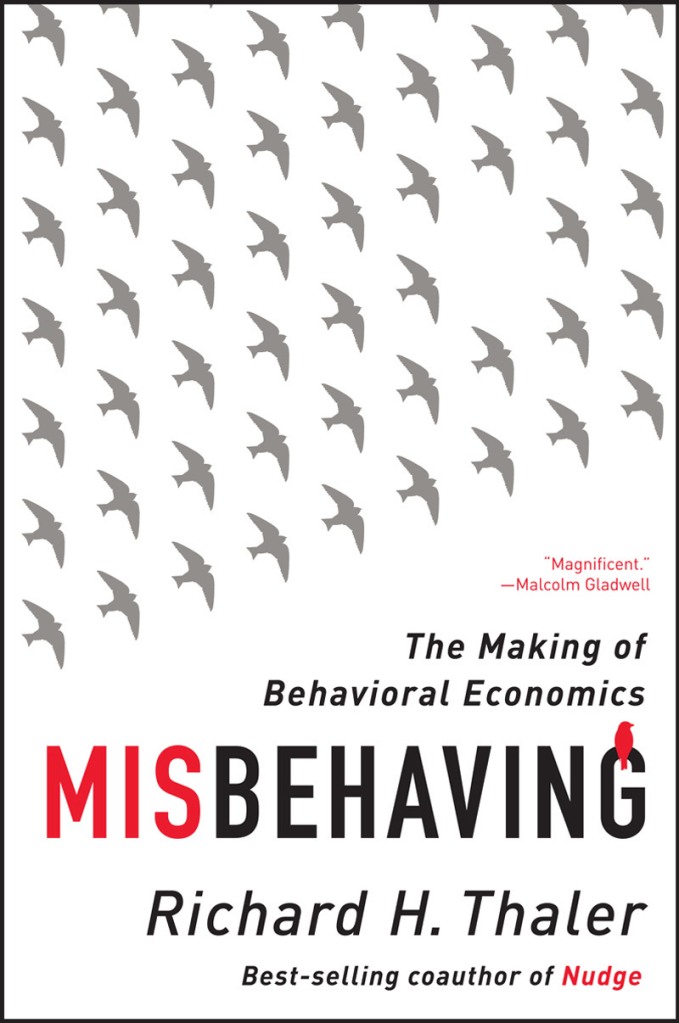
Nobel laureate Thaler chronicles how behavioural economics challenged traditional economic models by showing that humans are predictably irrational. We engage in mental accounting, succumb to loss aversion, and can be “nudged” toward better decisions through smart choice architecture.
What makes it special: This is an insider’s account of how a field was born, told by one of its founders. Thaler combines rigorous science with engaging storytelling, showing how understanding irrationality can improve policy, business, and personal decisions.
Perfect for: Economists, policymakers, marketers, and anyone curious about why people make “irrational” decisions. It’s also ideal for readers interested in psychology, decision-making, and practical applications of behavioural science.
Key takeaway: Small changes in how choices are presented can dramatically improve outcomes without restricting freedom. Understanding biases like loss aversion and present bias helps you make better personal and professional decisions.
38. 21 Lessons for the 21st Century by Yuval Noah Harari
Goodreads.com star rating = 4.16/5

Harari examines the most pressing challenges of our time. Artificial intelligence is reshaping work. Fake news is threatening democracy. Nationalism conflicts with globalism. We need new forms of education and meaning-making in an age of unprecedented change.
What makes it special: Harari combines historical perspective with cutting-edge analysis of current trends. He offers both big-picture thinking and practical guidance. He doesn’t just diagnose problems, but explores what individuals and societies can do about them.
Perfect for: Readers interested in current affairs, technology, philosophy, and global trends. It is also suitable for leaders, educators, and citizens who are navigating the 21st century’s complexities. Fans of Harari’s earlier works (Sapiens, Homo Deus) will enjoy this as well.
Key takeaway: The pace of change is unprecedented, making critical thinking, adaptability, and lifelong learning essential skills. Education must shift from teaching facts to teaching how to learn, unlearn, and think critically.
37. False Alarm: How Climate Change Panic Costs Us Trillions, Hurts the Poor, and Fails to Fix the Planet by Bjorn Lomborg
Goodreads.com star rating = 4.17/5

Lomborg argues that while climate change is real and serious, panic-driven policies are often costly and ineffective. He advocates for pragmatic solutions focused on innovation, adaptation, and cost-benefit analysis. He believes in choosing these methods over alarmism, which can hurt the world’s poorest populations.
What makes it special: This book challenges climate orthodoxy with data-driven analysis, advocating for evidence-based policy over emotional responses. Lomborg brings an economist’s perspective to environmental issues, prioritizing human welfare alongside planetary health.
Perfect for: Policymakers, environmentalists, economists, and concerned citizens. It is also ideal for readers interested in climate science, policy, and economics.
Key takeaway: Innovation and adaptation are more effective than panic-driven policies. Focus resources on cost-effective solutions that provide the greatest global benefit while avoiding measures that primarily harm the poor.
36. Deep Work: Rules for Focused Success in a Distracted World by Cal Newport
Goodreads.com star rating = 4.17/5
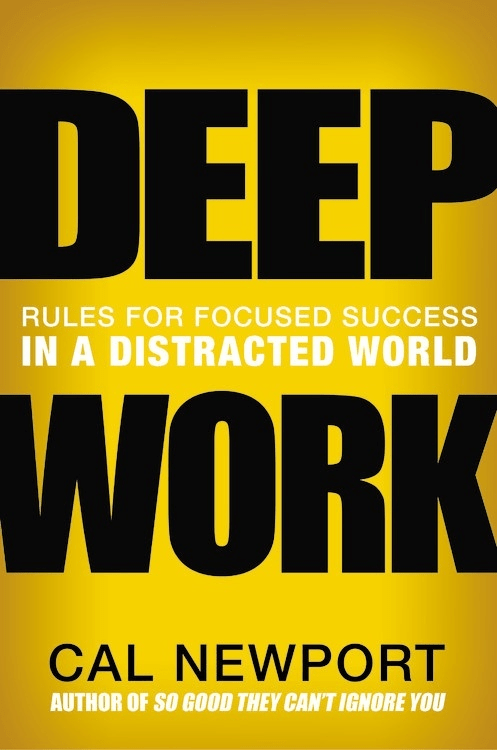
Newport distinguishes between “deep work” (cognitively demanding activities performed in focused concentration) and “shallow work” (logistical tasks done while distracted). In our hyper-connected world, the ability to focus deeply has become both rare and valuable.
What makes it special: This book offers a comprehensive philosophy. It also provides a practical system for reclaiming focus in the age of distraction. Newport combines research with actionable strategies, showing how deep work creates disproportionate value and personal satisfaction.
Perfect for: Knowledge workers, creatives, students, and professionals aiming to maximise productivity. It is also ideal for anyone overwhelmed by distractions looking for practical strategies to regain focus.
Key takeaway: Create rituals and environments that support deep work. Embrace boredom to train focus. Quit or dramatically reduce social media use. Schedule every minute of your day to minimise shallow work.
35. Thinking, Fast and Slow by Daniel Kahneman
Goodreads.com star rating = 4.17

Kahneman reveals how our minds function through two systems: System 1 (fast, automatic, intuitive) and System 2 (slow, deliberate, rational). Understanding these systems and their biases—from loss aversion to overconfidence—can dramatically improve decision-making.
What makes it special: This Nobel Prize winner’s masterwork synthesizes decades of groundbreaking research in behavioral psychology and economics. It fundamentally changes how you understand human judgment and decision-making.
Perfect for: Anyone interested in psychology, behavioural economics, or decision-making. It is also suitable for those wanting to improve their critical thinking. Professionals in business, finance, policy, and personal development could also benefit.
Key takeaway: Most decisions are made by the fast, biased System 1. Engaging the slow, deliberate System 2 through reflection and awareness can help detect and correct systematic errors in thinking.
34. Mating in Captivity: Reconciling the Erotic and the Domestic by Esther Perel
Goodreads.com star rating = 4.17/5

Perel explores the central paradox of modern relationships. We seek both security and excitement from the same person. However, these needs often conflict. She shows how couples can maintain desire and eroticism within the safety of committed relationships.
What makes it special: Perel brings a sophisticated perspective to sexuality and relationships. She offers a culturally informed view and challenges conventional wisdom about love and desire. Her approach is both deeply psychological and refreshingly practical.
Perfect for: Couples who are struggling with desire and intimacy in long-term relationships. It is also ideal for therapists, counsellors, and sex educators. Additionally, it is suitable for anyone interested in understanding the complexities of love, desire, and connection.
Key takeaway: Desire requires mystery, autonomy, and separateness—qualities that security tends to erode. Couples can cultivate erotic intelligence through maintaining individuality, exploring fantasies, and communicating desires without shame.
33. Quit: The Power of Knowing When to Walk Away by Annie Duke
Goodreads.com star rating = 4.17/5

Duke challenges the cultural myth that persistence is always virtuous. She shows that strategic quitting can save resources. It can also open better opportunities. She provides frameworks for making rational quit-or-continue decisions based on evidence rather than emotion.
What makes it special: This book tackles one of the most difficult aspects of decision-making. It focuses on knowing when to give up. It does so with the poker player’s analytical precision. Duke combines decision science with practical tools for overcoming the sunk-cost fallacy and social pressure.
Perfect for: Entrepreneurs, professionals, and creatives who face tough decisions. It suits anyone struggling with perfectionism, over-commitment, or indecision. It is also ideal for leaders seeking to foster adaptive decision-making.
Key takeaway: Set clear, measurable criteria for success and failure before starting projects. Regularly reassess based on new evidence, and create cultures that support “good quits” rather than blind persistence.
32. Exercised: Why Something We Never Evolved to Do Is Healthy and Rewarding by Daniel Lieberman
Goodreads.com star rating = 4.18/5
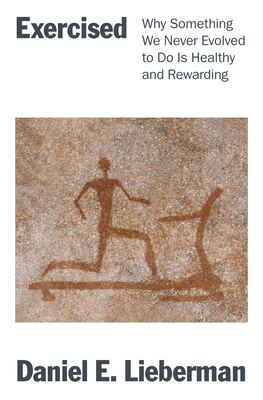
Lieberman explains why formal exercise feels unnatural. We evolved for varied movement, not repetitive workouts. He demonstrates why exercise is still essential for modern health though. He explores how to make physical activity more enjoyable and sustainable by aligning it with our evolutionary heritage.
What makes it special: This book bridges evolutionary biology, exercise science, and practical fitness advice. It explains both why we resist exercise and how to overcome that resistance. Lieberman debunks fitness myths while providing science-based guidance.
Perfect for: Anyone interested in health, fitness, and human evolution. It’s also suitable for health professionals, trainers, and policymakers. This is ideal for people seeking motivation and science-based insights on exercise.
Key takeaway: Humans evolved for varied, purposeful movement, not formal exercise. Make physical activity more sustainable by focusing on variety, enjoyment, social connection, and movements that mimic natural human activities.
31. The Inner Game of Tennis: The Classic Guide to the Mental Side of Peak Performance by Timothy Gallwey and Pete Carroll
Goodreads.com star rating = 4.18/5

Gallwey introduces the concept of Self 1 (the judgmental, controlling conscious mind) and Self 2 (the natural, capable subconscious). Peak performance occurs when Self 1 quiets down and trusts Self 2 to perform without interference.
What makes it special: Though ostensibly about tennis, this book revolutionized thinking about performance psychology across all domains. Its principles apply to any skill-based activity, from sports to music to business presentations.
Perfect for: Athletes, performers, and anyone seeking peak mental and physical performance. It is also ideal for people struggling with performance anxiety, self-doubt, or overthinking. Coaches and educators interested in the psychology of learning and mastery will find it valuable too.
Key takeaway: Stop trying to control every aspect of performance and instead develop non-judgmental awareness. Trust your body’s natural abilities, stay present-focused, and let go of self-criticism to access flow states.
The Meta-Lessons
- Expectations shape reality. There are various ways this happens, like through placebo effects, self-fulfilling prophecies, or behavioural nudges. What we expect profoundly influences what we experience.
- Our minds are predictably irrational. Understanding cognitive biases and decision-making flaws enables better choices in all areas of life.
- Focus is the new superpower. In an age of infinite distraction, the ability to concentrate deeply creates disproportionate value and satisfaction.
- Peak performance requires getting out of your own way. Whether in sports, relationships, or decision-making, overthinking and self-interference often prevent optimal outcomes.
Choose one book to implement insights from, instead of trying all at once. Make sure that it addresses your most pressing challenge right now. Master its principles through consistent practice before moving onto the next. Remember that transformation happens through depth, not breadth—through truly understanding and applying core principles rather than collecting more information.
The goal isn’t to read more books but to live the wisdom they contain.
Stay tuned for the next ten books in my countdown…
Dr Damon Ashworth
Clinical Psychologist


 Damon Ashworth Psychology
Leave a reply to Natasha R. Minier-Robinson Cancel reply