Tag: Vanuatu

  • Why Bother Overcoming Fears?

    Why Bother Overcoming Fears?

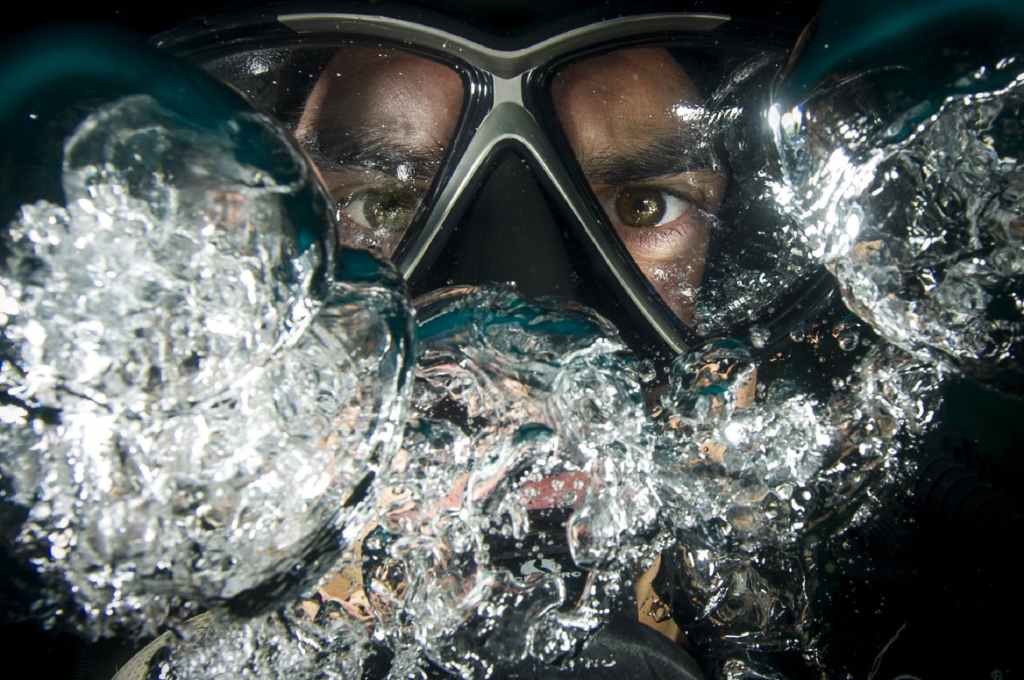
     Last weekend I managed to complete my PADI Open Water SCUBA Diver Course:

    PADI Temporary Card — Open Water Diver

    Name: Damon Ashworth
    Instructor Number: 305944

    This person has satisfactorily met the standards for this certification level as set forth by PADI.

    It was a pretty big challenge for me since I don’t really like being on boats and find it scary just swimming out in the middle of the ocean. But, I did it because a close friend asked me if I would be her dive buddy for the course, and I thought there would be no better opportunity than when I am already living in Vanuatu, home to some of the best dive sites in the world.

    To get your Open Water Card, you need to pass many theory tests about diving, and you need to complete 24 skills in a pool and then replicate these skills out in the open water across four dives. We saw a shipwreck, some amazing coral and sea life, and even a few small reef sharks during the open water dives.

    The scariest part to me was when I was up to 18 metres underwater, knowing that I’d need to stop for 3 minutes at 5 metres on the way up and ascend slowly to avoid decompression sickness. It meant that if I felt a bit anxious or panicky for whatever reason, I couldn’t just get out to the surface straight away and start gasping for air. Instead, I had to remain calm, breathe slowly and steadily using my regulator, put some confidence in my divemaster who was guiding us through the training and focus on whatever was in my control instead of worrying about things that were out of it.

    Fortunately, I successfully completed the dives and all the skills. Some moments were pretty cool, especially seeing the wreck and the sea life on the coral reef. In general, though, I didn’t love it and was utterly exhausted and a little bit relieved once I did it.

    So how do I know if it was worth it? Should I have bothered challenging myself to do something where I worried I could have died if something went badly wrong?

    When Is It Worth Facing Your Fears?

    The answer is it depends. It depends on:

    1. What scares you?
    2. How afraid you are (on a scale from 0 = no anxiety at all to 10 = completely overwhelmed and having a panic attack)?
    3. How safe or dangerous is the thing that you fear? and
    4. Will it impact your quality of life if you do not face up to your fear or try to overcome it?

    Suppose what you fear has a low risk of actually occurring. The activity is relatively safe even though it feels scary, and not doing it has a significant negative impact on your life. In that case, it is worth trying to challenge yourself and overcome your fears.

    For me:

    1. I think the fear of SCUBA diving was dying.
    2. The thought of actually going SCUBA diving increased my anxiety to a 7/10, which is high but not quite at the panic stage.
    3. The 2010 Diver’s Alert Network Workshop Report found that only one-in-211,864 dives end in a fatality. SCUBA diving is riskier than flying in an aeroplane or riding a bike but much less dangerous than driving a car, skydiving, or running a marathon. We’re even more likely to die from walking or falling on stairs than we are from SCUBA diving.

    4. If I never went SCUBA diving, I doubt that it would have reduced my quality of life in any way. I did it mainly because I wanted to spend time with my friend, and I wanted to challenge myself to face my fears, as not being able to overcome any fears would have a substantial negative impact on my quality of life.

    I am glad to get my PADI Open Water Certificate based on the above information. I’m not too sure if I will ever go again, though. I could enjoy it more and become less anxious about diving over time, and that did happen even across my four open water dives. If I went again, my anxiety might be a five or a six. In reality, though, I think I can enjoy snorkelling just as much without it lowering my quality of life in any way, and I’ll probably do that more than SCUBA diving in the future.

    What Are the Most Common Fears?

    The top ten most common specific phobias are:

    1. Arachnophobia — fear of spiders
    2. Ophidiophobia — fear of snakes
    3. Acrophobia — fear of heights
    4. Agoraphobia — fear of crowds or open spaces
    5. Cynophobia — fear of dogs
    6. Astraphobia — fear of thunder and lightning
    7. Claustrophobia — fear of small spaces
    8. Mysophobia — fear of germs
    9. Aerophobia — fear of flying
    10. Trypanophobia — fear of injections

    Looking at the above common phobias, they all have some basis for why we may become afraid of them. Some spiders and snakes can kill, as can dogs (especially if they have rabies). Planes can crash, and falling from high up can be fatal. People can become trapped and suffocate in a small space or crowds, and lightning strikes have killed people. Germs and bacteria spread disease too. Medical mishaps are the third most significant cause of death in the US, according to the latest figures from the US Center for Disease Control and Prevention. Unfortunately, our brain is not very good at distinguishing dangerous things versus things that feel dangerous but are pretty safe.

    How Do We Overcome Fears?

    We overcome any fear through the dual process of gradual exposure and cognitive reappraisal after the exposure:

    1. We determine what fear it is we would like to master. Preferably, this is something that you are currently avoiding that is negatively impacting your life, such as not going to the doctor or dentist because you are afraid of needles.

    2. We develop an exposure hierarchy on this fear. It should have at least five tasks that you want to do ranked from least scary to most scary (scale from 0–10). For Arachnophobia, it may be a 2/10 for looking at pictures of spiders to a 4/10 for watching videos of spiders. Then a 6/10 for looking at spiders in an enclosure to a 10/10 for letting a spider crawl up your arm.

    3. We start with the least scary task first and stay in the situation for at least 10 minutes if possible. It should be long enough for the anxiety to peak and then reduce substantially during the exposure exercise. A psychologist can teach specific behavioural and thinking skills to help lower stress levels during exposure.

    4. We reflect on the exposure experience afterwards and try to change our previously held beliefs about what we fear. It is called cognitive reappraisal and is done by asking ourselves, “how did it go?” “was it as bad as I thought it would be?” and “how would I approach a similar situation in the future?

    5. Once we are comfortable with that level of the exposure hierarchy, we repeat steps three and four with the next task on the exposure hierarchy. Then, once we become comfortable with the next step, we take each step until we are successful with all tasks on the hierarchy. By the end, you have overcome or mastered the fear.

    What if What I Fear is Dangerous?

    If you have Ophidiophobia and live in Australia, you’re probably not going to want to befriend a snake that you run into out in the bush. Australia is home to 21 out of the 25 most deadly snakes globally. If you want to overcome this fear, you might want to learn instead how to distinguish between poisonous and non-poisonous snakes and get more comfortable only with deadly ones from behind solid glass panels at your local zoo. Or you could visit someone who owned a harmless pet snake so that you could get used to being around it and touching it and realising that you are safe.

    If you’re afraid of heights, I wouldn’t suggest being like Alex Honnold and trying to free climb El Capitan in Yosemite. However, testing ‘The Edge’ experience at the Eureka tower in Melbourne or even riding ‘The Giant Drop’ on the Gold Coast might be a pretty safe way to challenge your fears.

    Facts can really help some people challenge their beliefs about their fears, but nothing beats putting ourselves in a feared situation first and then challenging our beliefs afterwards.

    For me, knowing that only 12 out of the 35,000 different varieties of spiders are harmful to humans makes me not worry every time I see a little one unless it is a whitetail or a redback spider.

    It helps to know that flying is one of the safest forms of travel, with a one-in-12 million chance of crashing. Likewise, although I don’t try to stand in an open field with a metal pole during a storm, it does help to know that being killed by lightning is nearly as rare, with a one-in-10.5 million chance.

    Even though I’m not particularly eager to watch it pierce my skin, needles don’t hurt nearly as much as I used to imagine, and the pain goes away almost immediately after the injection. Bacteria is everywhere, so I couldn’t avoid germs entirely even if I tried.

    If I ever feel a bit trapped or panicky the next time I dive, it will help to remind myself that I have done it before. I have my open water certificate and the skills from this, and what I’m doing is pretty safe as long as I don’t panic and follow my training.

    Just because we are afraid of something, it doesn’t mean we have to avoid it for the rest of our lives. But we don’t have to face our fears every time either, especially if it is not harming our quality of life. So if you determine it would be good to challenge yourself and try to overcome a fear, I hope the steps outlined above help, and I’d love to hear about any success stories in the comments.

  • Is Vanuatu the Happiest Country in the World?

    Is Vanuatu the Happiest Country in the World?

    The latest Happy Planet Index puts Vanuatu second in the world in terms of sustainable well-being. To determine a country’s score on the Happy Planet Index, they look at a country’s well-being, multiplied by their life expectancy and then divided by their ecological footprint.

    The only country with a better Happy Planet Index score is Costa Rica, with 62.1. Vanuatu is second with a score of 60.4, followed by Colombia (60.2), Switzerland (60.1) and Ecuador (58.8).

    Although the Happy Planet Index helps to highlight the importance of living sustainably and trying to slow down climate change, is the sustainable happiness score the same as people’s overall satisfaction with their lives?

    Not really. The well-being indicator is probably more indicative. To assess well-being, people in each country are asked to rate the quality of their lives overall on a scale from 0 (horrible) to 10 (the best life you could ever imagine).

    The majority of the well-being data is taken from the Gallup World Poll, but Vanuatu is not usually included in this Poll. Therefore, the Happy Planet Index gives us an excellent chance to compare Vanuatu to the rest of the world regarding how satisfied their residents are with their lives compared to residents of other countries.

    Here are the top 20 countries:

    1. Finland = 7.84 (out of 10)
    2. Denmark = 7.62
    3. Switzerland = 7.57
    4. Iceland = 7.55
    5. Netherlands = 7.46
    6. Norway = 7.39
    7. Sweden = 7.36
    8. Luxembourg = 7.32
    9. New Zealand = 7.28
    10. Austria = 7.27
    11. Australia = 7.18
    12. Israel = 7.16
    13. Germany = 7.16
    14. Canada = 7.10
    15. Ireland = 7.09
    16. Costa Rica = 7.07
    17. United Kingdom = 7.06
    18. Czech Republic = 6.97
    19. Vanuatu = 6.96
    20. United States = 6.95

    Vanuatu isn’t the happiest country on the planet, but the residents of Vanuatu are, on average, quite satisfied with their lives. However, the loss of tourism with the COVID-19 pandemic and the international border closures have made it financially challenging for many people. The capital city of Port Vila can also be quite expensive to live in.

    Many young people are also travelling to Australia and New Zealand to work on farms and make as much money as possible. This leads to better financial opportunities for them, their families and communities. However, it also puts pressure on their partners, families and communities left behind while the young people work overseas for months and sometimes years.

    The big positives in Vanuatu seem to be the connection that people have to their country, island, land and community. There are close-knit kinship and family ties and minimal large-scale conflict and political unrest.

    Vanuatu is also a beautiful country with an exceptional natural environment and many people that want to preserve these resources as much as possible. For example, Vanuatu was one of the first countries to ban plastic drinking straws and plastic bags.

    Work is also not an overly important aspect of many people’s lives. Following a death, people grieve with their family and friends and don’t rush back into their daily activities. Vanuatu also allows for up to 21 sick days per year, more public holidays than pretty much any country in the world, and 21 annual leave days a year too.

    Based on the 2021 World Happiness Report, Finland once again wins the happiest country on the planet. Vanuatu is not the happiest country globally, but it is in the top 20 in the world. It is also a more joyful place than the USA, France, and many other countries around the globe.

    By looking at surveys such as the Happy Planet Index or the World Values Survey, it is possible to see which places may be the best fit for you. If you really care about the environment and climate change, Costa Rica and Vanuatu will be right up there for you.

    An excellent work-life balance, close connections with the important people in my life, not too much stress, lots of relaxation, beautiful natural resources and a population that feels like they are living a pretty good life are essential to me.

    Dr Damon Ashworth

    Clinical Psychologist

  • Feeling Burnt Out? What Would Happen if We Worked Less?

    Feeling Burnt Out? What Would Happen if We Worked Less?

    In the 18th Century, employees worked up to 16 hours per day. Everyone knew this was unsustainable and led to severe burnout and horrible quality of life for the working class. Then in 1856, the 8 hours movement began in Victoria.

    The Labor unions fought hard for the idea of 888. They wanted 8 hours for sleep, 8 hours for work, and 8 hours for family, rest and play. This statue was erected at the top end of Russell Street in Melbourne in 1903, meaning that they had achieved this goal for most people sometime between 1856 and 1903.

    Eight Hour Day Monument (Melbourne): UPDATED 2020 All You Need to ...
    Eight Hour Day Monument (Melbourne): UPDATED 2020 All You Need to ...

    In the US, railroad workers began to work eight-hour shifts in 1916. Ford Motor Company followed suit in 1926 when they cut the working hours of their employees to 8 hours per day while doubling wages. The reduced work hours and better pay led to a happier and more committed workforce, and productivity increased. More leisure time and money also led to more workers buying more stuff (including Ford cars), which the government realised was better for raising GDP. Other companies also discovered that workers were more focused and productive when they worked less. So an eight-hour workday subsequently became the new norm.

    Since then, the working hours have begun to creep back up again, especially in the US. Among people employed full-time, the average employee works 47 hours per week. 40% of full-time employees now work over 50 hours per week, with only 8% working less than 40 hours. So much for 8-hour workdays being the standard.

    The Negative Consequences of Long Work Hours

    Research has shown:

    • Working more than 10 hours per day can increase your risk of cardiovascular issues by 60%
    • Regularly working more than 10 hours a day can also increase your risk of stroke by 29%.
    • Working more than 11 hours a day leads to increased depression risk.
    • Working 12 hours days increases your risk of making mistakes at work by 23%.
    • In companies where the average weekly work time is under 43.5 hours per week, barely any fatigue-related problems are found.
    • In companies where the average weekly work time is between 43.5 hours and 46 hours, minor fatigue problems are detected.
    • In companies where the average weekly work time is over 46.5 hours, severe fatigue-related issues are seen.
    • The rate of relationship problems in those working 50-60 hours per week is 10%
    • The percentage of relationship problems in those working more than 60 hours per week is 30%.
    • Long working hours are linked to poorer mental health and sleep quality.
    • Long working hours are also linked with increased smoking, excessive alcohol consumption and weight gain.
    • Long working hours are related to lower job performance, as well as less job satisfaction and lower overall life satisfaction.

    What if We Did Work Less?

    Six Hour Workday infographic

    The above infographic by Ohio University highlights why we need to work less. If the top 10% of employees in terms of productivity work in 52-minute blocks followed by 15- to 20-minute breaks, they can only do seven 52-minute work blocks daily. That is 7 x 52 = 364 minutes of work per day. That means we shouldn’t be putting in more than 6 hours and 4 minutes of work per day.

    We also should be taking 1 hour and 56 minutes of breaks spread out across the day if we want to be at our most productive. That’s six breaks that are 19 minutes and 20 seconds long, or five 15-minute breaks and one 41-minute lunch break. As the infographic says, eight-hour days are only productive when we take sufficient breaks, and few people do.

    A shorter workday is an alternative for people or organisations that don’t want to take regular breaks. However, the average person is only productive for 2 hours and 53 minutes daily. So what would happen if we reduced the workday to only 6 hours per day and paid people the same amount?

    For a 6-hour workday to be effective, it would be necessary for companies to make it harder for their employees to waste time. Putting a block on news and social media sites would give the average person 1 hour and 49 minutes of their typical workday back. With the extra time after work, these employees could check the news and social media if they wanted to. If the average employee is 20% happier and healthier with six-hour workdays, they will be less likely to look for other jobs.

    Microsoft has also recently experimented with four-day workweeks in Japan. When workers took the Friday and the weekend off, productivity went up 40%. Only 10% of the staff who tried this weren’t more productive overall. They also cut meeting times down to a maximum of 30-minutes each. I’m sure that this helped as well.

    When other companies have tried four-day workweeks, they manage to produce 25% more output with the same size staff. They also find it easier to fill vacant positions when they arise, as more people like the four-day-a-week full-time job than a typical five-day-a-week role.

    Conclusion

    Since returning to Melbourne and full-time work, I have noticed that much of my stress and fatigue has returned. Finding the right work/life balance isn’t easy, especially with the uncertainty and anxiety created by the COVID-19 pandemic. I’m grateful to have full-time work doing what I love to do, but working in a way that isn’t harmful to my health and well-being is still a work in progress for me.

    However you decide to manage your workload, please understand that working long hours without regular breaks is not sustainable. We can address this by working fewer hours in a day or fewer days in a week. Or you can merely get up from the desk and walk around a bit more when you notice that your productivity and energy levels are dropping. Getting outside for lunch and away from screens can also help. As can taking some pressure off of ourselves.

    Working hard and being busy are seen as status symbols in Western society too frequently. Stepping out of this culture and into “island time” for 18 months was one of the best things I could have done for my fatigue, happiness and overall well-being.

    The biggest question I still have is whether or not we can learn from our experiences and what the research says. Again, it seems counter-intuitive, but working less could help us be a healthier, happier, and more productive society.

  • Our Environment Makes More of a Difference to Our Health and Mental State Than We Realise

    Our Environment Makes More of a Difference to Our Health and Mental State Than We Realise

    It’s been over 9 months since I moved to Vanuatu to volunteer as a Clinical Psychologist with the Port Vila Central Hospital and the Vanuatu Government’s Ministry of Health. That means that I am over a third of the way through my volunteer experience.

    The first 1–2 months were challenging and a little overwhelming with so many new things to learn and new people to meet. I was also feeling a bit guilty about the people I had left behind to have this experience—especially my old private practice jobs and the patients I had there.

    Once I settled in, however, the following seven months have been some of the best times of my life. I’m not pushing myself too hard anymore. I am experiencing a great variety of opportunities with my volunteering work, helping people where I can. I am developing some excellent friendships too.

    About two months ago, I returned from a two-week trip to Australia to attend my sister’s wedding. It was my first time going back to Melbourne since moving to Port Vila, and I was really excited to go back and curious to see if things felt any different after not being there for the prior 8 months.

    Before I left Melbourne in August 2018, I was burning out. I had been highly productive and efficient with my work and was cramming a lot into every day and every week, but I was also stressed out and exhausted. My elevated blood pressure and constant fatigue were pretty solid indicators that my lifestyle was not going to be sustainable forever. I was also beginning to feel more isolated and disconnected from others and wondered if this was just a sign of the times, age, or environment.

    Moving to Vanuatu for 2 years was the perfect way to find out. Port Vila is a really social place if you want it to be, as people are always willing to stop for a chat or a drink at one of the 400+ nakamals in town. Vanuatu is also said to run on “island time”, which means Port Vila operates much more leisurely than Melbourne. This isn’t so great if you want your 3-on-3 basketball tournament to start on time, but pretty great for reducing stress as long as you don’t worry too much about things that are out of your control.

    The first thing that highlighted to me how much more relaxed I am in Vila is that when it came time to wrap up work to fly to Australia for my sister’s wedding, I felt so refreshed already that I didn’t even feel like I needed to have the holiday. That had never happened to me before.

    The moment I arrived back in Melbourne, however, I felt stressed again and tired shortly after that. I don’t know if it was staying in the city, but many people were rushing and agitated both on the road and walking around. Everyone seemed to be on a personal mission to get from point A to point B as fast as possible because they had important things to do and important people to see. Even I began to get caught up in this way of thinking within a day or two, and it was hard to unwind and relax.

    People in Melbourne also seemed to be off in their own world of headphones and smartphones, with very little interaction with anyone on the street. The few strangers I did smile at or said hello to looked at me like I was weird, and I was like, “oh, yeah…we don’t acknowledge other people here!”

    Reverse cultural shock is a real thing. Sometimes it does take a while to adjust back, even longer than it takes to adjust to a new culture in a new place. For example, people from Melbourne often expect Asia, South America, or Africa to feel different when they first travel there. It is a much weirder experience for things to feel unusual in the place where you grew up.

    My sister’s wedding was beautiful and heartwarming, and I couldn’t be happier for her and her new husband. It was amazing to see many of my friends and family again, and I hope to stay in touch with all of the important people in my life from Melbourne.

    I just don’t know if I still call Australia home.

    Dr Damon Ashworth

    Clinical Psychologist

  • The Importance of Sleep for Good Mental Health

    The Importance of Sleep for Good Mental Health

    Sleep difficulties are a feature of nearly every mental health difficulty, including depression, anxiety, trauma, substance use issues, bipolar disorder and psychosis or schizophrenia. Take Depression for example. Up to 90% of individuals with Depression have sleep difficulties, and two out of every three have significant enough sleep problems to also have a diagnosis of Insomnia.

    alarm clock analogue bed bedroom

    Worse still, Insomnia does not tend to go away on its own without appropriate treatment. This is because once people start to sleep poorly, they tend to develop ways of thinking and behaving around sleep that make their problems worse over the long run.

    Fortunately, there is a treatment out there that can improve your sleep. It’s called Cognitive Behavioural Therapy for Insomnia (CBT-I), which directly targets these unhelpful thoughts and behaviours around sleep.

    CBT-I is an effective treatment for insomnia, with many studies showing it to be similar to sleeping pills at improving sleep in the short-term, and much more effective than sleeping pills at improving sleep in the long-term.

    Research shows that CBT-I consistently reduces the time taken to get to sleep, decreases the amount of time spent awake during the night, and improves sleep quality and efficiency, with improvements persisting after treatment finishes. This is unlike sleeping pills, which typically lead to sleep difficulties coming back once people with insomnia stop taking them.

    Sleeping pills are also not recommended for use beyond 2-4 weeks at a time, because they stop working after a while and people need to take bigger doses over time to get the same effects. Sometimes doctors prescribe them more because they think they will work faster for patients, but even one session of CBT-I has been shown to make a significant difference to one’s sleep at night!

    beach during sunset

    CBT for Insomnia consists of four main components:

    1. Psychoeducation: This provides people with helpful information around sleep, including homeostatic pressure, circadian rhythms, hyper-arousal and sleep hygiene recommendations. Sleep hygiene means having a comfortable bedroom environment, minimising light exposure before bed, exercising during the day, minimising caffeine and alcohol and doing things to wind down or manage worries before bed.
    1. Sleep scheduling: This provides people with helpful information on when they should be going to bed at night, the time they should be arising from bed in the morning, and the ideal amount of time that they should be in bed for each night. Stimulus control and sleep restriction are the two main interventions included in sleep scheduling, and both are scientifically supported for improving sleep quality and sleep efficiency if done properly.
    1. Relaxation techniques: Because hyper-arousal plays a huge role in Insomnia, it is important to help people develop strategies to quieten the mind and calm the body, during the day, before bed and in bed. Relaxation techniques can include imagery training, meditation, biofeedback training, deep and slow breathing and progressive muscle relaxation.
    1. Cognitive Therapy: This provides people with the skills to challenge their unhelpful or unrealistic beliefs about sleep. A lot of individuals with Insomnia attribute all of their tiredness, mood difficulties or poor performance at work to their sleep difficulties, and this puts too much pressure on them to get a good night’s sleep. It is therefore important to get them to see the other factors that may contribute to how they feel during the day, present them with data that challenges their fears, and help them to develop realistic expectations about their sleep.

    In Vanuatu, there is currently only one psychologist located at the Mind Care Unit in Port Vila who is trained in CBT-I. Please come down to receive this effective treatment if you or a family member is struggling with poor sleep. Until then, there are other sleep strategies that you can try:

    orange cat sleeping on white bed

    BEST SLEEP INTERVENTIONS OVERALL

    In 2017, Dr Damon Ashworth, Clinical Psychologist and Sleep Researcher, ran 26 two-week experiments on his sleep to determine which interventions were most helpful for him.

    He gave each intervention a score out of 100, based on how effective he found the strategy (25 points), how easy it was to apply and use the strategy (25 points), and how much scientific evidence there was that showed that this strategy could improve sleep (50 points).

    Here are all of the sleep interventions he tested, ranked from best to worst based on their overall score out of 100:

    palm trees at night

    High Distinction

    1. Stimulus control = 85/100
    2. Winding down before sleep = 85/100
    3. Sleep restriction = 81/100
    4. Relaxation strategies pre-sleep = 81/100

    photo of a man sitting under the tree

    Distinction

    1. Meditation = 77/100
    2. No alcohol = 75/100
    3. Wearing blue-light blocking glasses before sleep = 75/100
    4. Listening to music in the evening = 73/100
    5. Yoga/Pilates = 72/100
    6. Constructive worry or writing down plans = 71/100

    white teddy bear with opened book photo

    Credit

    1. Avoiding TV before bed = 69/100
    2. Melatonin = 68/100
    3. Aromatherapy = 68/100
    4. Sauna or hot bath in the evening = 68/100
    5. Morning sunlight = 65/100
    6. Reading or listening to audiobooks pre-sleep = 63/100
    7. Exercise during the day = 61/100

    black ceramic tea cup on brown surface

    Pass

    1. No caffeine = 58/100
    2. Food that helps sleep = 57/100
    3. Controlling temperature = 57/100
    4. Massage in the afternoon = 57/100
    5. Comfort of sleep surface = 56/100
    6. Sleeping alone = 53/100
    7. Creativity in the evening = 52/100

    Sleep Recommendations

    (Stepanski & Wyatt, 2003)
    1. Decrease time in bed – Sleep efficiency is a better predictor of satisfaction with sleep and daytime mood than total sleep time. So if you only get 7 hours of sleep per night, spend 7.5 hours of time in bed. This will allow for better sleep over time.
    2. Regular bedtime and arising time – Reducing variability in your sleep can make a huge difference in how long it takes you to get to sleep, how restful a sleep you have, and how refreshed you feel in the morning. Have a set bedtime, and whenever you feel sleepy around this time, go to bed. Then set an alarm so that you can wake up at the same time each day. If you want to sleep in on weekends, allow yourself no more than one hour later than you usually wake up. Following this regardless of how much sleep you get helps to strengthen your circadian rhythms and build up your homeostatic pressure to ensure better sleep over time.
    3. Exercise – Vigorous exercise prior to bedtime is actually unhelpful for sleep, but expending more energy during the day is likely to lead to better quality sleep at night. The earlier in the day it is done, the greater the effect it will have.
    4. Less caffeine and alcohol – Minimise these substances where possible, especially within 4 hours of bedtime as they both have significant effects on sleep quality. Alcohol can reduce worries and result in getting to sleep quicker, but results in poorer sleep quality in the second half of the night. Alcohol can also can lead to more snoring due to the loosening of the throat muscles. Caffeine boosts cortisol levels, a.k.a. stress, and results in less deep sleep and more awakenings.
    5. Do not try to sleep – It is something that has to come on naturally. The harder you try to get to sleep, the less likely you will be able to, as trying activates the autonomic nervous system, which also increase how stressed you feel. The more you allow yourself to relax, the more likely sleep is.
    6. Do not keep looking at your phone or alarm clock during the night – If your alarm is set, then there is no need to know the time in bed. This will only increase performance anxiety if you look and see that you have not slept for very long. Put it in a draw, cover it with a shirt, or face it the other way.
    7. Keep naps short – Napping during the day reduces your pressure for sleep by the time you get into bed at night. If you have to nap, keep it less than 30 minutes so that you don’t go into a deep sleep, and do it before 4pm so that sleep pressure can build up again by the time you go to bed that night.
    8. Engage in relaxing activities before bed – Just like waking up, going to sleep is a transitional process. Don’t expect that your mind will shut off immediately as soon as you get into bed. Whatever it is, do something relaxing as a pre-bed routine. Watch some T.V., read a book, listen to some music, have a hot bath, practice yoga, mindfulness or relaxation techniques. Then maintain that relaxed state in bed and allow sleep to come.
    9. Use the bedroom only for sleep and sex – This means no reading, eating, internet surfing, game playing, phones, T.V., planning, worrying etc. in bed. Want bed = sleep.
    10. Make worry list before bed – To prevent your mind from racing in bed, reflect on the day about 2 hours before you want to sleep, write down any worries, concerns or problems you may have, create a to-do-list, or plan for the day ahead. Then if thoughts come up in bed, remind yourself that you have already sorted them out or that they can wait until tomorrow.
    11. Leave the bed if awake – Sometimes no matter what we try, you may find yourself awake in bed. If you do not fall to sleep within what feels like 20 minutes, get up, go to another room, and do something relaxing until you are sleepy before returning to bed. Over time, this will recondition the bed with sleepiness rather than frustration and allow you to fall asleep quickly. If you are worried that you may never sleep if this was the case, give it a try for a week. It may be the most difficult recommendation to follow initially, but it produces long-lasting results quickly.

    Dr Damon Ashworth

    Clinical Psychologist