For the earlier books and descriptions in the countdown: 100-91, 90-81, 80-71, 70-61.
Here is part five…
60. How to Know a Person: The Art of Seeing Others Deeply and Being Deeply Seen by David Brooks
Goodreads.com star rating = 4.09/5

In our distracted world, most people feel unseen and unheard. Brooks reveals that we can be “illuminators” who make others feel valued. Alternatively, we can be “diminishers” who cause people to feel overlooked. The key to deep connection lies not just in hearing words, but in perceiving emotions, body language, and unspoken needs.
What makes it special: Brooks connects interpersonal understanding to democracy and social cohesion. He makes the case that truly seeing others is a personal skill and a civic duty. It’s rare to find a book that links individual empathy to societal healing.
Perfect for: People wanting to improve emotional intelligence. It is also ideal for therapists and coaches, partners and parents. Anyone struggling to bridge differences could benefit. Introverts or awkward conversationalists looking for practical guidance will find it helpful too.
Key takeaway: Small moments of genuine attention—making eye contact, remembering details, asking thoughtful questions—can have profound impact on relationships.
59. Mindset: The New Psychology of Success by Carol S. Dweck
Goodreads.com star rating = 4.10/5
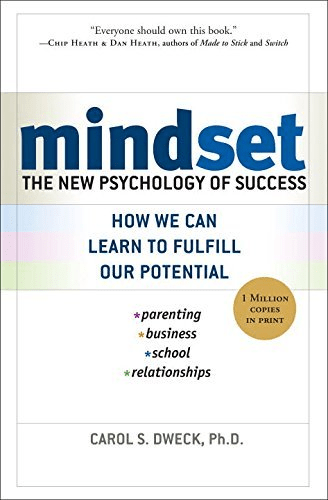
Dweck’s groundbreaking research shows that how we think about our abilities shapes our success. Those with a “fixed mindset” believe talents are static. They are less likely to keep putting in effort to get better at something. In contrast, those with a “growth mindset” see abilities as things that can develop through effort and learning.
What makes it special: It is backed by decades of rigorous research across various domains. These include schools, sports, and corporate boardrooms. This isn’t just theory. It is proven science that can be applied everywhere. The simplicity of the concept belies its profound impact.
Perfect for: Students and educators. Parents, caregivers, therapists and coaches will find it useful. Professionals, entrepreneurs, athletes and performers might also find it beneficial. Essentially, it’s for anyone facing change, setbacks, or self-doubt.
Key takeaway: Praise effort and strategy, not intelligence. View failures as learning opportunities rather than proof of inadequacy.
58. The Science of Trust: Emotional Attunement for Couples by John M. Gottman
Goodreads.com star rating = 4.10/5
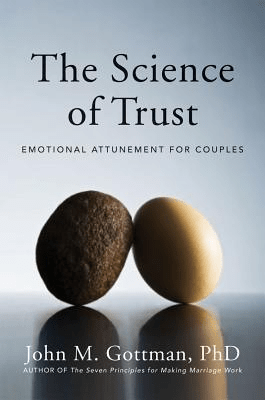
Trust isn’t built through grand gestures but in everyday “sliding door moments”—small opportunities to connect or turn away. Gottman’s research shows that how couples handle conflict and respond to each other’s bids for connection determines relationship success.
What makes it special: Gottman can predict divorce with over 90% accuracy using mathematical models. This isn’t relationship advice based on opinion—it’s hard science applied to love, filled with measurable metrics and proven interventions.
Perfect for: Couples, especially those in long-term or committed relationships. It’s ideal for therapists and relationship coaches. Individuals recovering from betrayal or disconnection could find it enlightening. Students of psychology or counselling will find it useful. Analytical thinkers interested in emotional dynamics are welcome too.
Key takeaway: Trust is dynamic and evolves with every interaction. Focus on emotional attunement and repair attempts rather than perfection.
57. How Emotions Are Made: The Secret Life of the Brain by Lisa Feldman Barrett
Goodreads.com star rating = 4.10/5

Barrett challenges the traditional view of emotions as hardwired reactions. Instead, she reveals that emotions are constructed by our brains using past experiences to interpret bodily sensations and context.
What makes it special: This book completely overturns everything you thought you knew about emotions. Barrett dismantles decades of psychological orthodoxy with cutting-edge neuroscience. She offers a radical new understanding that emotions are cultural, learned and therefore changeable.
Perfect for: Psychology and neuroscience enthusiasts. Students and academics. Mental health professionals and therapists. Curious readers interested in self-understanding. Anthropologists. People interested in emotional intelligence.
Key takeaway: Since emotions are constructed, they’re malleable. Developing emotional granularity—the ability to distinguish between different emotions—improves mental health and emotional regulation.
56. Be Useful: Seven Tools for Life by Arnold Schwarzenegger
Goodreads.com star rating = 4.11/5

Schwarzenegger distills his life philosophy into practical wisdom. His emphasis is on being useful—contributing meaningfully—rather than just being impressive.
What makes it special: This isn’t typical celebrity memoir fluff. Schwarzenegger’s achievements in three distinct areas offer a rare case study. He excelled as a bodybuilding champion, a Hollywood superstar, and a politician. His story shows reinvention and sustained excellence across different domains.
Perfect for: Anyone feeling stuck or aimless who wants clear and practical life advice. It’s also great for fans of Arnold’s life story who seek motivation mixed with personal responsibility. Young adults or career changers looking for structure and inspiration may benefit too.
Key takeaway: Success demands sacrifice and relentless effort. Use criticism as fuel and turn every failure into feedback for improvement. Have a clear vision. Work relentlessly. Ignore naysayers. Learn from failure. Listen to mentors. Give back.
55. Hidden Potential: The Science of Achieving Greater Things by Adam M. Grant
Goodreads.com star rating = 4.11/5

Grant argues that success isn’t about innate ability but about character skills like grit, curiosity, and determination. He emphasises that potential is dynamic—people develop at different rates and what matters is trajectory, not starting point.
What makes it special: Grant challenges meritocracy myths with compelling research. He shows how biased systems hide potential. The right environments can reveal greatness in unexpected places. It’s both inspiring and actionable.
Perfect for: Teachers, coaches, leaders, and parents who want to unlock growth in others. It’s also suitable for anyone who has been underestimated or who underestimates themselves. Additionally, it’s ideal for fans of books like Grit, Mindset, or Atomic Habits who are looking for science-based, optimistic personal development guidance.
Key takeaway: Embrace strategic discomfort as a growth zone. Progress comes from stretching just beyond your current limits, not from repeating what’s easy.
54. Predictably Irrational: The Hidden Forces That Shape Our Decisions by Dan Ariely
Goodreads.com star rating = 4.12/5

Ariely reveals the hidden psychological forces that drive our choices. We compare relatively rather than absolutely, overvalue free things, procrastinate on good intentions, and let emotions hijack rational thought.
What makes it special: Through clever experiments that are both entertaining and enlightening, Ariely makes behavioural economics accessible and fun. The book reads like a detective story, uncovering the surprising patterns behind our seemingly random decisions.
Perfect for: Anyone interested in behavioural economics, psychology, or marketing. This includes people who want to understand why we make irrational choices and how to outsmart our own biases. It is also for fans of Malcolm Gladwell, Thinking, Fast and Slow, or Nudge.
Key takeaway: Awareness of our biases allows us to make better decisions. Plan ahead while in a “cold” emotional state to counter the effects of “hot” emotional decisions.
53. Captivate: The Science of Succeeding with People by Vanessa Van Edwards
Goodreads.com star rating = 4.12/5

Van Edwards breaks down social interaction into three levels: first impressions, personalisation, and deep connection. She reveals that the most respected people are both high-warmth (friendly, empathetic) and high-competence (confident, skilled).
What makes it special: Van Edwards combines rigorous research with practical techniques. She turns the art of charisma into a learnable science. Her approach demystifies social skills for introverts and gives even socially confident people specific tools for deeper connections.
Perfect for: Professionals, leaders, and entrepreneurs who want to improve networking and people skills. Introverts who want a science-based approach to social confidence could also benefit. It is for anyone interested in nonverbal communication, charisma, and influence.
Key takeaway: The first few seconds matter enormously. Use intentional body language, ask engaging questions beyond small talk, and focus on making others feel valued.
52. Sum: Forty Tales from the Afterlives by David Eagleman
Goodreads.com star rating = 4.12/5
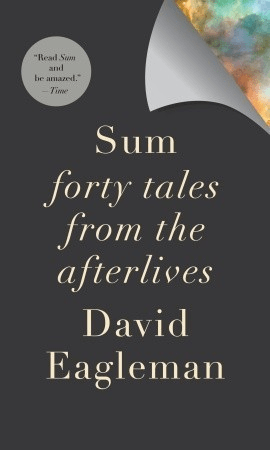
Through creative tales of possible afterlives, Eagleman explores identity, meaning, and what makes life worth living. These thought experiments reveal our deep desire for purpose and connection.
What makes it special: This isn’t philosophy or religion—it’s imaginative fiction that makes you think deeply about existence. Each micro-story is a philosophical puzzle that reframes how you see life, death, identity, and meaning in completely unexpected ways.
Perfect for: Thinkers, dreamers, and sceptics who enjoy existential fiction or philosophical musing. It’s also for fans of Black Mirror, Jorge Luis Borges, or Ted Chiang. Additionally, it suits anyone interested in death, meaning, consciousness, or what makes a life worth living.
Key takeaway: We are not one fixed person but many versions of ourselves. The limits and struggles of life often give it depth and meaning—perfection isn’t what we think it is.
51. The Power of Moments: Why Certain Experiences Have Extraordinary Impact by Chip Heath and Dan Heath
Goodreads.com star rating = 4.12/5
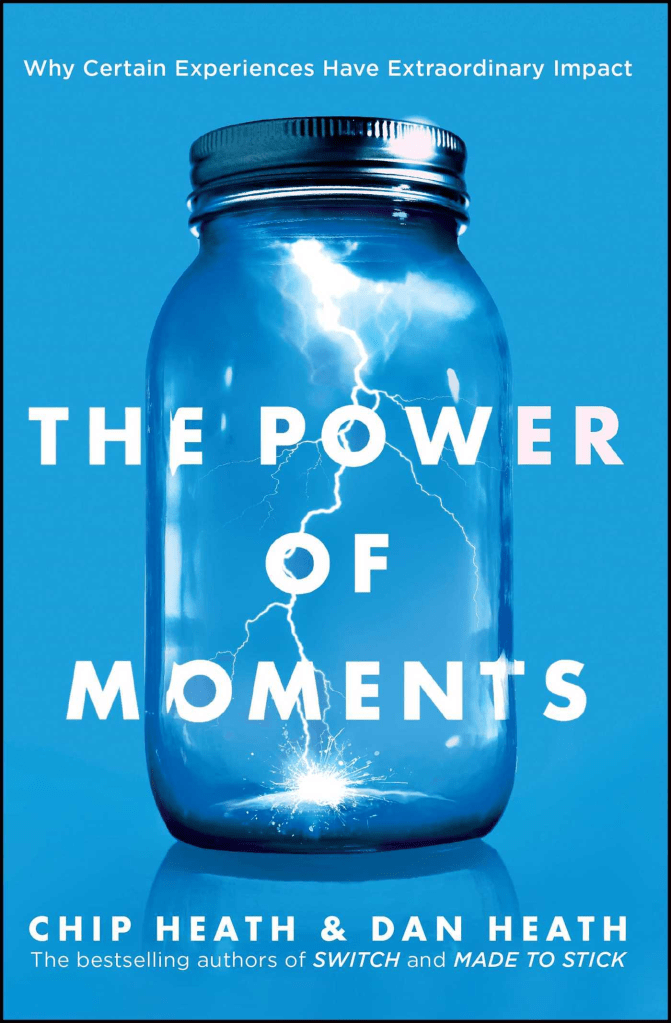
Chip and Dan Heath identify four elements that make moments memorable. The first is elevation, which means rising above routine. The second is insight, which involves re-framing our understanding. The third is pride, capturing people at their best. The fourth is connection, deepening ties with others.
What makes it special: This book provides a practical blueprint. It helps you engineer peak experiences rather than leaving them to chance. The Heaths research-backed framework applies whether you’re designing customer experiences, teaching students, or creating family memories.
Perfect for: Leaders, educators, therapists, coaches, and customer experience designers who aim to create meaningful, lasting experiences. Anyone who wants to make life more memorable and emotionally resonant for themselves and others could benefit. It is also ideal for fans of Made to Stick or Drive who enjoy actionable insights grounded in psychology.
Key takeaway: People remember peaks and endings more than duration. You can intentionally design meaningful moments rather than waiting for them to happen naturally.
These ten books share several powerful themes:
- Growth is possible at any stage – Whether it’s developing a growth mindset, building emotional intelligence, or recognising hidden potential
- Relationships are central to fulfillment – From deep listening to building trust to creating shared moments
- Self-awareness enables better living – Understanding our biases, emotions, and patterns helps us make better choices
- Small actions compound into significant change – Whether it’s micro-moments of attention or daily efforts toward goals
The path to a more fulfilling life isn’t about perfection. It’s about growth and connection. It requires the courage to keep learning about ourselves and others.
Stay tuned for the next books in the countdown…
Dr Damon Ashworth
Clinical Psychologist

 Damon Ashworth Psychology
Leave a reply to Part Nine of the Top 100 Non-Fiction Books Countdown: A Curated Guide to Personal Growth (20-11) – Damon Ashworth Psychology Cancel reply