Tag: self-improvement

  • Why Bother Overcoming Fears?

    Why Bother Overcoming Fears?

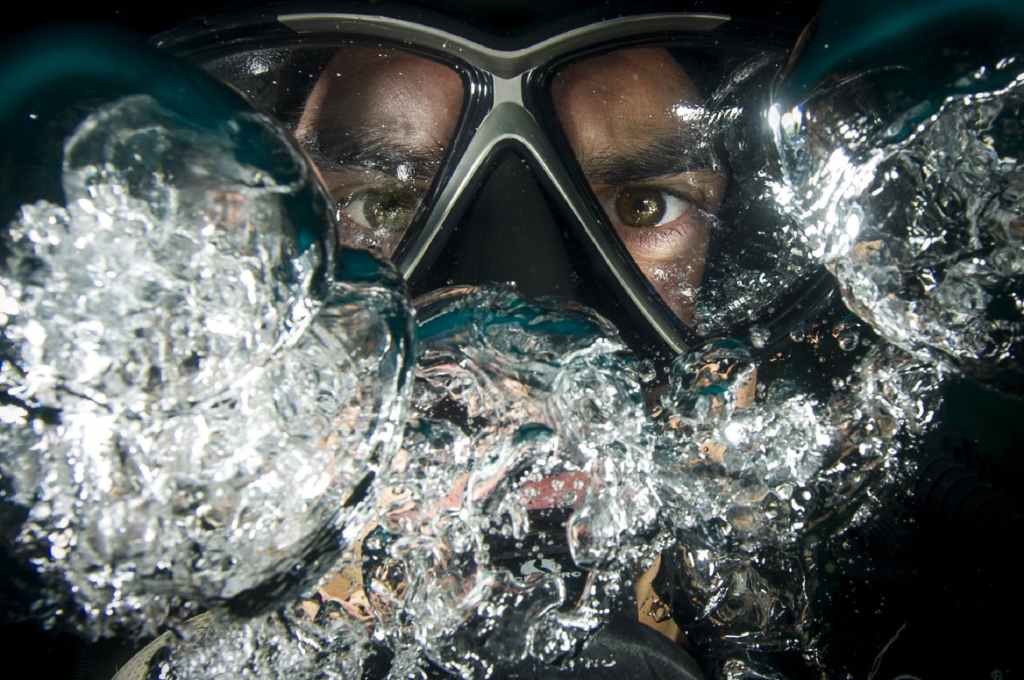
     Last weekend I managed to complete my PADI Open Water SCUBA Diver Course:

    PADI Temporary Card — Open Water Diver

    Name: Damon Ashworth
    Instructor Number: 305944

    This person has satisfactorily met the standards for this certification level as set forth by PADI.

    It was a pretty big challenge for me since I don’t really like being on boats and find it scary just swimming out in the middle of the ocean. But, I did it because a close friend asked me if I would be her dive buddy for the course, and I thought there would be no better opportunity than when I am already living in Vanuatu, home to some of the best dive sites in the world.

    To get your Open Water Card, you need to pass many theory tests about diving, and you need to complete 24 skills in a pool and then replicate these skills out in the open water across four dives. We saw a shipwreck, some amazing coral and sea life, and even a few small reef sharks during the open water dives.

    The scariest part to me was when I was up to 18 metres underwater, knowing that I’d need to stop for 3 minutes at 5 metres on the way up and ascend slowly to avoid decompression sickness. It meant that if I felt a bit anxious or panicky for whatever reason, I couldn’t just get out to the surface straight away and start gasping for air. Instead, I had to remain calm, breathe slowly and steadily using my regulator, put some confidence in my divemaster who was guiding us through the training and focus on whatever was in my control instead of worrying about things that were out of it.

    Fortunately, I successfully completed the dives and all the skills. Some moments were pretty cool, especially seeing the wreck and the sea life on the coral reef. In general, though, I didn’t love it and was utterly exhausted and a little bit relieved once I did it.

    So how do I know if it was worth it? Should I have bothered challenging myself to do something where I worried I could have died if something went badly wrong?

    When Is It Worth Facing Your Fears?

    The answer is it depends. It depends on:

    1. What scares you?
    2. How afraid you are (on a scale from 0 = no anxiety at all to 10 = completely overwhelmed and having a panic attack)?
    3. How safe or dangerous is the thing that you fear? and
    4. Will it impact your quality of life if you do not face up to your fear or try to overcome it?

    Suppose what you fear has a low risk of actually occurring. The activity is relatively safe even though it feels scary, and not doing it has a significant negative impact on your life. In that case, it is worth trying to challenge yourself and overcome your fears.

    For me:

    1. I think the fear of SCUBA diving was dying.
    2. The thought of actually going SCUBA diving increased my anxiety to a 7/10, which is high but not quite at the panic stage.
    3. The 2010 Diver’s Alert Network Workshop Report found that only one-in-211,864 dives end in a fatality. SCUBA diving is riskier than flying in an aeroplane or riding a bike but much less dangerous than driving a car, skydiving, or running a marathon. We’re even more likely to die from walking or falling on stairs than we are from SCUBA diving.

    4. If I never went SCUBA diving, I doubt that it would have reduced my quality of life in any way. I did it mainly because I wanted to spend time with my friend, and I wanted to challenge myself to face my fears, as not being able to overcome any fears would have a substantial negative impact on my quality of life.

    I am glad to get my PADI Open Water Certificate based on the above information. I’m not too sure if I will ever go again, though. I could enjoy it more and become less anxious about diving over time, and that did happen even across my four open water dives. If I went again, my anxiety might be a five or a six. In reality, though, I think I can enjoy snorkelling just as much without it lowering my quality of life in any way, and I’ll probably do that more than SCUBA diving in the future.

    What Are the Most Common Fears?

    The top ten most common specific phobias are:

    1. Arachnophobia — fear of spiders
    2. Ophidiophobia — fear of snakes
    3. Acrophobia — fear of heights
    4. Agoraphobia — fear of crowds or open spaces
    5. Cynophobia — fear of dogs
    6. Astraphobia — fear of thunder and lightning
    7. Claustrophobia — fear of small spaces
    8. Mysophobia — fear of germs
    9. Aerophobia — fear of flying
    10. Trypanophobia — fear of injections

    Looking at the above common phobias, they all have some basis for why we may become afraid of them. Some spiders and snakes can kill, as can dogs (especially if they have rabies). Planes can crash, and falling from high up can be fatal. People can become trapped and suffocate in a small space or crowds, and lightning strikes have killed people. Germs and bacteria spread disease too. Medical mishaps are the third most significant cause of death in the US, according to the latest figures from the US Center for Disease Control and Prevention. Unfortunately, our brain is not very good at distinguishing dangerous things versus things that feel dangerous but are pretty safe.

    How Do We Overcome Fears?

    We overcome any fear through the dual process of gradual exposure and cognitive reappraisal after the exposure:

    1. We determine what fear it is we would like to master. Preferably, this is something that you are currently avoiding that is negatively impacting your life, such as not going to the doctor or dentist because you are afraid of needles.

    2. We develop an exposure hierarchy on this fear. It should have at least five tasks that you want to do ranked from least scary to most scary (scale from 0–10). For Arachnophobia, it may be a 2/10 for looking at pictures of spiders to a 4/10 for watching videos of spiders. Then a 6/10 for looking at spiders in an enclosure to a 10/10 for letting a spider crawl up your arm.

    3. We start with the least scary task first and stay in the situation for at least 10 minutes if possible. It should be long enough for the anxiety to peak and then reduce substantially during the exposure exercise. A psychologist can teach specific behavioural and thinking skills to help lower stress levels during exposure.

    4. We reflect on the exposure experience afterwards and try to change our previously held beliefs about what we fear. It is called cognitive reappraisal and is done by asking ourselves, “how did it go?” “was it as bad as I thought it would be?” and “how would I approach a similar situation in the future?

    5. Once we are comfortable with that level of the exposure hierarchy, we repeat steps three and four with the next task on the exposure hierarchy. Then, once we become comfortable with the next step, we take each step until we are successful with all tasks on the hierarchy. By the end, you have overcome or mastered the fear.

    What if What I Fear is Dangerous?

    If you have Ophidiophobia and live in Australia, you’re probably not going to want to befriend a snake that you run into out in the bush. Australia is home to 21 out of the 25 most deadly snakes globally. If you want to overcome this fear, you might want to learn instead how to distinguish between poisonous and non-poisonous snakes and get more comfortable only with deadly ones from behind solid glass panels at your local zoo. Or you could visit someone who owned a harmless pet snake so that you could get used to being around it and touching it and realising that you are safe.

    If you’re afraid of heights, I wouldn’t suggest being like Alex Honnold and trying to free climb El Capitan in Yosemite. However, testing ‘The Edge’ experience at the Eureka tower in Melbourne or even riding ‘The Giant Drop’ on the Gold Coast might be a pretty safe way to challenge your fears.

    Facts can really help some people challenge their beliefs about their fears, but nothing beats putting ourselves in a feared situation first and then challenging our beliefs afterwards.

    For me, knowing that only 12 out of the 35,000 different varieties of spiders are harmful to humans makes me not worry every time I see a little one unless it is a whitetail or a redback spider.

    It helps to know that flying is one of the safest forms of travel, with a one-in-12 million chance of crashing. Likewise, although I don’t try to stand in an open field with a metal pole during a storm, it does help to know that being killed by lightning is nearly as rare, with a one-in-10.5 million chance.

    Even though I’m not particularly eager to watch it pierce my skin, needles don’t hurt nearly as much as I used to imagine, and the pain goes away almost immediately after the injection. Bacteria is everywhere, so I couldn’t avoid germs entirely even if I tried.

    If I ever feel a bit trapped or panicky the next time I dive, it will help to remind myself that I have done it before. I have my open water certificate and the skills from this, and what I’m doing is pretty safe as long as I don’t panic and follow my training.

    Just because we are afraid of something, it doesn’t mean we have to avoid it for the rest of our lives. But we don’t have to face our fears every time either, especially if it is not harming our quality of life. So if you determine it would be good to challenge yourself and try to overcome a fear, I hope the steps outlined above help, and I’d love to hear about any success stories in the comments.

  • Is it Better to be Completely Honest, a Strategic Truth-Teller or an Occasional Liar?

    Is it Better to be Completely Honest, a Strategic Truth-Teller or an Occasional Liar?

    I used to lie a lot growing up. Not quite as bad as Holden Caulfield in ‘The Catcher in the Rye’:

    I’m the most terrific liar you ever saw in your life. It’s awful. If I’m on my way to the store to buy a magazine, even, and somebody asks me where I’m going, I’m liable to say I’m going to the opera. It’s terrible.
    ― J.D. Salinger, The Catcher in the Rye

    I remember lying to my mum about cleaning my room to go outside to play. So instead, I would push all the mess under the bed or throw it in the wardrobe.

    I remember lying about doing my homework so that I didn’t have to do it and could play video games. I would then lie about being sick the next day to finish the assignment I needed to do the night before.

    I remember lying about how many points I scored in basketball to friends or how many alcoholic drinks I had to my parents whenever they picked me up from a high school party.

    I even remember lying to my brother’s friend about my surfing skills (I didn’t have any) and to a classmate about how many languages I spoke (I can say maybe 30 words in Indonesian, Spanish, and Italian, but not much more).

    I think back to these moments, and I’m not proud of saying these things, but I can also understand why I did it.

    I wish I could have been a less lazy, more confident and self-assured kid who was always honest with his friends and strangers and did the right thing by his parents and teachers. But how realistic is that scenario, and is it even ideal?

    The truth is always an insult or a joke. Lies are generally tastier. We love them. The nature of lies is to please. Truth has no concern for anyone’s comfort.
    ― Katherine Dunn, Geek Love

    Why Do People Lie?

    We lie to:

    • fit in and pretend we are like others
    • stand out and pretend we are different to or better than others
    • seek approval from others
    • be seen as more loveable/desirable/acceptable
    • feel better about ourselves
    • avoid getting into trouble
    • protect other people’s feelings or avoid hurting them
    • be polite
    • avoid feeling hurt, sad, disappointed, guilty or ashamed
    • keep a secret
    • maintain confidentiality
    • be consistent with societal norms

    I’m not upset that you lied to me, I’m upset that from now on I can’t believe you.
    ― Friedrich Nietzsche

    What Happens if We Are 100% Honest?

    Jim Carrey plays the main character in the 1997 comedy ‘Liar Liar’. He’s a high flying lawyer who keeps disappointing his son Max by making promises to him that he doesn’t keep by putting work first. Finally, after his dad doesn’t turn up to his birthday celebration, Max wishes for his dad not to be able to tell a lie, and the magic of movies makes this wish come true.

    What results is some hilarious situations in which Jim Carrey’s character gets himself into trouble for telling the whole truth when it would be more polite to lie. It includes telling his secretary why he didn’t give her a pay rise, telling his boss that he has had better than her, and confessing to everyone in a crowded elevator that he was the one who did the smelly fart.

    The moral of the story was two-fold:

    1. Sometimes it is necessary to lie, or at least not always be brutally honest and say everything that comes to your mind, and
    2. By being tactful and as honest as possible, you may become a better person who upsets people less and has more authentic relationships.

    “One lie has the power to tarnish a thousand truths.
    ― Al David

    Radical Honesty

    In 2007, A.J. Jacobs wrote an article for Esquire magazine about a month-long experiment on a movement called Radical Honesty. It was titled ‘I Think You’re Fat’ and is worth reading. Much more than the 1995 book called ‘Radical Honesty’ by Brad Blanton that initially inspired the article:

    Blanton had worked as a psychotherapist for 35 years in Washington D.C. and ran 8-day workshops on Radical Honesty that retailed for $2,800 back in 2007. Blanton says his method works, although he may distort some of the positive benefits for personal and financial gain. He’s been married five times and claims to have slept with more than 500 women and six men, including a “whole bunch of threesomes.” He also admits to lying sometimes.

    “She looks honestly upset, but then, I’ve learned that I can’t read her. The problem with a really excellent liar is that you have to just assume they’re always lying.
    ― Holly Black, Black Heart

    I Think You’re Fat

    In Jacobs article, he wasn’t overly optimistic about Blanton’s version of Radical Honesty either. If we didn’t have a filter between what we say and what we notice in the world, in our body and our thoughts like Blanton advocates, the results would probably be less funny and more consequential than what happened to Jim Carrey in ‘Liar Liar’. He declares:

    Without lies, marriages would crumble, workers would be fired, egos would be shattered, governments would collapse.” — A.J. Jacobs

    Jacobs found it impossible not to tell a lie during his month-long experiment but did cut down his lying by at least 40%. But unfortunately, he also scared a five-year-old girl, offended numerous people, and spoke about sex and attraction to the point where he felt creepy.

    On the positive, being radically honest did save Jacobs time, resulting in him having to talk less to the people he didn’t want to talk to and do less of the things he didn’t want to do. In addition, it saved him mental energy by not having to choose how much he would lie or massage the truth. It also meant that people were usually more honest with him in return, and he found out that his relationships could withstand more truth-telling than he expected. So, similar to the ‘Liar Liar’ take-away message, Jacobs concluded:

    1. Being radically honest all the time and never having a filter is likely to be inappropriate in many settings and lead to more confrontations with others, and
    2. We could probably benefit by being more authentic, honest and truthful with others, especially in intimate relationships, as secrets tend to weigh us down.

    There is beauty in truth, even if it’s painful. Those who lie, twist life so that it looks tasty to the lazy, brilliant to the ignorant, and powerful to the weak. But lies only strengthen our defects. They don’t teach anything, help anything, fix anything or cure anything. Nor do they develop one’s character, one’s mind, one’s heart or one’s soul.
    ― José N. Harris

    What is a Lie?

    In his interesting small book ‘Lying’, Sam Harris defines a lie as:

    “Anything that is done to intentionally mislead others when they expect honest communication.” — Sam Harris

    Omission vs Commission

    In ‘Lying’, Sam Harris distinguishes between lies of commission, where the person is active in their intent to deceive, and the more passive act of omission, where the person fails to do something or say something they probably should. Both are deceptive and misleading to the audience who is the target of the action or lack of action.

    Harris believes that lies of commission are a more serious violation of ethics and likely to be more harmful. It is similar to how pushing someone in front of a train is a more serious ethical violation than not saving someone who was hit by a train when you had a chance to do so.

    Harris argues for people to stop all forms of commission and says that we can enhance our world, build trust and improve relationships by always being honest in our communication. While he believes that omission is also lying, he does not think that we can or should eliminate all forms of omission. Instead, he says that “skilful truth-telling” is sometimes required to be both honest and tactful in our words and avoid causing unnecessary harm.

    Let’s look at the following three examples to see the difference between radical honesty, lying and skilful truth-telling.

    SCENARIO ONE: Your husband asks if he looks fat in an outfit that you honestly believe isn’t flattering for him. You could say:

    A) “Yeah. You do look fat. I’d say about 10 pounds overweight. Maybe you should skip dessert for a while.

    B) “Not at all, sweety. You look amazing!

    C) “You look nice, but I think I prefer the black jumper and blue jeans I bought you a few weeks ago. Want to try that one and see which one you feel better in?

    SCENARIO TWO: Your sister and her family are in town for the week and have decided to stay at your place for the whole time because they want to save money. You don’t dislike them, but you’d prefer to be catching up on your work that you are behind on. On night four, she notices you are a little tense and asks if you mind them staying there. You could say:

    A) “I do. I wish you weren’t so tight and could have paid for a hotel if you planned to stay more than three nights. A week is pushing it, and I’d prefer you left.

    B) “Mind? Are you kidding? I love it. The more, the merrier, I always say! Stay for as long as you’d like.

    C) “It’s a busy week for me in terms of work, so it wasn’t ideal timing for me. If I seem a bit tense, I’m sorry. I do want to be able to help you guys out because family means a lot to me.

    SCENARIO THREE: You’ve been unemployed for six months and get a job interview to wait tables at a restaurant in town. You’d ideally prefer an acting job. The restaurant boss asks what your career plans are, as they want to hire someone who will stick around. You could say:

    A) “Well, acting has always been my passion, so this is just a stop-gap job to pay the bills and put food on the table. I couldn’t care less about the job or your restaurant. I want a regular paycheck so that I can pay my rent and bills until I get a real job.

    B) “I’d love to become a professional waiter. I’ve always thought that providing great service to people is my calling in life, and I plan to stick around for at least five years and show everyone just how amazing your restaurant is. So I’m in it for the long haul.

    C) “I’m not too sure about what will happen with my career, but at this stage, I’d like to be able to work here. I am available seven days a week and will put in 100% effort whenever I am on shift. I am also willing to learn whatever skills are required, and I can promise that I will give you as much notice as possible if my plans ever do change in the future.

    In each scenario, A is the radically honest response, B is the active lying or commission response, and C is the skilful truth-telling response. Some truths are unsaid in the C responses, which is technically a lie of omission.

    Many people still believe that omissions are a big no-no:

    When truth is replaced by silence, the silence is a lie.
    ― Yevgeny Yevtushenko

    A lie that is half-truth is the darkest of all lies.
    ― Alfred Tennyson

    At times to be silent is to lie. You will win because you have enough brute force. But you will not convince. For to convince you need to persuade. And in order to persuade you would need what you lack: Reason and Right.
    ― Miguel de Unamuno

    People think that a liar gains a victory over his victim. What I’ve learned is that a lie is an act of self-abdication, because one surrenders one’s reality to the person to whom one lies, making that person one’s master, condemning oneself from then on to faking the sort of reality that person’s view requires to be faked…The man who lies to the world, is the world’s slave from then on…There are no white lies, there is only the blackest of destruction, and a white lie is the blackest of all.
    ― Ayn Rand, Atlas Shrugged

    Is it Ever Helpful to Lie to Ourselves?

    The short answer is yes. It is psychologically healthier to be slightly optimistic rather than entirely realistic. Research indicates that people with depression are often more realistic in their appraisals of situations and other people’s judgments than people without depression. Most “healthy people” believe that they are better drivers, more intelligent, better workers, better parents, and better lovers compared to the average person.

    People lie to themselves because they like to feel that they are important and maybe more unique or special than they are. To prove this point, how would you feel if someone told you that you were just “average”? People also like to see themselves as good people who behave in particular ways for sound reasons. Even people that consistently cause harm to themselves or others.

    Anyone with an unhealthy addiction becomes an expert at lying to themselves and others. This secrecy and dishonesty only further fuel the sense of depression, shame and guilt that people with addiction feel. As long as they are in touch with the truth of the situation and the consequences of their actions. Most addicts are not, however, thanks to in-built defence mechanisms.

    Defence mechanisms are mostly subconscious or unconscious methods that we engage in to protect our ego or positive sense of self. Some of the more famous ones are denial, humour, repression, suppression, rationalisation, intellectualisation, projection, displacement and regression. My personal favourite is reaction formation (click here for a full description of these defence mechanisms and how to identify yours). Most people will deny engaging in defence mechanisms if you ask them directly about it, but they’ll tell you that others do. The reality is we all lie to ourselves at times, and maybe we need to lie to maintain a “healthy” outlook on ourselves, others, the world and our future.

    The visionary lies to himself, the liar only to others.
    ― Friedrich Nietzsche

    I lie to myself all the time. But I never believe me.
    ― S.E. Hinton, The Outsiders

    The best lies about me are the ones I told.
    ― Patrick Rothfuss, The Name of the Wind

    Anybody who says they are a good liar obviously is not, because any legitimately savvy liar would always insist they’re honest about everything.
    ― Chuck Klosterman

    So What Can We Do?

    The most accurate recommendations that I could find on lying were also some of the simplest:

    “If you don’t want to slip up tomorrow, speak the truth today.”

    ― Bruce Lee

    “If you tell the truth, you don’t have to remember anything.

    Mark Twain

    I agree with Sam Harris that it is a worthwhile aim to never be actively dishonest. Furthermore, this approach is consistent with one of Jordan Peterson’s better rules from his ’12 Rules for Life’ book — Rule #8: “Tell the truth — or, at least, don’t lie

    The philosopher Robin Devenport wouldn’t agree with either Harris or Peterson. He states:

    “it is impossible for anyone to be truly honest about many things, as long as he (or she) carries biased perspectives, hidden resentments, unresolved longings, unacknowledged insecurities, or a skewed view of self, to name just some inner human conditions… if absolute honesty is impossible, then we are all liars by nature, at least to a degree.”

    Dan Ariely concludes in his excellent book ‘The Honest Truth about Dishonesty’ that we all tend to lie to everyone, especially ourselves. We lie only as much as we know we can get away with, but not so much that it becomes hard to keep seeing ourselves as good people.

    Devenport continues:

    “Perhaps the best we can do, then, is only to lie in ways that are intended to promote another’s well-being or spare her unnecessary pain, and so further our integrity. The ‘noble liar’ is someone who tries to live by good intentions, even if that means intentionally lying to another person, if doing so is the lesser of two evils…Before we cast too harsh a judgment on the liar, let’s first understand what his motives are.”

    Robin Devenport

    We all need to be as honest as we can, especially with those we love and make sure that it is for a good reason when we lie. We also need to realise that it will never be possible to be 100% honest about everything to anyone, including ourselves, and that is okay. Other people won’t be 100% honest with you or themselves either, which doesn’t make them bad people. It’s what we lie about and why that matters.

  • Why Do Some People Cheat in Relationships and Others Remain Faithful?

    Why Do Some People Cheat in Relationships and Others Remain Faithful?

    With the development of the internet, dating websites, social media, smartphones and dating apps, it is now easier than ever for someone to cheat on their partner or spouse.

    This same technology can also make it easier to get caught due to the potential digital trail created by these unscrupulous liaisons.

    The Ashley Maddison hack and the scandal were examples of technology helping people have extramarital affairs and leading to them getting caught. The hackers tried to blackmail the company and many users and then released all their details in a massive data leak when users did not meet their demands. As a result, families broke up; and the scandal ruined reputations and even lives in the aftermath.

    The consequences of infidelity continue to have a devastating impact on individuals, partners, children and society. Yet, it remains a prevalent issue in every country and culture. Maybe even more so today with the advent of technology.

    Given the massive changes that we have gone through in the past 30 years, I am interested in finding out the prevalence rates of cheating, if our attitudes towards infidelity have changed, and if there is anything that we can do about it.

    What is Cheating?

    The definition of cheating depends on who you talk to and their expectations for their relationship. The stereotype is that males tend to perceive cheating as exclusive to physical encounters or actions. In contrast, females also see emotional infidelity as cheating. Emotional cheating is sharing something with someone you wouldn’t say to your partner. Many people also believe that relationships that exist purely over the internet or phone are also cheating, especially if you share explicit words, photos, or sexual acts on these devices.

    Weeks, Gambescia and Jenkins (2003) define infidelity as a violation of emotional or sexual exclusivity. The boundaries of exclusivity are different in each couple, and sometimes these boundaries are explicitly stated, but they are usually merely assumed. Because each partner can have different assumed limits, it is difficult for all exclusivity expectations to be met (Barta & Kiene, 2005).

    Leeker and Carlozzi (2012) believe that when someone has a subjective feeling that their partner has violated the rules around infidelity, sexual jealousy and rivalry naturally arise. If an act of adultery has occurred, the consequence is often psychological damage, including feelings of betrayal and anger, impaired self-image for the person cheated on, and a loss of personal and sexual confidence (Leeker & Carlozzi, 2012).

    Prevalence of Infidelity

    Most of the research presented in this post comes from the surprising and entertaining book ‘Modern Romance’ by Aziz Anzari (the actor and comedian) and Eric Klinenberg (a Sociologist).

    Unfortunately, people who are suspicious of infidelity sometimes have a reason to be. More than half of all men (60%) and women (53%) confess to having tried to mate-poach before. Mate-poaching means that they attempted to seduce a person out of a committed relationship to be with them instead. I can’t believe that these figures are so high.

    I also can’t believe that in “committed relationships”, where the partners are not married to each other, the incidence rate of cheating is as high as 70%.

    It gets a little bit better for married couples, with only 2–4% of married individuals admitting to having an extramarital affair over the past year in the USA. However, this increases to 30% of heterosexual men and 25% of heterosexual women who will have at least one extramarital affair at some point during their marriage. It’s scary to think that nearly one-third of all married individuals have affairs. However, it’s good to know that two-thirds of all married people stay faithful to their spouse.

    Attitudes Towards Extramarital Affairs

    In ‘Modern Romance’, an international study examines people’s views on extramarital affairs across 40 countries.

    84% of people strongly agreed that cheating was “morally unacceptable” in the USA. In Australia, 79% view extramarital affairs as morally unacceptable. Canada, the UK, South America and African countries all have similar rates of cheating disapproval as Australia. Areas with the highest disapproval rates are typically Islamic countries, with 93% of those surveyed in Turkey stating that marital infidelity is morally unacceptable, second only to Palestinian territories with 94%.

    France is the most tolerant country for extramarital affairs, with only 47% saying that cheating is unacceptable. Unsurprisingly, they also happen to be the country with the most extramarital affairs. The latest data indicates that 55% of men and 32% of French married women admit to having committed infidelity on their spouse at least once. The second most tolerant nation is Germany, with 60% finding extramarital affairs morally unacceptable. Italy and Spain are equal third, with 64% each.

    Expectations vs Reality

    When you compare the level of disapproval towards infidelity with the data on the actual prevalence of extramarital affairs, the numbers don’t quite add up. Furthermore, many people who cheat themselves still condemn the practice and would not be okay with being cheated on themselves.

    A Gallup poll on cheating found that disapproval of infidelity is higher than animal cloning, suicide and even polygamy. Although it is against the law, being married to two people is seen as less offensive than being married to one and breaching the honesty, trust and connection that you share with your partner.

    People also differ between their beliefs and practices regarding whether or not to confess infidelity.

    A Match.com US survey found that 80% of men and 76% of women would prefer their partner to “confess their mistake… and suffer the consequences” rather than “take their secret to the grave”. However, the excuse given by most people who have cheated and haven’t told their partner is that they didn’t want to hurt their partner. Interestingly, they only worry about their actions’ impact on their partner after the unfaithful act has already occurred and not beforehand.

    Unfortunately, most people try to keep their affairs to themselves and make excuses for their behaviour while demanding at the same time that their partners own up to their indiscretions if they stray. If their partner does own up, they are likely to treat them harshly for it, because, after all, cheating is considered morally unacceptable by most.

    Why Do People Cheat?

    Dr Selterman from the University of Maryland looked into why 562 adults cheated while in a “committed” romantic relationship. He found eight main reasons given for why the infidelity occurred:

    1. Anger: seeking revenge following a perceived betrayal
    2. Lack of love: falling “out of love” with a partner, or not enough passion or interest in the partner anymore
    3. Neglect: not receiving enough attention, respect or love (#1 reason for women)
    4. Esteem: seeking to boost one’s sense of self-worth by being desired by or having sex with multiple partners
    5. Sexual desire: not wanting sex with their partner or wanting to have sex more with others (a common reason for men)
    6. Low commitment: Not clearly defining the relationship as exclusive or not wanting a future with their partner or anything too serious
    7. Variety: Want to have more sexual partners or experiences in their lifetime (a common reason for men)
    8. Situation: Being in an unusual scenario, such as under high stress, under the influence of alcohol or a substance, or on vacation or a working holiday (a common reason for men)

    Interestingly, these factors suggest that infidelity doesn’t always reflect how happy or healthy a relationship is. Instead, it says more about the person who commits adultery and their personality rather than anything else.

    Ways to Reduce the Likelihood of Infidelity

    In ‘Modern Romance’, the authors explain that passionate love inevitably fades within every relationship. A loss of passionate love could lead to infidelity if people don’t realise that this may indicate how long they have been together, not an issue with their relationship.

    Companionate love, or that sense of building a life and a legacy with a partner, is different to passionate love. It can continue to grow across a relationship and a lifetime rather than decline with time. Couples in their 60s and 70s often rate their relationship satisfaction as much better than when they were younger and trying to raise children together and work full-time.

    One way to reduce the likelihood of committing infidelity is to build companionate love and a shared life and legacy together, rather than equating real love with passion.

    In his classic book ‘On Love’, philosopher Alain de Botton said that:

    “Perhaps the easiest people to fall in love with are those about whom we know nothing…we fall in love because we long to escape from ourselves with someone as beautiful, intelligent and witty as we are ugly, stupid and dull.”

    Alain de Botton

    It’s much easier to idealise or become infatuated with someone you don’t know well. Because you can imagine that they are perfect or have none of the flaws that your current partner (or you) possess.

    The quickest cure for infatuation is to get to know the person a bit more (without breaching the infidelity norms of your relationship) and realise that they are just as flawed as the rest of us. Once you understand this, leaving one flawed relationship for another and having to start all over again carries much less appeal.

    In another of his excellent books, ‘The Course of Love’, de Botton states:

    “When we run up against the reasonable limits of our lovers’ capacity for understanding, we musn’t blame them for dereliction. They were not tragically inept. They couldn’t fully fathom who we were — and we could do no better. No one properly gets, or can fully sympathize with anyone else… there cannot be better options out there. Everyone is always impossible.”

    Alain de Botton

    de Botton is not saying that we shouldn’t leave abusive and neglectful partners. He means that we need to avoid imagining that there is “a lover (out there) who will anticipate (all) our needs, read our hearts, act selflessly and (always) make everything better. (This) is a blueprint for disaster.” No one is perfect. Try to be grateful for what you have with your current relationship. Trying to make your current relationship as good as possible is much healthier than imagining that “the one” could be around the corner.

    We still have the issue of love and sexual desire typically being separated in our society. Esther Perel, couples therapist and author, points this out better than anyone in her groundbreaking book ‘Mating in Captivity: Reconciling the Erotic and the Domestic’:

    “Today, we turn to one person to provide what an entire village once did: a sense of grounding, meaning, and continuity. At the same time, we expect our committed relationships to be romantic as well as emotionally and sexually fulfilling… our need for togetherness exists alongside our need for separateness… (but) it’s hard to feel attracted to someone who has abandoned (their) sense of autonomy… Is it any wonder that so many relationships crumble under the weight of it all?”

    Esther Perel

    A way to keep the spark of desire alive is to ensure that even though you do many things with your partner, you must also do some things individually.

    Perel also agrees that both love and desire can be maintained or grown over time with effort and a specific way of looking at things:

    “For [erotically intelligent couples], love is a vessel that contains both security and adventure, and commitment offers one of the great luxuries of life: time. Marriage is not the end of romance, it is the beginning. They know that they have years in which to deepen their connection, to experiment, to regress, and even to fail. They see their relationship as something alive and ongoing, not a fait accompli. It’s a story that they are writing together, one with many chapters, and neither partner knows how it will end. There’s always a place they haven’t gone yet, always something about the other still to be discovered.”

    Esther Perel

    What About If Infidelity Has Already Occurred?

    If cheating has already taken place, many people say that too much pain has occurred, trust has been breached and broken, and leaving is the best thing to do. However, breaking up may not be the most straightforward, practical, or best solution in other cases. For individuals in these cases, I would recommend reading Perel’s more recent book ‘The State of Affairs: Rethinking Infidelity’.

    In this book, Perel says that:

    “Once divorce carried all the stigma. Now, choosing to stay when you can leave is the new shame.”

    Perel warns against only judging the cheating, as this closes all further conversation about what happened and why. It also makes it hard to know where to go from there. Instead, Perel believes that it is much better to see an affair as a symptom of a troubled relationship or a troubled person.

    If the person is troubled, and they are remorseful for what they have done and willing to try to make amends and not cheat again, they must get help to address whatever issue led to the infidelity in the first place. But, on the other hand, be wary if they are unwilling to get help and work on themselves but merely say it won’t happen again.

    If it is the relationship that was in trouble, relationship counselling may help too. Perel says that:

    “Infidelity hurts. But when we grant it a special status in the hierarchy of marital misdemeanors, we risk allowing it to overshadow the egregious behaviors that may have preceded it or even led to it.”

    If both people in a relationship can take ownership of the behaviours they engaged in that caused pain and hurt to the other and are willing to start again to build a stronger relationship, they can have a healthy relationship in the future. It’s just never going to be the same as things were before the infidelity took place.

    My Personal Opinion

    Monogamy is sometimes challenging, but it is a choiceSo is continuing to work at having a healthy relationship. We may not always have complete control over what we initially think or feel, but we do have the capacity to consider things properly before acting.

    Relationship researcher John Gottman found that couples who turn towards each other when there is an issue in their life are much more likely to stay together. Couples who turn away from each other or turn against each other when fighting are more likely to break up.

    One study found that newlyweds who remained married six years later turned towards each other 86% of the time when issues arose. Newlyweds who were divorced six years later only turned towards each other 33% of the time. Turning towards your partner when a problem occurs is the key to a close and connected relationship and is much less likely to result in infidelity or breaking up.

    For me, it comes down to personal values. I want to have a close and connected relationship with openness, honesty, and trust. I don’t want to feel like I have to hide anything, and I don’t want to do anything that I am not personally okay with or that I know would hurt those I care about the most.

    Anything that we hide from our partners tends to lead to greater distance and a feeling of disconnection. Especially with stuff we feel ashamed of or know is dishonest or disrespectful. Our body language, micro-expressions and tone of voice also tend to reveal how we genuinely feel over time if we hide something, even if we wouldn’t like to admit it.

    Existential philosophers believe that our biggest challenge in life is to come face-to-face with the true nature of who we are. Over time, our actions rather than our intentions become our character or who we are. I aim to be the best partner and person that I can be and learn from any mistakes that I make along the way so that I hopefully never repeat them. What about you?

    Dr Damon Ashworth

    Clinical Psychologist

  • Parenting is Tough, but Science Suggests Clear Strategies that Help You to Raise Emotionally Healthy Children

    Parenting is Tough, but Science Suggests Clear Strategies that Help You to Raise Emotionally Healthy Children

    In 2018, the American Psychiatric Association identified what they considered to be the three primary goals of parenting:

    “1. Ensuring children’s health and safety

    2. Preparing children for life as productive adults, and

    3. Transmitting cultural values”

    Many environmental and biological factors influence a parent’s and a child’s capacity to reach these ambitious goals. However, there are still a few simple changes in how we try to parent our children and manage emotions in ourselves and those closest to us that can make a significant difference.

    Parenting Styles

    In 1971, Baumrind identified and developed three main parenting styles. These parenting styles include parents’ attitudes and values about parenting, their beliefs about the nature of children, and the specific strategies they use to help socialise their child.

    The parenting styles are known as:

    1. Authoritative

    Includes being warm and involved in the child’s day-to-day life, helping the child with reasoning and inductive thought processes and reflective practices, democratic participation, letting the child have a say in what goes on, and being good-natured and generally easy-going with the child.

    2. Authoritarian

    Includes being verbally hostile towards the child, using corporal punishment, not reasoning things through with the child, using punitive control strategies or excessively harsh penalties, and being directive towards the child rather than discussing things with them.

    3. Permissive

    Includes high levels of warmth, but a relaxed and non-consistent discipline style, with minimal rules, expectations and guidance. It consists of a lack of follow-through on consequences, ignoring misbehaviour and boosting self-confidence rather than disciplining the child.

    The graph above highlights a fourth style known as uninvolved (Maccoby & Martin, 1983), including very little control or strictness and very little parental warmth.

    Subsequent reviews by Baumrind in 1989 and 1991 found a clear winner for parents who employed an authoritative parenting style over an authoritarian or a permissive parenting style, especially once children reach higher.

    An authoritative parenting style leads to the more significant development of child competence, including better maturity, assertiveness, responsible independence, self-control, better co-operation with peers and adults, and academic success (Baumrind, 1989; 1991). In addition, children of authoritative parenting also exhibit higher levels of moral conscience and prosocial behaviours (Krevans & Gibbs, 1996).

    Other research has found that non-authoritative parenting styles can lead to a higher risk of depression, anxiety, ADHD and conduct or behavioural problems (Akhter et al., 2011). For example, authoritarian parenting can lead to antisocial aggression, hostility and rebelliousness (Baumrind, 1991), and anxiety (Chorpita & Barlow, 1998).

    Indulging children too much and not setting appropriate boundaries can reduce the child’s academic performance and social competence (Chen et al., 2000). Permissive parenting can also lead to low self-control and impulsive, bossy or dependent behaviour in children (Baumrind, 1967).

    Uninvolved parenting leads to a greater risk of behavioural problems and depression (Downey & Coyne, 1990).

    The chart below clearly highlights the consequences of each style of parenting:

    If you want to develop a more authoritative parenting style, be warned that it is the most time-consuming and energy-demanding of all the methods (Greenberger & Goldberg, 1989). However, try to see if any of the following strategies work for you:

    • “Learn the names of your children’s friends.
    • Ask about your child’s problems or concerns at school and communicate with their teachers about any issues that they may be having.
    • Encourage the child to talk about their troubles.
    • Give praise and acknowledgment when the child does something positive.
    • Tell your child that you appreciate what they try or accomplish.
    • Give emotional comfort and understanding when the child is upset.
    • Respond to the child’s feelings and emotional needs.
    • Show sympathy or empathy when the child is hurt or frustrated.
    • Express affection by hugging, kissing or holding your child when it is appropriate to do so.
    • Explain the consequences of your child’s behaviour.
    • Give your child the reasons for the rules you have.
    • Emphasise why they must follow the rules.
    • Help them understand the impact of their behaviour by encouraging them to talk about the consequences of their actions.
    • Explain how you feel about your child’s good and bad behaviour.
    • Take into account your child’s preferences when making family plans.
    • Allow your child to give input into family rules.
    • Take your child’s desires into account before asking them to do something.
    • Joke and play with your child.
    • Show patience with your child.
    • Try to be easy-going and relaxed around your child.”

    The Relationship Cure

    There isn’t an author out there who has conducted more in-depth and scientific research on interpersonal relationships than John Gottman. ‘The Relationship Cure: A Five-Step Guide to Strengthening Your Marriage, Family, and Friendships’ is his 2002 book that offers a 5-step guide to improving the quality of your relationship with your partner or children.

    The five steps to improve your relationships are:

    1. Look at Your Bids for Connection

    We need to analyse how we bid for connections with others and respond to others bids.

    A bid is simply any form of expression, whether a verbal question, a visual look, or a physical gesture or touch that says, “I want to connect with you!

    A response to a bid can be either an encouraging sign that shows that you also want to connect by turning towards them or a discouraging sign that indicates that you do not wish to connect through turning away from them or turning against them.

    Over time, turning towards responses lead to even more bidding and responding and a stronger, closer relationship. But, conversely, both turning away and turning against reactions leads to less bidding, hurt or suppressed feelings, and the breakdown of the connection you share in the long-term.

    2. Discover Your Brain’s Emotional Command Systems

    There are seven main areas in which people differ, influencing relationship needs. Once you have discovered if you and your family members are low, moderate or high on each system, it becomes easier to see how it affects the bidding process in the relationship.

    The systems are the following:

    • Commander-in-chief (dominance and control)
    • Explorer (exploration and discovery)
    • Sensualist (sensual gratification, pleasure)
    • Energy Czar (regulates the need for energy, rest, relaxation)
    • Jester (play, fun)
    • Sentry (safety, vigilance)
    • Nest-builder (affiliation, bonding, attachment)

    3. Examine Your Emotional Heritage

    People typically develop one of four emotional philosophy styles. These styles are learnt during childhood and can affect your method of bidding and your ability to connect with others.

    The four emotional styles are:

    • Emotion-dismissing (“You’ll get over it!“) = less bidding and turning away
    • Emotion-disapproving (“Don’t feel that way!“) = less bidding and turning against
    • Laissez-faire (“I understand how you feel.“) = bidding may or may not increase
    • Emotion-coaching (“I understand. Let’s figure out how we can help you.“) = more bidding, turning toward, with the bonus of guidance being offered for how to cope.

    Families that create emotion-coaching environments give their children a higher chance of having more successful and loving relationships with their parents, siblings and friends. They also tend to get along better with their co-workers and romantic partners when they are older.

    4. Sharpen Your Emotional Communication Skills

    By learning effective communication skills, we are more likely to say what we mean and feel without the other person becoming defensive. As a result, it can increase our chances of positive changes occurring and improve relationship satisfaction.

    The four steps of effective communication are as follows:

    — Describe the situation, and stick to facts, not judgments

    (e.g., ”When you don’t clean up your room”, not “When you are disrespectful and don’t care about your things!”).

    E — Explain how you feel

    (Emotions — e.g., “I feel hurt and upset!”. Not opinions — e.g., “I feel like you don’t care about me or the house rules!”)

    A — Ask for what you need or would prefer

    (Behaviours — e.g., “I would prefer that you follow the rules we have established and clean up your room before going outside to play with friends”. Not feelings — e.g., “I would prefer if you actually cared about this family and your things like you say you do”).

    R — Reinforce the potential benefits to them, you and the relationship if they could do what you have asked

    (e.g., “Then your things won’t get wrecked, you can play, I can relax, and we can all have fun together later instead of me having to nag you all the time!”).

    You might be sceptical, but it really can work, and it does become more comfortable with practice.

    5. Find Shared Meaning with Others

    This can be done by sharing your dreams or visions, or it can be about developing consistent rituals together that, over time, can lead to more shared experiences and a stronger emotional bond.

    With the kids, this may be prioritising having dinner around the table with the whole family and chatting each night without technology. Or it could be:

    • a regular movie night every Friday,
    • church every Sunday morning,
    • games night once a week,
    • Christmas and Family Day with the extended family,
    • New Year at the beach every year, or
    • Anything else that you can repeat regularly

    Rituals provide great memories for the children and predictability and help them feel loved and secure. What you do does not matter too much; it is about what is meaningful to you and your family.

    So there we have it. Try to develop an authoritative parenting style, turn towards your child’s emotional bids, foster an emotion-coaching philosophy in the home, and try to communicate and find shared meaning with your children. Then, you will be well on your way to raising emotionally healthy children. I wish you all the best with the inevitable challenges along the way.

    Dr Damon Ashworth

    Clinical Psychologist

  • 10 Bits of Advice I’d Give My 10-Year-Old Self

    10 Bits of Advice I’d Give My 10-Year-Old Self

    When I was ten, I was in grade four at primary school. I was one of the tallest kids in the class, skinny and uncoordinated.

    I loved sport and computer games. I enjoyed living where I did in the northeast suburbs of Melbourne and had some good friends who I saw regularly.

    I was not too fond of school, talking on the phone, doing chores around the house, and my little sister. I also tried to regularly take sick days from school with a sore tummy that I now know was anxiety. I’d had a horrible teacher the year before who didn’t seem to like me, and I had no idea how to cope.

    Here are ten thoughts that I would say to myself if I could go back in time and have a chat with my ten-year-old self:

    1. Before you do anything else, breathe

    I know you worry a lot and stress yourself out by overthinking, but you don’t have to have all the answers yet, or maybe ever. So before you do something you may regret, stop. Take ten slow and deep breaths, and try to breathe out all the air with each breath. Then see how you feel and what you can do.

    2. Focus on one thing at a time

    I know that you feel you have too many things to do and not enough time. But multitasking is a myth and will stress you out more. Instead, determine whatever is most important to you at any given moment, and then try to put all of your intention and effort into that until it is complete or you need to take a break.

    3. Don’t always believe what your thoughts tell you

    I know that you personalise things and catastrophise or imagine the worst. Some things are your fault, but many things are not. You are not “bad” or “evil”, but you can be mean if you want to be. You’re also probably not going to die over the homework assignment that you forgot to save on your computer. Start meditating 10 minutes a day before you go to bed, and you will eventually understand your thoughts and manage your emotions much better.

    4. Write things down

    I know you feel that your mum and dad don’t always understand you, but you can learn to understand yourself through reflection. First, write down three things that you are grateful for every day. Then, make a plan to address any concerns or worries before they all build up and become overwhelming for you. If you spend 5–10 minutes writing in a journal every day, you won’t regret it. Also, learn how to use a calendar or diary as soon as possible. Good organisational habits now will make life much easier for you later on.

    5. Don’t forget to have fun

    I know that you are super competitive and hate to lose, but basketball, swimming, tennis, baseball or any other sport is for fun. Practice isn’t always fun as that’s focused on helping you get better, but if you don’t enjoy competing or playing the games, find another sport that you think you will enjoy, and put more time into that. You will not become a professional athlete who gets paid, which is okay. Sport is a very healthy hobby to have, and if you can enjoy it, it’s even better.

    6. It’s okay to make mistakes, get rejected or fail

    I know that you struggle not being very good at something. Even though it doesn’t feel that good to be a novice or a beginner, the only way to become good at something is to be okay at sucking at it. If you persist through the sucking part, you will become a lot better over time, not suck so much, and eventually enjoy it. So keep playing and practising guitar and trombone, drawing and being creative, and paying attention in Italian class. It’s pretty cool to make art and speak multiple languages, and easier to learn when you are still young. Also, take French at high school, not Indonesian.

    7. Keep reading and learning outside of school

    I know you don’t like school much at the moment, but don’t just let your teachers dictate what you should learn. If something interests you, explore it further. If you have questions that you want to answer, see if you can find the answers in books or the internet once it gets faster. Many wise people have clarified their thoughts and written them down for you. Their words will help you a lot as you get older, and fostering curiosity and a love of learning at your age is fantastic. If mum wants to teach you how to cook, bake, clean, iron, sew, listen to her, watch what she does, try it and get feedback until you know what you are doing. The same goes with dad trying to teach you about sport, cars, gardening and making things with tools. You won’t regret having these skills once you move out on your own.

    8. Make time for friends and family

    I know that playing video games is fun, but technology shouldn’t replace face-to-face contact with other people. Be interested in people more than you are in things. You will learn a lot from them, and it will make you happier if you are yourself and they appreciate you for it. Your family won’t always be around as much as they are now, so try to enjoy the time you have with them even though they can all be annoying at times. And be nice to your sister. It’s not her fault that she is cuter and more extroverted than you. She’ll turn out to be a pretty cool person and a good friend to you one day.

    9. Invest in index funds

    I know that it is fun to spend money if you have it, but saving and investing doesn’t have to take much time and effort and is worth it. No matter how much money you earn, put 10% aside and stick it into an index fund. The power of compounding interest means that you will be setting yourself up for your financial future. You will have more freedom to do what you want to do when you are older without worrying about money as much. You probably won’t feel like you are sacrificing much, but the long-term benefit will be great.

    10. Try to be the best you that you can be

    You often compare yourself to others and don’t feel like you are as good or lovable as them. The truth is you will never be as good as your brother at being your brother, so don’t even try. Rather than comparing yourself to who others are today, try to compare yourself to who you were yesterday. As long as you strive to be a better person each day, that is all you can do. Be proud of yourself for who you are and for the effort you put in. Although you don’t see it all the time, know that mum and dad are proud of you and love you too. Unfortunately, they don’t always show it the way you want them to, but they do care. Your life will be pretty cool in the future, and it doesn’t keep getting harder, so try not to worry about the future too much. Instead, focus on what is healthy and in your control each day. The future will take care of itself.

    Dr Damon Ashworth

    Clinical Psychologist

  • 10 Traits of Highly Successful People

    10 Traits of Highly Successful People

    Tom Butler-Bowden’s book ’50 Success Classics: Winning Wisdom for Work & Life from 50 Landmark Books’ suggests ten characteristics that successful people have. They are:

    1. An optimistic outlook

    In ‘Learned Optimism,’ Martin Seligman shows that having an optimistic mindset or favourable expectations towards the future leads to better mental and physical health. Upbeat individuals have better immune functioning and are less likely to develop depression (Carver et al., 2010). They are also more likely to persevere in tough challenges and are more likely to experience psychological growth following a traumatic experience (Prati & Pietrantoni, 2009). Optimism can also reduce mortality rates over four years (Galatzer-Levy & Bonanno, 2014) and forty years (Brummett, Helms, Dahlstrom, & Siegler, 2006).

    The good news is that you can develop an optimistic mindset. A recent meta-analysis by Malouff and Schutte (2016) showed that across 29 studies, an individual’s optimism level does significantly increase with training. The most effective way to do this is with the ‘Best Possible Self’ intervention:

    Imagine yourself in the future after everything has gone as well as it possibly could. You have worked hard and succeeded in accomplishing all the goals of your life … — Boselie et al., 2014, p. 335

    Optimism training works. However, it would be best to keep it up as the benefits typically wane once the intervention has finished.

    2. A definite aim, purpose, or vision

    “The primary cause of success in life is the ability to set and achieve goals. That’s why the people who do not have goals are doomed forever to work for the people who do. You either work to achieve your own goals or work to achieve someone else’s.”

    Brian Tracy

    Although I like this quote, Stephen Covey provides a caveat when he says that there is no point exerting all of your energy climbing up a ladder leaning against the wrong wall. First, we must determine where it is that we would like to climb.

    “The key to prospering and adapting in the coming decades amidst an ever-escalating rate of change is to first be clear about and resolutely dedicated to what you stand for and why that should never change. You must then be just as resolutely willing to change absolutely everything else.”

    J.W. Marriott Jr.

    Successful people are clear on what their values are and what they stand for before taking purposeful action. Values clarification and committed action are two of the six essential components of Acceptance and Commitment Therapy, or ACT, with the other four elements focused on teaching clients mindfulness skills. According to the American Psychological Association, ACT has strong research support for chronic pain and modest research support for depression, anxiety, OCD and psychosis.

    Chase and colleagues (2013) found that goal setting alone did not affect students grade point averages (GPAs) across a semester. However, it did when they provided training in values clarification alongside goal setting—furthermore, clarifying values before setting goals also significantly reduced the dropout rate of these students the following semester (Chase et al., 2013).

    3. A willingness to work hard and persevere

    “There is absolutely no limit to what plain, ordinary people can accomplish if they’re given the opportunity and the encouragement and the incentive to do their best. It takes risk, hard work, knowing where you want to go and being willing to do what it takes to get there.”

    Sam Walton

    Professor Angela Duckworth studied the West Point Military Academy students over some years and determined which ones graduated. She knew that each cadet admitted to West Point was intelligent, physically fit, with excellent grades and test scores. However, she was also aware that nearly 6% of the cadets dropped out during the first seven weeks (Beast Barracks training), and one-fifth dropped out before graduation.

    Eventually, Duckworth identified two qualities that were more predictive than anything else for determining which students made it to the end: 1. passion and 2. perseverance. Together, they make up a quality known as grit. People who score high in grit are much more likely to put in the effort required, do whatever it takes and persist until they succeed. She has since found that grit is a great predictor of success in other areas too.

    “Often we are caught in a mental trap of seeing enormously successful people and thinking they are where they are because they have some special gift. Yet a closer look shows that the greatest gift that extraordinarily successful people have over the average person is their ability to get themselves to take action.”

    Anthony Robbins

    4. Discipline to work until goals are achieved

    Undoubtedly, we become what we envisage… Genuine success requires both courage and character — patience, discipline and rationality.”

    Claude Bristol

    Duckworth and colleagues (2010) have also researched self-discipline and show that you need to sustain this for long-term commitment and implementation. Without this self-discipline, adolescents struggle to set long-term goals and strive towards them.

    Fortunately, it can be improved using two strategies:

    1. Mental contrasting — elaborate upon a future that you desire with the relevant obstacles that you currently face.
    2. Implementation intentions — identify the action you will take when an opportunity arises that is relevant to your goal.

    Compared to a control writing exercise, eleventh-grade students who spent 30-minutes writing on the above two strategies completed over 60% more practice questions in preparation for a high-stakes exam. Because of the writing exercises, they had a higher level of self-discipline in pursuing a meaningful goal (Duckworth et al., 2010). Over time, self-discipline can result in higher knowledge, deeper understanding, and better results and grades.

    “The first step on the road to success is good character. The second is openness to new perspectives. The third is ensuring that daily action is shaped by higher aims, with the knowledge that you always reap what you sow.” 

    Stephen Covey

    5. An integrated mind utilising both logic and intuition

    In his excellent book “Thinking, Fast and Slow”, Daniel Kahneman talks about our two systems of interpreting the world.

    The first one, appropriately named ‘system one,’ is perceived quickly, instinctual, and generally our emotional reaction or intuition. ‘System two’ takes more effort and time to access but is also more rational and logical.

    As Kahneman shows in his research, people typically use heuristics when making decisions or judgments. Heuristics are generally adequate but not optimal solutions to severe problems. Heuristics use our first system and help us conserve brainpower, but they are only accurate about 80% of the time.

    Successful people can utilise both system one and system two. System one is excellent if the decision has minimal long-term consequences, such as what to have for dinner. If the decision has potentially significant implications, however, such as whether or not to buy a house or change jobs, the more energy depleting and accurate system two will be better, even if it takes more time to come up with the correct answer for you.

    “Stroll through the open spaces of time to the center of opportunity. Wise hesitation ripens success and brings secrets to maturity. The crutch of time can do more than the steely club of Hercules.. Fortune gives large rewards to those who wait.”

    Baltasar Gracian

    6. Prolific reading

    Reading fiction is great for developing empathy towards others. It provides an opportunity to see inside the characters heads and experience their inner world in a way that you often don’t get in movies or TV shows. It helps develop imagination, as the brain creates the visual images that it reads in words on the page. Thirty minutes of reading can significantly reduce stress, as indicated by lower systolic and diastolic blood pressure and lowered heart rate (Rizzolo, Zipp, Stiskal & Simpkins, 2009).

    I love reading non-fiction because I can learn from experts in psychology and related fields for such a low cost. If I were to see them give a talk or book a one-on-one consult, I might be paying up to $1000, and it would only be scratching the surface of all of the fantastic knowledge that they have accumulated in their lives. That is if I could even get a chance to see them. A book in comparison is $30 or less and contains the majority of their pearls of wisdom in one place. Sure, some books can take a while to get through. However, the value for money and knowledge gained is worth it.

    “The movers and the shakers of the world are often professional modellers — people who have mastered the art of learning everything they can by following other people’s experiences rather than their own.” 

    Anthony Robbins

    7. The willingness to take risks

    There is a big difference between constantly engaging in risky behaviour and being willing to take risks when it is a sound decision to make. Someone like Sir Richard Branson has taken many chances with his Virgin empire, and if it weren’t for these risks, he wouldn’t have been able to expand and grow at the level that he has. For optimal success, you need to take some degree of risk.

    “People that don’t risk anything will inevitably find themselves behind those that do. You can lead a change or it can lead you.”

    J.W. Marriott Jr.

    However, recent research on female and male CEOs supports the notion that too much risk isn’t a good thing either. Faccio, Marchica and Mura (2016) found that firms run by male CEOs tend to make riskier decisions, with generally higher leverage and more volatile earnings than firms run by female CEOs. They are also less likely to remain in operation than firms run by female CEOs (Faccio et al., 2016). More significant risks may lead to higher growth but also a higher risk of overall collapse.

    8. Understanding the power of expectation

    Successful people think big instead of small and believe that they can achieve anything they set their mind to, even if it takes more effort, setbacks and time than they initially envisioned. Furthermore, look out if thinking big combines grit, a growth mindset, and the right timing. There’s no saying how much someone could achieve.

    “When our attitude toward ourselves is big, and our attitude towards others is generous and merciful, we attract big and generous portions of success.” 

    Napoleon Hill and W. Clement Stone

    Research indicates that individuals who believe they can improve are more likely to grow (Bergsma, 2008). Higher expectations strengthen hope, increase determination and goal completion (Geraghty, Wood, & Hyland, 2010). Higher expectations of the outcome can also improve distress tolerance (Williams, Thompson, & Andrews, 2013).

    9. Developing mastery in what is most important to them

    “The world does not dictate what you shall do, but it does require that you be a master in whatever you undertake.” 

    Orison Swett Marden

    While it may be tempting to try to learn as many different things as possible, the saying “jack of all trades; master of none” often becomes the consequence for people that try to take on too many different projects or career paths all at once.

    Warren Buffett once said to his pilot that he should write down the top 25 things he wanted to do in life. Then circle his top 5 priorities and label items 6–25 as “avoid at all costs” until you complete items 1–5.

    Reaching mastery can take a long time. In many cases, up to 10,000 hours of deliberate practice, as proposed by Malcolm Gladwell and Anders Ericsson. Ten thousand hours equates to nearly 7 hours a day of deliberate practice, every day, for four straight years. So it makes sense not to spread yourself too thin unless you want to develop mastery in nothing.

    “I believe the true road to pre-eminent success in any line is to make yourself master of that line. I have no faith in the policy of scattering one’s resources.” 

    Andrew Carnegie

    10. Well-roundedness and balance

    Developing proficiency and accumulating achievements in one area of your life may not mean much if you are not a success as a person.

    “No kind action is ever lost. You will be indebted to these trifles for some of the happiest attentions and the most pleasing incidents of (your) life.” 

    Andrew Carnegie

    After watching ‘The Founder’ movie based on the life of Ray Kroc, I was appalled by how willing he was to trample on anyone in his way throughout his pursuit of wealth and power without a second thought. He ignored his first wife, poached the wife of another business associate, didn’t keep his word, and screwed the initial founders of McDonald’s for millions of dollars annually.

    Ray Kroc was also a workaholic, with his famous catchphrase “if you’ve got time to lean, you’ve got time to clean” still repeated throughout McDonald’s franchises worldwide.

    “Without time for recovery, our lives become a blur of doing unbalanced by much opportunity for being.” 

    Jim Loehr & Tony Schwartz

    Suppose you dedicate no time to personal growth, spiritual growth, health, relaxation, leisure, relationships and community. Then, it would become tough to have the well-being, vitality, meaning and support required to achieve ongoing success.

    My two cents

    Remember, relationship warmth is the number one predictor of long-term health and happiness, not how much money you have in the bank or how hard you have worked.

    Focus on building genuine connections and a sense of belonging with others who embrace you for who you are. Don’t let old friendships go by if they give you these things.

    “Various scientific studies have proven that if you learn how to deal with other people, you will have gone about 85% of the way down the road to success in any business, occupation, or profession, and about 99% of the way down the road to personal happiness.” 

    Les Giblin

    Try to be kind, compassionate, patient and accepting to others, but also yourself. No one is perfect, and we all fall into the same traps time and time again. However, if you can learn from these mistakes, you will improve and grow.

    Lastly, try to accumulate positive experiences, not things. Materialism and consumerism are empty pursuits, void of meaning and purpose. Doing fun, new or helpful things alongside the people you love never is.

    Dr Damon Ashworth

    Clinical Psychologist

  • What Makes Some Things Fade Fast, and Others Stand the Test of Time?

    What Makes Some Things Fade Fast, and Others Stand the Test of Time?

    After writing blog posts for the last eight years, I find it quite interesting to see which articles are immediately successful and which remain successful over a long period.

    The most popular blog post that I have written since 2015 is titled ‘How Have Intimate Relationships Changed Over the Years, and Where Does it Leave Us Now?’. It was first published in May 2016 and did okay initially. However, it continued to build over time, and its most successful month for post views was April 2018, nearly two years after it was first released.

    Most posts tend to track like the typical movies at the cinema, a book at the book store, or a song at the record store (back when they still existed). Their biggest week of views (or sales) tends to occur right near the start, and a lousy opening release indicates that the overall views (or sales) aren’t likely to be that great either. Very rarely, this isn’t the case.

    Movies

    At boxofficemojo.com, they even talk about and predict opening multipliers for films or how much a movie will gross compared to its opening weekend takings. One of the most significant drops was the remake of ‘Friday the 13th’ in 2009. It grossed over $40 million in the first week, less than $8 million in the second week, and only $65 million all up on the US Box office. It was a multiplier of only 1.625, indicating no staying power. Essentially, anyone who wanted to see it saw it as soon as it came out, and that was it.

    At the opposite end of the spectrum, you have ‘La La Land’, which started with just over $9 million in ticket sales in the US in the first week, but over $12.5 million the second week and more than $151 million at the US box office all up. Good reviews and Oscar buzz must have played a bit of a role, as its overall take was nearly 17 times that of its opening weekend. In 2005, ‘Sideways’ produced a multiplier of almost 30 times its opening weekend, and ‘Titanic’ and ‘ET’ remained at #1 at the US Box office for 15 and 16 weeks, respectively.

    Avatar is the highest-grossing movie of all time worldwide. It stayed in release for 238 days and grossed 2.924 billion dollars. Titanic, released in 1997, is still the fourth highest-grossing movie worldwide. Avatar: The Way of Water is third. James Cameron directed all three movies. He knows how to make films that impact people.

    Songs

    In the UK, Wet Wet Wet pulled their song ‘Love is All Around’ after 15 weeks at number 1 on the charts, and Gnarls Barkly did the same with their song ‘Crazy’ after nine weeks at #1. Maybe they worried about being one-hit wonders. Can anyone remember any of their other songs?

    Other songs may not have even been that big at the time but continue to be hits months and years after first being released. For example, ‘Mr Brightside’ by the Killers, ‘Chasing Cars’ by Snow Patrol and ‘My Way’ by Frank Sinatra never even reached number 1 on the UK charts but remained in the top 100 singles chart for 203, 166 and 133 weeks in total respectively.

    Books

    ‘The Alchemist’ by Paulo Coelho stands out like no other with books. Initially, sales were so slow when first published in Portuguese in 1988 that the publisher gave back the author’s rights after a year. Since then, it has gone on to win over 100 international awards, been translated into 80 languages, and sold over 65 million. Publishers also rejected Harry Potter 12 times before it was finally accepted and sold millions of copies worldwide.

    So how do some movies, books and songs defy the odds and have seemingly miraculous staying power? I’m not sure if the exact reason is fully known, but it does seem to be that they all make an emotional impact on the audience and come out at the right place and the right time to have the effect that they do. One year earlier or later, and the same magic just may not be recreated. It’s why remakes often fail.

    What if you could recreate that, though? Are there particular elements that all big successes have? That helps things go viral? That leads to the box office or New York Times bestselling gold?

    What Makes Ideas Hang Around?

    Most watched videos on YouTube of All-Time:

    1. Baby Shark = 9.58 billion views (released June 2016)
    2. Despacito = 7.61 billion views (released January 2017)
    3. Johny Johny Yes Papa = 5.85 billion views (released October 2016)
    4. Shape of You = 5.51 billion views (released January 2017)
    5. See You Again = 5.31 billion views (released April 2015)
    6. Bath Song = 4.60 billion views (released May 2018)
    7. Learning Colors — Colorful Eggs on a Farm = 4.53 billion views (released February 2018)
    8. Masha and the Bear — Recipe for Disaster = 4.47 billion views (released January 2012)
    9. Uptown Funk = 4.34 billion views (released November 2014)
    10. Phonics Song With Two Words = 4.27 billion views (released March 2014)
    11. Gangnam Style = 4.24 billion views (released July 2012)

    Looking at the above list of the most-watched videos on YouTube, are there any similarities that seem evident to you?

    Yes. All of the top 11 are either music videos or videos for children. So there is something about these videos that make adults and children want to watch them again and again. But what is it?

    In their book ‘Made to Stick’, Chip and Dan Heath show that any successful idea has two essential qualities:

    1. It is memorable, and
    2. People are eager to pass it onwards

    They also say that successful ideas have the following six elements: the acronym SUCCES. They are:

    S — Simple: They manage to uncover the core of the idea and don’t complicate it too much beyond that. Like a boy survives evil, but his parents don’t; gets rescued from an awful family; goes to wizard school, and is the one chosen to save the day.

    U — Unexpected: They surprise people and grab their attention by doing something unexpected. ‘Gangnam Style’ definitely did this.

    C — Concrete: They make sure an idea can be grasped and remembered later. Like this plot: Poor boy meets rich girl on a big boat; they fall in love; the ship hits an iceberg and sinks; the rich girl doesn’t share the door; the poor boy dies.

    C — Credible: They make an idea believable or give it credibility. Expert or celebrity testimonials in ads might be the best example of this.

    E — Emotional: They help people see the importance of an idea. Watch ‘Sugar’ by Maroon 5, and you’ll know that it has a clear emotional tone (surprise, joy), and the message is unmistakable (Having a famous band turn up to play at your wedding would make a pretty cool story to tell the grandkids one day).

    S — Story: They empower people to use an idea through the power of a story. Would you please think of how successful Marvel has been with their movies through the power of storytelling and how DC hasn’t quite managed the same? ‘Batman vs Superman’ sucked.

    Yes, I am aware that they didn’t include a final S in their acronym, but maybe that is Heath’s way of being unexpected. Nevertheless, I still find it annoying.

    If you found any of this information memorable or valuable, please feel free to share it or pass it on to others. This post probably won’t be the next ‘Mr Brightside’, and that’s okay by me. I’m happy to compromise.

    Also, a big thanks to Feedspot for featuring Damon Ashworth Psychology at #1 on the top 35 Australian Psychology Blogs on the web.

  • How to Be Useful to Others, Get Rich, Like People, and Thrive in an Unknowable Future

    How to Be Useful to Others, Get Rich, Like People, and Thrive in an Unknowable Future

    Derek Sivers seems like a pretty cool guy. On his website, he calls himself a musician, producer, circus performer, entrepreneur, TED speaker, and book publisher. He started a company called CDBaby and made millions from this. He then gave the company to charity, resulting in millions of dollars subsequently being used to help up-and-coming musical artists who need some monetary support to try and realise their dreams.

    Sivers also reads a lot of non-fiction books that are focused on psychology, self-help and self-improvement. He has little reviews of these books on his website and gives them a score out of 10, which is great if you are in need of a recommendation of what to read.

    In 2016, Sivers tried to summarise all of the key points that he obtained from reading so many non-fiction books. These key points were put into “do this” directives for him as a personal guide to various aspects of life. The directives were first brought to the public’s attention in his episode of the hugely popular ‘Tim Ferriss Show’ podcast. Because of the demand for the remainder of these lists, they were shared on Derek’s website sivers.org. He also plans on doing more with these directives in the future, including potentially writing his own book.

    Below are his directives, as well as my opinion of them. Directives that I completely agree with will be in green. Directives that I disagree with or that go against scientific research will be in red.

    group hand fist bump

    How to be useful to others:

    Get famous

    • Do everything in public and for the public.
    • The more people you reach, the more useful you are.
    • The opposite is hiding, which is of no use to everyone.

    Get rich

    • Money is neutral proof you’re adding value to people’s lives.
    • So, by getting rich, you’re being useful as a side effect.
    • Once rich, spend the money in ways that are even more useful to others.
    • Then, getting rich is double useful.

    Share strong opinions

    • Strong opinions are very useful to others.
    • Those who were undecided or ambivalent can just adopt your stance.
    • But those who disagree can solidify their stance by arguing against yours.

    Be expensive

    • People given a placebo pill were twice as likely to have their pain disappear when told the pill was expensive.
    • People who paid more for tickets were more likely to attend the performance.
    • People who spend more for a product or service value it more, and get more use out of it.

    people taking group photo

    WHAT I THINK: While there are a lot of famous and rich people who are useful to other people, there are many others who are not. What is true is that if you are famous and rich, you have the potential to have more influence on others and do more positive things, such as Bill and Melinda Gates. You also have the potential to negatively influence more people too, such as Donald Trump. What you do with that power and exposure is up to you.

    You can also make a difference to others without being rich or famous. Don’t underestimate the difference you can make as a teacher or coach or parent or volunteer or community member or any other role where you interact with others on a regular basis. If you charge more, people will value your services more, you will earn more money and then have a greater chance to be useful to others.

    Do try to be informed before sharing your opinions publicly. Look at all the damage Jenny McCarthy did by sharing her opinions on vaccines and autism.

    achievement-bar-business-chart-40140.jpeg

    How to get rich:

    Live where luck strikes

    • Live where everything is happening.
    • Live where the money is flowing.
    • Live where careers are being made.
    • Live where your role models live.
    • Once there, be as in the game as anyone can be.
    • Be right in the middle of everything.

    Say yes to everything

    • Meet everyone.
    • Pursue every opportunity.
    • Nothing is too small. Do it all.
    • Like lottery tickets, you never know which one will win. So the more, the better.
    • Follow-up and keep in touch with everyone.

    Learn the multiplying skills

    • Speaking, writing, psychology, design, conversation, 2nd language, persuasion, programming, meditation/focus.
    • Not pursued on their own, they’re skills that multiply the success of your main pursuit (e.g., A pilot who’s also a great writer and public speaker; A chef with a mastery of psychology, persuasion and design).
    • These skills multiply the results of your efforts, and give you an edge over others in your field.

    Pursue market value, not personal value

    • Do what pays well.
    • Do not be the starving artist, working on things that have great personal value to you, but little market value.
    • Follow the money. It tells you where you’re most valuable.
    • Don’t try to make a career out of everything you love. For example, sex.

    Shamelessly imitate success

    • Imitate the best strategies of your competitors.
    • The market doesn’t care about your personal need to be unique.
    • It’s selfless and humble to use the best ideas regardless of source, to create the best service or product for your clients.
    • Get great at executing other people’s ideas as well as your own.

    Be the owner, not just the inventor

    • It’s tempting to try to be the ideas person, having someone else do the dirty work of making those ideas happen.
    • Ideas don’t make you rich. Great execution of ideas does.
    • A rule of capitalism: whoever takes the most financial risk gets the rewards.
    • The biggest rewards will always go to those that fund it and own it.
    • To get rich, be the owner. Own as close to 100% as possible.

    Benefit from human nature

    • Instead of complaining about the downside of human nature, find ways to benefit from it.
    • Instead of complaining about the rules, just learn the game, then play it.

    bitcoins and u s dollar bills

    WHAT I THINK: To get rich, it is important to know how humans think and act, and to find ways to benefit from this instead of wishing for things to be different. It is useful to see what has worked for others, to learn how to do things in this way first, and then to adapt the best things so that what you are doing is authentically yours. It is important to try to own the product or service you are trying to sell. If you don’t do this, your earning potential will always be capped and will generally always be less than your bosses.

    While it is true that people need to be willing to spend money in order to make money, it’s not just about taking financial risks. There are many broke people out there who have spent too much on bad ideas. Figure out how to test your ideas or products first to see how the market responds before investing too much in it, and don’t be afraid to make changes or start over again if a better opportunity presents itself. Ideally we aren’t just doing something for the money. If we love it, are good at it and it makes a lot, you will be much happier than doing something just because you know that it pays well.

    While it is true that we don’t know which opportunities will necessarily work out, we also can’t make much progress if we are saying yes to everyone and everything. Meet and connect with the right people who are not just out for themselves until you find a great idea. Then pursue this project for a set period until you know if it is likely to make you rich or not. If not, jump ship as soon as you realise it and keep brainstorming and connecting and saying yes until you find your next great idea. Once you have this, learning how to prioritise and say no may be even more important than always saying yes. Same with being in the middle of everything. It’s good until you know which path you want to go down. Once you know, distance from others can be just as good until an idea has been executed.

    The last bit of advice that isn’t here is don’t gamble or invest in get rich quick schemes. Use debit cards instead of credit cards. Don’t buy the most expensive insurance options. Do invest in index funds and other trustworthy stocks regularly and as early as you can and don’t change them around too much. Compounding interest will help you to gain a lot of money over time. But having heaps of money beyond what you need to meet your basic needs isn’t likely to make you a lot happier in the long run.

    flight technology tools astronaut

    How to thrive in an unknowable future:

    Prepare for the worst

    • Since you have no idea what the future may bring, be open to the best and the worst.
    • But the best case scenario doesn’t need your preparation or your attention.
    • So mentally and financially prepare for the worst case, instead.
    • Like insurance, don’t obsess on it. Just prepare, then carry on appreciating the good times.

    Expect disaster

    • Every biography of a successful person has that line, “And then, things took a turn for the worse.”
    • Fully expect that disaster to come to you at any time.
    • Completely assume it’s going to happen, and make your plans accordingly.
    • Not just money, but health, family, freedom. Expect it all to disappear.
    • Besides, you appreciate things more when you know this may be your last time seeing them.

    Own as little as possible

    • Depend on even less.
    • The less you own, the less you’re affected by disaster.

    Choose opportunity, not loyalty

    • Have no loyalty to location, corporation, or your past public statements.
    • Be an absolute opportunist, doing whatever is best for the future in the current situation, unbound by the past.
    • Have loyalty for only your most important human relationships.

    Choose the plan with the most options

    • The best plan is the one that lets you change your plans.
    • Example: renting a house is buying the option to move at any time without losing money in a changing market.

    Avoid planning

    • For maximum options, don’t plan at all.
    • Since you have no idea how the situation or your mood may change in the future, wait until the last moment to make each decision.

    aerial view of city with lights during night

    WHAT I THINK: It’s good to be creative, flexible, adaptable and open to change. These characteristics will become even more important in the future, because change is likely to continue to happen at an even faster and faster pace. People back in the 14th century kind of knew what to expect by the 15th century, but most people living now have no idea what life is likely to look like in the 22nd century. This doesn’t mean that we shouldn’t plan, and it definitely doesn’t mean that we should only plan for the worst. Life has continued to get better and better in so many ways, and it is likely to continue to get better in many ways too. It doesn’t mean it can’t get worse, but we shouldn’t all become doomsday preppers or not buy anything in case disaster strikes. Try to only buy the things you need that will help add value to your life.

    Especially if you have kids, stability is good, so don’t be afraid to set up roots. Buy a house, start a business where you live, and develop friendships with other people in your neighbourhood. Some people may leave, businesses may collapse, marriages may crumble, but research still indicates that people have more satisfied relationships if they get married than if they live together but don’t get married. Married men are also both happier and healthier than single men. Divorce negatively impacts kids, especially if there is a lot of conflict, and learning how to overcome difficulties is better than always avoiding things or running away as soon as things get tough or another seemingly desirable option presents itself. We always think the grass is greener on the other side, but when we get there it’s often not as shiny or as different as we first thought (or better than we’ve previously had).

    Essentially, having plans and making commitments is better than having none, as long as you are also open to making tweaks and even big changes if things really aren’t working out. Research indicates that having too many options makes it too hard to choose and not making a decision can be really stressful and both physically and emotionally draining. Research also indicates that we tend to become happier with our choices over time once we have made them, as long as we commit to our choices and don’t keep trying to doubt ourselves or leave all the other doors open too.

    four women standing on mountain

    How to like people:

    Assume it’s their last day

    • Everyone talks about living like it’s your last day on earth.
    • Instead, to appreciate someone, live like it’s their last day on earth.
    • Treat them accordingly. Try to fulfill their dreams for the day.
    • Really listen to them. Learn from them.

    Be who’d you’d be when alone

    • You could live in a crowd, pleasing only others.
    • You could live in solitude, pleasing only yourself.
    • But ideally, when in a crowd, be the same person you’d be when alone.

    Assume men and women are the same

    • Men think women are so different from them.
    • Women think men are so different from them.
    • But the differences among men and differences among women are far greater than the differences between men and women.
    • So, counteract your tendency to exaggerate the differences.

    Always make new friends

    • As you grow old and change, old friends and family will be unintentionally invested in maintaining you as you were before.
    • Let go of people that don’t welcome and encourage your change.

    Avoid harming the relationship

    • For long-term relationship success, it’s more effective than seeking the positive.
    • A friendship that may take years to develop can be ruined by a single action.

    Act calm and kind

    • Regardless of how you feel

    Don’t try to change them

    • unless they asked you to.
    • Don’t teach a lesson.
    • Stop trying to change people who don’t think they have a problem.

    Find wisdom in your opponents

    • Really engage with those who think opposite of you.
    • You already know the ideas common on your own side.

    Purge the vampires

    • Get rid of people that drain you, that don’t make you feel good about yourself.
    • They make you hate all people.

    men s white button up dress shirt

    WHAT I THINK: It is great to really try to appreciate others, and understanding that some people may die soon is a helpful way to ensure that we don’t take others for granted. The Tail End by Tim Urban is an awesome blog post that nicely highlights how little time we actually have left with the important people in our lives. We should try to make the most of our time with them while we still have it so we don’t regret it later.

    We can learn a lot from others if we ask them about their life and experiences and beliefs and really listen, even if they have different ways of looking at things to us. But we shouldn’t try to give advice or teach lessons to others unless someone has asked or agreed to it first (or they’re reading your blog post!).

    While it is good to minimise how much time we spend with people that drain us or make us feel bad or don’t accept us for who we are, it is also important to try and maintain our old friendships too. Having both old friends and family to keep us grounded and new friends to help us learn and grow is having the best of both worlds.

    Men and women are different in some ways, and it is important to understand how and why. Of course we should still see each other as individuals and not just a gender, but this is the same with people who come from a different culture, ethnicity, nationality, religion and any other group that is different to yours. If we can understand group norms, it can help us to understand others a little bit better, but we should also be willing to change our perceptions of others based on what they say and do, rather than hold onto rigid, unhelpful or even discriminatory stereotypes.

    While it’s not possible to always be 100% ourselves around others, the more authentic we can be the more we will feel energised around others and connected with them. Similarly, we shouldn’t always act calm if we really are upset or angry or worried and need to express our feelings or what we need. What we can do is express this in a way that is still kind and considerate so that you don’t unnecessarily burn any bridges.

    Thanks for reading! For more advice on a good life, feel free to check out some of my other articles, especially: Can We Develop Our Own Guide to Better Living?; 10 Bits of Advice I’d Give My 10-Year-Old Self; Ten Traits of Highly Successful People; 25 Ideas That Could Change Your Life.

    Dr Damon Ashworth

    Clinical Psychologist

  • If You’re Not Sleeping Well, Your Sleep Hygiene Is Probably Not the Answer

    If You’re Not Sleeping Well, Your Sleep Hygiene Is Probably Not the Answer

    If you’ve ever experienced difficulty getting to sleep at night, you may have heard about the importance of ‘sleep hygiene.’ 

     Just like ‘dental hygiene’ is about recommendations that help you to look after the health of your teeth, sleep hygiene is about doing the right things to ensure a good night’s sleep.  

    The problem with sleep hygiene recommendations, though, is that everyone seems to have their unique list of the essential things you need to do to sleep well at night. 

    A 2003 review study attempted to define sleep hygiene recommendations and found 19 different rules across seven studies. 

    I don’t know about you, but if I am already worried about my sleep, following 19 different rules each night probably won’t be relaxing. The more stressed and tense I am, the lower my sleep quality could be, even if I practice good sleep hygiene. 

    For this reason, little evidence supports sleep hygiene as an effective strategy for significantly improving your sleep. 

    For example, someone may have bought an expensive bed and pillows, worn earplugs and eye masks, stayed away from caffeine, and slept poorly. However, another person might not do any of these things but feel confident about their ability to sleep, go to bed when they feel sleepy at night and sleep excellently. 

    How our brains work, particularly our fear circuit, can keep us up at night. All it takes is a few horrible nights of sleep where someone sees the negative consequences that not sleeping can have. They then begin to lose confidence in their natural ability to switch off and let sleep come once they are in bed. They then try to force themselves to sleep, sometimes well before their natural body clock is ready for sleep. 

    Once sleeping difficulties begin, a person’s brain is likely to perceive not sleeping well or enough as a threat. Our brain’s fear centre activates and triggers the fight-or-flight mechanism in response to the perceived threat. Changes occur in the brain and body to prepare the person to attack or run away from the danger. But if the threat is not sleeping, how helpful is the fight-or-flight response in helping that person drift off to sleep?

    Unfortunately, the fear of not sleeping well can become the very thing that prevents people from sleeping well. By feeling like you need to worry about 19 things every night in order to sleep well, this fear probably isn’t going to improve.

    Chronic insomnia is a big problem in our society, and sleep difficulties impact at least 30 percent of us. However, unless you are not prioritising sleep enough, making you worry more about the sleep you’re not getting enough of each night will not help you sleep any better.

    Instead of focusing on all the sleep hygiene tips, see if there is one or two things that you could try that you think could make a big difference for you. Let’s say that you are drinking five cups of coffee a day. Maybe it would be worth cutting it down a bit or having your last coffee before 2pm. If you are already not drinking much caffeine and only having it in the mornings, being more strict about it probably won’t be worth it. Instead, see if there is something else that could be more helpful, such as having a regular wake time each day, waiting until you feel sleepy before going to bed, or getting some morning sunlight exposure.

    By trying one or two things at a time, you are likely to be less overwhelmed. You are also going to be more likely to stick to any changes that you try, and then see if it makes any positive difference for you. If it doesn’t, switch your focus to something else that you think might help, try it for at least a week, and then review. If you keep doing it this, eventually you will learn what does and doesn’t work for you, and be able to turn to the most helpful strategies for you when you really need it.

    If you aren’t sleeping well and haven’t been for some time, it might be worth getting some expert help. Cognitive Behavioural Therapy for Insomnia (CBT-I) is the gold standard treatment for people with difficulties falling asleep, remaining asleep, and not feeling refreshed during the day. A lot of research has shown that it can help people improve in as little as two sessions of treatment, and improvements are often maintained one year later. Sleeping pills can sometimes help in the short term, but your insomnia is likely to come back as soon as you stop taking them, and they’re not recommended on a long-term basis. 

    If you can’t find a sleep physician or psychologist trained in CBT-I, there are also some good online CBT-I courses that can teach you all the skills you need. If that doesn’t help, please check out my latest book, Deliberately Better Sleep. It will help you set up your own sleep experiment tailored to you as an individual and assess how much difference it makes for you. Most importantly, it will help you regain confidence in your sleep so that if you ever have a poor night’s sleep, you will understand why and what you can do about it.


    Dr Damon Ashworth, Clinical Psychologist and Author of Deliberately Better Sleep.

  • What’s a Better Life Goal than Happiness?

    What’s a Better Life Goal than Happiness?

    When I type ‘Happiness books’ into Amazon.com, over 60,000 results appear.

    Happiness is clearly a popular topic. However, when I hear people say to me in therapy that they “just want to be happy”, I find it hard to write this down as a goal for them to achieve in therapy.

    The problem with striving for happiness is that it is simply one of many emotions. Sometimes we can feel happiness or joy, and other times we can feel sad, angry, jealous, disgusted, guilty, surprised, anxious, or many other things. Not only is it okay if we feel these things at times, but it is normal and healthy.

    To say that we only want to feel happy is unrealistic and unhealthy. The movie ‘Inside Out’ taught this message that it is essential to allow ourselves to feel whatever we do at the moment, whether it is sadness, fear, disgust or anger. To live our lives to the fullest, we need to make room for our emotions instead of changing them or pushing them away.

    So if feeling happy all the time is not the healthiest goal to aim at, what is?

    Life satisfaction?

    Life satisfaction (Diener, Emmons, Larsen & Griffen, 1985) has been widely measured worldwide. People from different cities and countries have even had their life satisfaction scores compared to each other.

    To determine your life satisfaction, simply ask yourself how satisfied you are with your life currently from 0 to 10, where 10 is the best life you could imagine, and 0 is the worst.

    Finland has the highest life satisfaction in the latest World Happiness Report findings. But how do we know if one person’s 8 out of 10 is the same as someone’s from another city or country? For example, both Uzbekistan and Somalia have cities that are the two most hopeful in the world regarding their expected life satisfaction in the future. However, neither country has any cities in the top 20 for their current life satisfaction.

    Is it better to be satisfied now but expect that things will worsen in the future, or not be fully satisfied now, but hope that things will continue to improve?

    High positive affect and low negative affect?

    The positive and negative affect scale (PANAS; Watson, Clark & Tellegen, 1988) has also been widely used to assess how strongly people tend to experience positive and negative emotions. Including ten positive and ten negative emotions represents what people feel more than just focusing on happiness, but it can still be hard to determine the ideal.

    Asuncion in Paraguay has the highest levels of positive emotion, and Taipei in Taiwan has the lowest negative emotions. Still, neither country has a city in the top ten globally for both.

    ‘Inside Out’ and I believe it is better to fully experience all emotions rather than not experience feelings at all. But it may be different depending on the culture that you live in. Should negative emotions even be considered “negative” if all feelings have a purpose or function?

    Psychological well-being?

    Ryff’s (1989) model of psychological well-being proposed additional aspects of life as crucial to well-being rather than just emotions or life satisfaction. She included self-acceptance, positive relations, autonomy, environmental mastery, purpose in life, and personal growth. Now, these seem like good things to measure if you want to see if someone is psychologically healthy.

    Seligman also formulated his PERMA model of well-being. He said that we needed five main things in our lives to thrive or flourish. He detailed these five things in his 2012 book ‘Flourish: A Visionary New Understanding of Happiness and Well-Being’. They were p = positive emotions, e = engagement, r = (positive) relationships, m = meaning, and a = achievement.

    Self-determination?

    Ryan and Deci (2000) came up with self-determination theory (SDT) over twenty years ago. The researchers derived three core needs that they said each human must-have for optimal functioning. They are needs for competence, relatedness and autonomy. Competence covers environmental mastery and personal growth from Ryff’s model and achievement from Seligman’s, and autonomy is in Ryff’s model too. Relatedness and positive relations with others and positive relationships are all similar. However, SDT doesn’t adequately account for self-acceptance, positive emotions, engagement, purpose in life and meaning.

    Curiosity?

    Kashdan and colleagues (2009; 2017) defined curiosity as “the recognition, pursuit and intense desire to explore novel, challenging and uncertain events“. There are five dimensions of curiosity, including joyous exploration, deprivation sensitivity, stress tolerance, social curiosity and thrill-seeking.

    These aspects definitely consider positive emotions, engagement and achievement from Seligman’s well-being model, but less so positive relationships and meaning. Unless social curiosity leads to positive relationships and meaning can be found in trying new things and being curious about everything you encounter?

    A Good Life?

    The Good Lives Model is a strengths-based approach to rehabilitating offenders. Ward and colleagues (2004) first proposed nine classes of primary goods, which have since been extended to 11 because of further research by Purvis (2010).

    The 11 classes of primary goods are life, knowledge, excellence in play, work, agency, inner peace, relatedness, community, spirituality, pleasure, and creativity. If people do not have much of a primary good in their life, approach goals are set to help them achieve more of this good. It can then reduce the person’s risk of reoffending or committing another crime.

    Self-actualisation?

    Maslow put self-actualisation at the top of his hierarchy of needs. But, according to Scott Barry Kaufman in his excellent book, ‘Transcend: The new science of self-actualisation’, Maslow never intended his hierarchy to be a pyramid of needs, as most people think of when they hear Maslow’s name.

    Maslow thought human maturation was an ongoing growth process towards the transcendent experience of being “fully human“. You don’t tick off an area and never think about it again. Instead, over time, you become less concerned with the security needs of safety, connection and self-esteem and more interested in growing and exploring, loving and finding purpose.

    The more self-actualised one becomes, the more they understand themselves and their identity. People who have become self-actualised can utilise who they are and their strengths to best help others and the world.

    Kaufman has since developed the characteristics of self-actualisation scale (CSAS). In it, there are ten elements of self-actualisation that are assessed. To see how self-actualised you are in each area, say whether you strongly disagree with each statement (1 point), disagree (2 points), are neutral (3 points), agree (4 points), or strongly agree (5 points). Then add up your total for each element, or complete the test here.

    1. Purpose

    “I feel a great responsibility and duty to accomplish a particular mission in life.”

    “I have a purpose in life that will help the good of humankind.”

    “I feel as though I have some important task to fulfil in this lifetime.”

    2. Humanitarianism

    “I feel a deep sense of identification with all human beings.”

    “I feel a great deal of sympathy and affection for all human beings.”

    “I have a genuine desire to help the human race.”

    3. Equanimity

    “I tend to take life’s inevitable ups and downs with grace, acceptance, and equanimity.”

    “I am relatively stable in the face of hard knocks, blows, deprivations, and frustrations.”

    “I am often undisturbed and unruffled by things that seem to bother most people.”

    4. Continued freshness of appreciation

    “I can appreciate again and again, freshly and naively, the basic goods of life, with awe, pleasure, wonder and even ecstasy, however stale these experiences may have become to others.”

    “I often feel gratitude for the good in my life no matter how many times I encounter it.”

    “A sunset looks just as beautiful every time I see one.”

    5. Peak experiences

    “I often have experiences in which I feel new horizons and possibilities opening up for myself and others.”

    “I often have experiences in which I feel one with all people and things on this planet.”

    “I often have experiences in which I feel a profound transcendence of my selfish concerns.”

    6. Creative spirit

    “I bring a generally creative attitude to all of my work.”

    “I have a generally creative spirit that touches everything I do.”

    “I am often in touch with my childlike spontaneity.”

    7. Authenticity

    “I can maintain my dignity and integrity even in environments and situations that are undignified.”

    “I can stay true to my core values even in environments that challenge them.”

    “I take responsibility for my actions.”

    8. Good moral intuition

    “I have a strong sense of right and wrong in my daily life.”

    “I trust my moral decisions without having to deliberate too much about them.”

    “I can tell deep down right away when I’ve done something wrong.”

    9. Acceptance

    “I accept all sides of myself, including my shortcomings.”

    “I accept all of my quirks and desires without shame or apology.”

    “I have unconditional acceptance of people and their unique quirks and desires.”

    10. Truth-seeking or efficient perception of reality

    “I try to get as close as I can to the reality of the world.”

    “I am always trying to get at the real truth about people and nature.”

    “I often have a clear perception of reality.”

    Once you have scored up the totals for all of your elements, you can see which ones are strengths or weaknesses for you. For example, authenticity was my top score, with peak experiences being my lowest.

    Conclusion

    Self-actualisation is not precisely the same as psychological well-being or curiosity, but it seems to include elements from both.

    Being more curious, psychologically healthy or having optimal psychological well-being are all worthwhile goals in therapy. They are also better to aim for than wanting to “just feel happy”.

    Striving for self-actualisation is also another worthy target to aim for in therapy.

    Self-actualisation is associated with emotional stability, goal attainment, constructive thinking, authenticity, and meaning in life. It can reduce disruptive impulsivity. Self-actualisation can also increase life satisfaction, curiosity, positive relationships, personal growth, and environmental mastery. Higher self-actualisation scores can also improve work performance, work satisfaction, skill development, creativity and humour ability. Lastly, it can increase one’s feelings of connectedness with the world.

    Interestingly, self-actualisation is not correlated with age, education, ethnicity, gender, childhood income or school performance. So while many variables, including one’s environment, can impact a person, it does not look like it has to stop them from becoming more self-actualised.

    Exactly how to reach self-actualisation isn’t fully known, but practising Mindfulness Meditation or Loving-Kindness Meditation daily could help. You could write a gratitude letter to thank someone you really care about. Or write down three things that either went well or you appreciated or felt grateful for each day. Or try to look for opportunities to help others, volunteer your skills or time, be curious about others or the world, or engage in a random act of kindness.

    Different fields, including mindfulness and positive psychology, are looking into ways to help build psychological health and optimal well-being. Many of these strategies and practices are also likely to help people become more self-actualised.

    Now that there is a modern instrument for measuring self-actualisation and its ten components, it will be possible to also create interventions that directly aim to improve these areas over time.

    Dr Damon Ashworth

    Clinical Psychologist